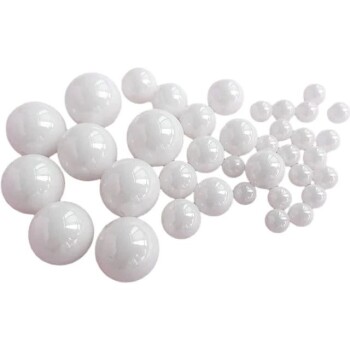
Zirconia grinding balls are the preferred media for LSLBO powder preparation due to their unique combination of extreme physical hardness and chemical inertness. These properties allow for the high-energy impact required to refine powder particles without introducing metallic impurities that would degrade the electrolyte's performance.
The success of LSLBO synthesis relies on achieving fine particle sizes while maintaining absolute chemical purity. Zirconia media solves this dual challenge by providing the density needed for efficient milling while acting as a non-reactive barrier against contamination, thereby preserving the material's ionic conductivity.
The Imperative of Chemical Purity
Eliminating Metallic Contamination
Standard steel grinding media introduces metallic impurities, such as iron or chromium, into the powder mixture through wear debris.
Zirconia is chemically inert, meaning it does not react with the precursor materials even during aggressive processing. This prevents the introduction of conductive metals that would compromise the insulating properties and stability of the LSLBO electrolyte.
Preserving Ionic Conductivity
The presence of foreign impurities in solid electrolytes can trigger side reactions and block ion transport pathways.
By using zirconia, you ensure the final powder retains its intended chemical composition. This high purity is directly linked to maintaining superior ionic conductivity and electrochemical stability in the final battery application.
Mechanical Efficiency and Wear Resistance
High Impact Energy Transfer
LSLBO preparation requires significant kinetic energy to refine the powder to the correct particle size.
Zirconia balls are extremely hard and dense, allowing them to deliver efficient energy transfer during collisions. This density ensures that bulk particles are effectively crushed and dispersed, promoting a uniform mixture.
Withstanding Long-Duration Milling
The synthesis process often involves long milling sessions (e.g., five hours or more) which would rapidly degrade softer media.
Zirconia exhibits superior wear resistance, maintaining its structural integrity over prolonged high-speed impacts. This durability ensures that the grinding media itself does not degrade and become a significant contaminant in the sample.
Understanding the Trade-offs
Cost vs. Performance
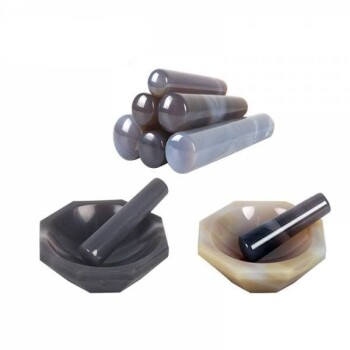
While zirconia is the technical standard for high-purity applications, it is significantly more expensive than stainless steel or agate media.
However, for LSLBO electrolytes, the cost is justified because lower-grade media would render the material unusable due to contamination.
Thermal Considerations
Zirconia has lower thermal conductivity compared to metal media, meaning heat generated during milling dissipates more slowly.
In high-energy milling, this can lead to localized heating. While generally acceptable for ceramics, process parameters should be monitored to ensure the heat does not alter the phase of the precursor materials.
Making the Right Choice for Your Goal
To optimize your milling process for LSLBO preparation, consider the following:
- If your primary focus is maximizing ionic conductivity: Prioritize high-purity yttria-stabilized zirconia to completely eliminate the risk of metallic contamination and side reactions.
- If your primary focus is particle size distribution: Utilize a mix of zirconia ball diameters (e.g., combining larger crushing balls with smaller dispersing beads) to ensure both bulk crushing and fine dispersion.
Zirconia offers the only reliable path to synthesizing LSLBO powders that meet the rigorous purity standards required for high-performance solid electrolytes.
Summary Table:
| Key Feature | Benefit for LSLBO Synthesis | Why Zirconia is Preferred |
|---|---|---|
| Chemical Inertness | Prevents metallic impurities | Won't react with precursors or degrade electrolyte performance. |
| High Hardness | Efficient particle size reduction | Provides the high-energy impact needed for fine dispersion. |
| Wear Resistance | Maintains material purity | Resists degradation during long milling sessions (5+ hours). |
| High Density | Optimal kinetic energy transfer | Ensures bulk particles are effectively crushed for a uniform mixture. |
Elevate Your Battery Research with KINTEK Precision
Achieving the perfect LSLBO electrolyte requires uncompromising purity and precise particle control. KINTEK specializes in high-performance laboratory equipment designed for advanced material synthesis. Whether you need robust crushing and milling systems with premium zirconia media, or high-precision high-temperature furnaces (muffle, vacuum, or atmosphere) for subsequent sintering, we provide the tools necessary to maximize ionic conductivity.
From high-pressure reactors and electrolytic cells to essential PTFE and ceramic consumables, KINTEK is your partner in battery innovation.
Ready to optimize your powder preparation? Contact our technical experts today to find the ideal milling solution for your lab!
Related Products
- Laboratory Jar Ball Mill with Alumina Zirconia Grinding Jar and Balls
- Precision Machined Zirconia Ceramic Ball for Engineering Advanced Fine Ceramics
- Laboratory Jar Mill with Agate Grinding Jar and Balls
- Laboratory Ball Mill Jar Mill with Metal Alloy Grinding Jar and Balls
- High Energy Planetary Ball Mill Milling Machine for Laboratory
People Also Ask
- What are the primary functions of using a ball mill for BZCY72 powder? Achieve High Purity and Enhanced Sintering
- In what way does a laboratory ball mill affect material properties when modifying PHBV/pulp fiber composites?
- Why is a laboratory ball mill required for ultra-fine fly ash? Unlock Nano-Scale Adsorption Power
- What is the function of a laboratory ball mill in the preparation of AMMCs? Optimize Dispersion & Grain Refinement
- What is the function of a laboratory ball mill in the pretreatment of waste tire char (WTC)? Optimize Material Reactivity