Precision sieving at 250 microns is a critical quality control step in biochar production. This specific sizing ensures that tea waste particles maintain high physical consistency, which is the prerequisite for uniform chemical activation and predictable thermal decomposition. Without this level of precision, the resulting biochar will suffer from irregular porosity and inconsistent surface area.
A 250-micron sieve standardizes the raw material to ensure that subsequent acid activation and pyrolysis processes occur uniformly across all particles. This level of control is essential for maximizing the biochar’s internal pore structure and ensuring experimental reproducibility.
The Impact of Particle Size on Chemical Activation
Optimizing Acid-Surface Interaction
When tea waste undergoes acid activation, the chemical agent must penetrate the cellular structure of the biomass. A 250-micron threshold ensures that the surface-area-to-volume ratio is consistent across the sample. This allows for even acid contact, preventing "over-activation" of smaller particles or "under-activation" of larger ones.
Enhancing Mass Transfer Efficiency
In any chemical treatment, mass transfer efficiency determines how well the liquid phase interacts with the solid biomass. By using a precision sieve, you eliminate larger chunks that would otherwise resist penetration. This results in a more efficient reaction where the entire volume of the material is modified equally.
Thermodynamic Consistency During Pyrolysis
Ensuring Uniform Heat Transfer
Pyrolysis relies on precise temperature control to convert biomass into carbon. Large or irregular particles create thermal gradients, where the exterior chars while the interior remains under-processed. The 250-micron standard ensures that heat moves through each particle at a nearly identical rate, leading to a homogenous final product.
Controlling Volatile Matter Release
The rate at which volatile gases escape the tea waste during heating directly influences the formation of pores. Consistent particle size ensures that volatile matter release is synchronized across the entire batch. This synchronization is what allows producers to target specific surface areas and pore volumes with high accuracy.
Understanding the Trade-offs and Challenges
Material Yield vs. Precision
Strictly adhering to a 250-micron limit often results in a significant amount of "oversize" material that must be re-ground. While this increases the quality and consistency of the biochar, it can lower the initial throughput of the preparation phase. Balancing the need for precision with the energy costs of additional grinding is a key operational decision.
Sieve Blinding and Maintenance
Tea waste contains natural oils and fibers that can lead to sieve blinding, where the mesh openings become clogged. Using a high-precision sieve requires frequent cleaning and calibration to ensure the 250-micron standard is actually being met. Neglecting maintenance can lead to larger particles "sneaking" through, which compromises the integrity of the pyrolysis stage.
Optimizing Your Biochar Preparation Workflow
To achieve the best results with tea waste biochar, your sieving strategy should align with your ultimate performance goals.
- If your primary focus is maximizing adsorption capacity: Use the 250-micron sieve to ensure every particle is fully reached by activation agents, creating the highest possible specific surface area.
- If your primary focus is experimental reproducibility: Treat the 250-micron limit as a hard boundary to eliminate particle size as a variable, ensuring that your data reflects the chemistry rather than physical inconsistencies.
- If your primary focus is high-throughput production: Use a multi-stage grinding and sieving circuit to minimize the time material spends in the re-grind loop while still maintaining the 250-micron standard.
By standardizing your raw material at the 250-micron level, you transform raw tea waste into a predictable, high-performance precursor for advanced carbon materials.
Summary Table:
| Process Phase | Role of 250-Micron Sieve | Impact on Biochar Quality |
|---|---|---|
| Chemical Activation | Standardizes surface-area-to-volume ratio | Prevents over/under-activation; ensures even acid penetration |
| Mass Transfer | Eliminates large biomass chunks | Increases reaction efficiency across the entire sample |
| Pyrolysis | Maintains uniform heat transfer rates | Prevents thermal gradients; ensures homogenous carbonization |
| Pore Formation | Synchronizes volatile matter release | Enables precise targeting of specific surface areas and volumes |
Optimize Your Biochar Research with KINTEK Precision
Achieving experimental reproducibility in carbon material science starts with the right equipment. KINTEK specializes in high-performance laboratory solutions tailored for advanced material preparation.
Whether you are standardizing tea waste with our precision sieving equipment, refining raw materials using our crushing and milling systems, or conducting uniform pyrolysis in our high-temperature furnaces (muffle, tube, and vacuum), we provide the consistency your research demands. Our portfolio also features high-pressure reactors, hydraulic presses for pelletizing, and specialized ceramics to support every stage of your workflow.
Ready to elevate your biochar quality? Contact KINTEK today to find the perfect equipment for your laboratory needs.
References
- Sana Khalid, Muhammad Ibrar. Biochar supported metallo-inorganic nanocomposite: A green approach for decontamination of heavy metals from water. DOI: 10.1371/journal.pone.0289069
This article is also based on technical information from Kintek Solution Knowledge Base .
Related Products
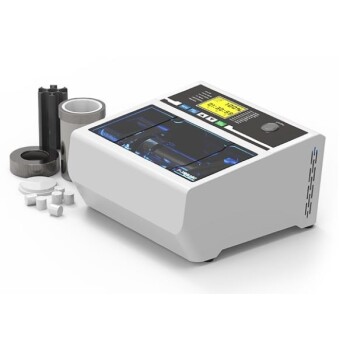
- Three-dimensional electromagnetic sieving instrument
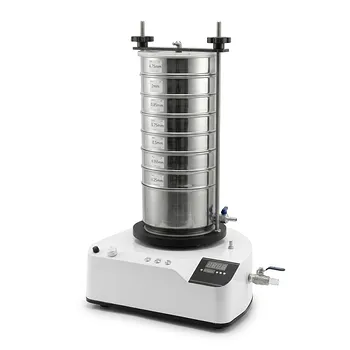
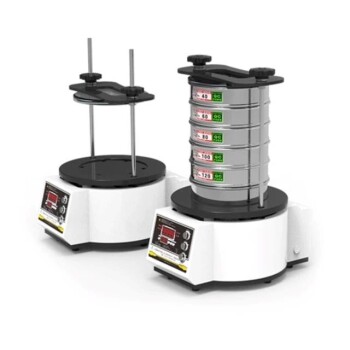
- Laboratory Test Sieves and Sieving Machines
- Laboratory Test Sieves and Vibratory Sieve Shaker Machine
- Laboratory Micro Horizontal Jar Mill for Precision Sample Preparation in Research and Analysis
- Custom PTFE Teflon Parts Manufacturer for PTFE Mesh F4 Sieve
People Also Ask
- Why is sieving equipment essential for the classification of processed bio-activated carbon? Optimize Performance
- What are the limitations of sieving? Understanding the Constraints of Particle Size Analysis
- What are advantages and disadvantages of sieving method? A Guide to Reliable & Cost-Effective Particle Sizing
- How is sieving important? The Critical Role of Particle Size Analysis in Quality Control
- What is sieving and how does it work? A Guide to Accurate Particle Size Analysis