Knowledge sieve shaker Why is sieving equipment essential for the classification of processed bio-activated carbon? Optimize Performance
Author avatar

Tech Team · Kintek Solution

Updated 1 month ago

Why is sieving equipment essential for the classification of processed bio-activated carbon? Optimize Performance


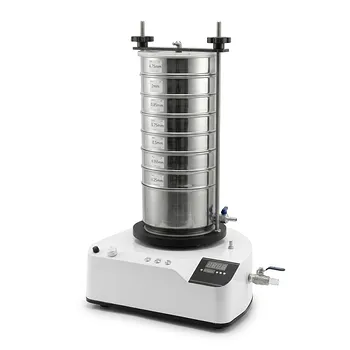
Sieving equipment is the fundamental tool for achieving particle size uniformity in bio-activated carbon. By classifying crushed carbon into specific ranges, such as 45 to 150 µm, sieving allows for the precise adjustment of the material's effective surface area. This control is essential because smaller, uniform particle sizes reduce external mass transfer resistance, significantly increasing the absorption rate of target contaminants like fluoride ions.

The core value of sieving equipment lies in its ability to transform raw, irregular carbon into a standardized technical material. By ensuring particle uniformity, sieving dictates the material's adsorption kinetics, thermal stability during production, and physical behavior in industrial systems.

Optimizing Adsorption and Chemical Performance

Maximizing Effective Surface Area

The primary role of sieving is to isolate particle sizes that provide the highest possible contact area for adsorption. Smaller particles, meticulously separated via sieving, offer a greater surface-to-volume ratio, which is the critical driver for high-capacity chemical uptake.

Improving Mass Transfer Kinetics

Sieving ensures that the carbon particles are small enough to minimize the distance adsorbate molecules must travel. By reducing this diffusion path length, sieving equipment directly accelerates the rate at which the bio-activated carbon can treat water or gas streams.

Ensuring Consistency in Thermal and Mechanical Processing

Facilitating Uniform Carbonization

In the production phase, sieving biomass shells prior to carbonization ensures that heat is distributed evenly within a furnace. Particle size uniformity prevents the common issue of uneven heating, where the exterior of large particles over-processes while the core remains under-activated.

Enhancing Dispersibility and Structural Integrity

When bio-activated carbon is used as a filler in polymers or electrodes, sieving to a precise mesh size—often 200-mesh or finer—is vital. This prevents stress concentration points and ensures high dispersion, which improves the mechanical strength and electrochemical conductivity of the final product.

Managing System Flow and Physical Stability

Controlling Pressure Drop and Flow Resistance

In large-scale wastewater or air filtration systems, the particle size determined by sieving dictates the flow resistance. Uniformly sized carbon prevents "fines" from clogging the system and ensures a predictable pressure drop, allowing for efficient pump and blower operation.

Eliminating Structural Weaknesses

For applications like biomass briquettes or molded carbon devices, sieving removes oversized particles that could compromise the device's integrity. Consistency in the powder allows for a stable pore structure, which translates to reliable combustion or filtration performance.

Understanding the Trade-offs

The Balance Between Speed and Pressure

While smaller particles achieved through fine sieving offer faster adsorption, they also create significantly higher flow resistance. Engineers must often choose a "middle ground" mesh size to ensure the system doesn't require excessive energy to move fluids through the carbon bed.

Material Loss and Sieve Blinding

Fine sieving processes are susceptible to sieve blinding, where particles become lodged in the mesh, reducing efficiency. Additionally, aggressive sieving can generate "dust" or "fines" that are too small for certain applications, leading to material waste that must be factored into production costs.

Making the Right Choice for Your Goal

  • If your primary focus is rapid contaminant removal: Utilize high-precision sieving to isolate the smallest possible particle fractions (e.g., <150 µm) to maximize surface area and minimize mass transfer resistance.
  • If your primary focus is industrial filtration system longevity: Prioritize larger, uniform mesh sizes (like 8x30 mesh) to maintain a low pressure drop and prevent system clogging while ensuring predictable flow.
  • If your primary focus is manufacturing carbon composites or electrodes: Employ ultra-fine sieving (200-mesh or higher) to ensure uniform filling and reduce internal contact resistance within the polymer matrix.

By treating sieving as a critical precision step rather than a mere secondary process, you ensure the technical reliability and performance of your bio-activated carbon.

Summary Table:

Key Factor Role in Processing Benefit to Final Product
Particle Size Ensures uniformity (e.g., 45–150 µm) Maximized surface area and faster adsorption
Thermal Stability Provides even heat distribution Uniform carbonization without over-processing
Flow Dynamics Controls mesh size consistency Predictable pressure drop and reduced clogging
Structural Integrity Removes oversized particles Enhanced dispersion and mechanical strength

Optimize Your Carbon Processing with KINTEK

Achieve unmatched precision in your material science workflows with KINTEK. Whether you need high-performance sieving equipment for particle classification, high-temperature furnaces (muffle, tube, or rotary) for uniform carbonization, or hydraulic pellet presses for carbon composite molding, we provide the technical tools to ensure your success.

Our comprehensive range of laboratory equipment and high-quality consumables—from PTFE products to crucibles—is designed to help you maximize surface area and adsorption efficiency. Contact our experts today to discover how KINTEK can enhance your production consistency and technical reliability.

References

  1. K. Kiran Kumar, G. Krishnaveni. Defluoridation of Water by Biowaste Material – A Study of Adsorption Kinetics and Isotherms. DOI: 10.46488/nept.2023.v22i04.031

This article is also based on technical information from Kintek Solution Knowledge Base .

Related Products

People Also Ask

Related Products

Three-dimensional electromagnetic sieving instrument

Three-dimensional electromagnetic sieving instrument

KT-VT150 is a desktop sample processing instrument for both sieving and grinding. Grinding and sieving can be used both dry and wet. The vibration amplitude is 5mm and the vibration frequency is 3000-3600 times/min.

Laboratory Vibratory Sieve Shaker Machine for Dry and Wet Three-Dimensional Sieving

Laboratory Vibratory Sieve Shaker Machine for Dry and Wet Three-Dimensional Sieving

KT-VD200 can be used for sieving tasks of dry and wet samples in the laboratory. The screening quality is 20g-3kg. The product is designed with a unique mechanical structure and an electromagnetic vibrating body with a vibration frequency of 3000 times per minute.

Laboratory Test Sieves and Sieving Machines

Laboratory Test Sieves and Sieving Machines

Precision lab test sieves & sieving machines for accurate particle analysis. Stainless steel, ISO-compliant, 20μm-125mm range. Request specs now!

Laboratory Wet Three-Dimensional Vibratory Sieve Shaker Machine

Laboratory Wet Three-Dimensional Vibratory Sieve Shaker Machine

The wet three-dimensional vibrating sieving instrument focuses on solving the sieving tasks of dry and wet samples in the laboratory. It is suitable for sieving 20g - 3kg dry, wet or liquid samples.

Laboratory Test Sieves and Vibratory Sieve Shaker Machine

Laboratory Test Sieves and Vibratory Sieve Shaker Machine

Efficiently process powders, granules, and small blocks with a high-frequency vibration sieve. Control vibration frequency, screen continuously or intermittently, and achieve accurate particle size determination, separation, and classification.

Vibratory Sieve Shaker Machine Dry Three-Dimensional Vibrating Sieve

Vibratory Sieve Shaker Machine Dry Three-Dimensional Vibrating Sieve

The KT-V200 product focuses on solving common sieving tasks in the laboratory. It is suitable for sieving 20g-3kg dry samples.

Laboratory Vibratory Sieve Shaker Machine Slap Vibrating Sieve

Laboratory Vibratory Sieve Shaker Machine Slap Vibrating Sieve

KT-T200TAP is a slapping and oscillating sieving instrument for laboratory desktop use, with 300 rpm horizontal circular motion and 300 vertical slapping motions to simulate manual sieving to help sample particles pass through better.

Custom PTFE Teflon Parts Manufacturer for PTFE Mesh F4 Sieve

Custom PTFE Teflon Parts Manufacturer for PTFE Mesh F4 Sieve

PTFE mesh sieve is a specialized test sieve designed for particle analysis in various industries, featuring a non-metallic mesh woven from PTFE filament. This synthetic mesh is ideal for applications where metal contamination is a concern . PTFE sieves are crucial for maintaining the integrity of samples in sensitive environments, ensuring accurate and reliable results in particle size distribution analysis.

Professional Cutting Tools for Carbon Paper Cloth Diaphragm Copper Aluminum Foil and More

Professional Cutting Tools for Carbon Paper Cloth Diaphragm Copper Aluminum Foil and More

Professional tools for cutting lithium sheets, carbon paper, carbon cloth, separators, copper foil, aluminum foil, etc., with round and square shapes and different sizes of blades.

Mini Planetary Ball Mill Machine for Laboratory Milling

Mini Planetary Ball Mill Machine for Laboratory Milling

Discover the KT-P400 desktop planetary ball mill, ideal for grinding and mixing small samples in the lab. Enjoy stable performance, long service life, and practicality. Functions include timing and overload protection.

Laboratory Single Horizontal Jar Mill

Laboratory Single Horizontal Jar Mill

KT-JM3000 is a mixing and grinding instrument for placing a ball milling tank with a volume of 3000ml or less. It adopts frequency conversion control to realize timing, constant speed, direction change, overload protection and other functions.

12 Inch 24 Inch High Precision Automatic Diamond Wire Cutting Machine Laboratory Saw Precision Wire EDM Cutting Machine

12 Inch 24 Inch High Precision Automatic Diamond Wire Cutting Machine Laboratory Saw Precision Wire EDM Cutting Machine

The high precision automatic diamond wire cutting machine is a versatile cutting tool that uses a diamond wire to cut through a wide range of materials, including conductive and non-conductive materials, ceramics, glass, rocks, gems, jade, meteorites, monocrystalline silicon, silicon carbide, polycrystalline silicon, refractory bricks, epoxy boards, and ferrite bodies. It is especially suitable for cutting various brittle crystals with high hardness, high value, and easy to break.

High-Energy Omnidirectional Planetary Ball Mill Milling Machine for Laboratory

High-Energy Omnidirectional Planetary Ball Mill Milling Machine for Laboratory

The KT-P4000E is a new product derived from the vertical high-energy planetary ball mill with a 360° swivel function. Experience faster, uniform, and smaller sample output results with 4 ≤1000ml ball mill jars.

Laboratory High Throughput Tissue Grinding Mill Grinder

Laboratory High Throughput Tissue Grinding Mill Grinder

KT-MT is a high-quality, small, and versatile tissue grinder used for crushing, grinding, mixing, and cell wall breaking in various fields, including food, medical, and environmental protection. It is equipped with 24 or 48 2ml adapters and ball grinding tanks and is widely employed for DNA, RNA, and protein extraction.

Laboratory Ball Mill Jar Mill with Metal Alloy Grinding Jar and Balls

Laboratory Ball Mill Jar Mill with Metal Alloy Grinding Jar and Balls

Grind and mill with ease using metal alloy grinding jars with balls. Choose from 304/316L stainless steel or tungsten carbide and optional liner materials. Compatible with various mills and features optional functions.

High Energy Planetary Ball Mill Milling Machine for Laboratory

High Energy Planetary Ball Mill Milling Machine for Laboratory

The biggest feature is that the high energy planetary ball mill can not only perform fast and effective grinding, but also has good crushing ability

Lab Internal Rubber Mixer Rubber Kneader Machine for Mixing and Kneading

Lab Internal Rubber Mixer Rubber Kneader Machine for Mixing and Kneading

Lab internal rubber mixer is suitable for mixing, kneading and dispersing various chemical raw materials such as plastics, rubber, synthetic rubber, hot melt adhesive and various low-viscosity materials.

High Energy Planetary Ball Mill Milling Machine for Laboratory

High Energy Planetary Ball Mill Milling Machine for Laboratory

Experience fast and effective sample processing with the F-P2000 high-energy planetary ball mill. This versatile equipment offers precise control and excellent grinding capabilities. Perfect for laboratories, it features multiple grinding bowls for simultaneous testing and high output. Achieve optimal results with its ergonomic design, compact structure, and advanced features. Ideal for a wide range of materials, it ensures consistent particle size reduction and low maintenance.

Laboratory Jar Mill with Agate Grinding Jar and Balls

Laboratory Jar Mill with Agate Grinding Jar and Balls

Grind your materials with ease using Agate Grinding Jars with Balls. Sizes from 50ml to 3000ml, perfect for planetary and vibration mills.

Powerful Plastic Crusher Machine

Powerful Plastic Crusher Machine

KINTEK's powerful plastic crusher machines process 60-1350 KG/H of diverse plastics, ideal for labs and recycling. Durable, efficient, and customizable.


Leave Your Message