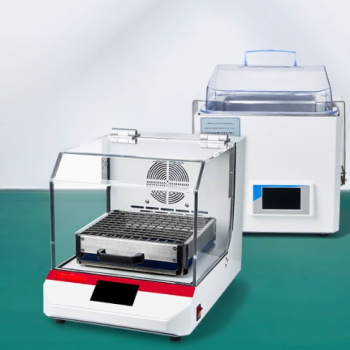
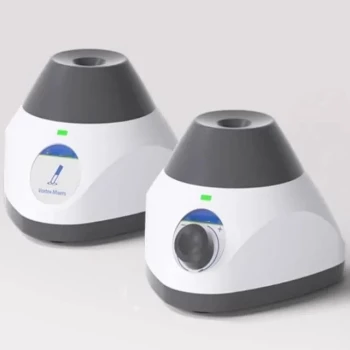
The necessity of a constant-temperature reciprocating shaker lies in its ability to simultaneously control thermal energy and mechanical agitation. This equipment ensures that cadmium ions and adsorbent particles achieve maximum contact while maintaining a stable thermodynamic environment. By eliminating mass transfer resistance, the shaker allows researchers to capture accurate, repeatable data regarding the material's true adsorption capacity and kinetic behavior.
A constant-temperature reciprocating shaker provides the controlled kinetic energy and thermodynamic stability required to eliminate mass transfer resistance. This ensures that the resulting data accurately reflects the intrinsic chemical interactions between cadmium ions and the adsorbent surface rather than experimental artifacts.
Overcoming Mass Transfer Resistance
Maximizing Solid-Liquid Contact
The reciprocating motion keeps adsorbent particles, such as modified biochar or carbonized composites, in a state of constant suspension. This prevents particles from settling at the bottom of the flask, ensuring that every available active site on the adsorbent surface is exposed to the cadmium-containing wastewater.
Eliminating the Diffusion Layer
Before cadmium ions can bind to an adsorbent, they must pass through a static liquid film surrounding the particle. Mechanical oscillation at specific speeds (such as 180 r/min) disrupts this layer, effectively eliminating external mass transfer resistance and allowing ions to diffuse freely to the material's surface.
Achieving Kinetic Equilibrium
Uniform agitation ensures that the solute concentration remains consistent throughout the solution, preventing local concentration gradients. This controlled environment allows the system to reach thermodynamic equilibrium within a designated period, providing a clear window into the material's maximum adsorption potential.
Thermodynamic Stability and Kinetic Accuracy
Precision in Kinetic Modeling
Adsorption rates are highly sensitive to temperature fluctuations, which can alter the energy of the cadmium ions and the surface properties of the adsorbent. Precise thermal control (e.g., 25 °C) ensures that the resulting data accurately represents pseudo-second-order kinetics or other relevant models without interference from ambient temperature shifts.
Reliability of Thermodynamic Data
By isolating temperature as a constant variable, researchers can accurately determine how thermal environments influence adsorption capacity. This stability is vital for calculating essential thermodynamic parameters, including enthalpy, entropy, and Gibbs free energy, which define the spontaneity of the reaction.
Ensuring Experimental Repeatability
A stable environment minimizes variables that could lead to inconsistent results across different trial runs. Whether using MOF-5/PANI composites or activated carbon, the constant-temperature shaker provides a standardized "kinetic stage" that makes the data scientifically defensible and reproducible.
Understanding the Trade-offs
Mechanical Degradation vs. Mixing Efficiency
While high rotation speeds (e.g., 220 rpm) maximize mass transfer, excessive mechanical force can cause physical attrition of fragile adsorbent particles. If the adsorbent breaks down into smaller fragments during the process, it may artificially increase the surface area and skew the final adsorption results.
Air vs. Water Bath Stability
Constant-temperature water bath shakers typically offer superior thermal stability compared to air-incubated shakers due to the higher heat capacity of water. However, air shakers are often easier to maintain and present a lower risk of sample contamination from water vapor or splashing.
Applying This to Your Research
Making the Right Choice for Your Goal
- If your primary focus is Kinetic Modeling: Prioritize a shaker with highly precise oscillation frequency control to ensure that mass transfer is never the rate-limiting step in your observations.
- If your primary focus is Industrial Scalability: Use the shaker to test a wide range of stable temperatures (e.g., 20°C to 45°C) to determine how the adsorbent will perform in fluctuating real-world wastewater environments.
- If your primary focus is Material Comparison: Maintain a strictly uniform rotation speed (e.g., 180 rpm) across all samples to ensure that differences in adsorption are due to material properties rather than varying degrees of agitation.
Utilizing a constant-temperature reciprocating shaker transforms a simple mixing task into a controlled scientific environment necessary for high-fidelity adsorption analysis.
Summary Table:
| Key Feature | Role in Adsorption Kinetics | Experimental Impact |
|---|---|---|
| Reciprocating Motion | Disrupts the static liquid film (diffusion layer) | Eliminates external mass transfer resistance |
| Thermal Control | Maintains constant thermodynamic environment | Enables accurate pseudo-second-order kinetic modeling |
| Uniform Agitation | Keeps adsorbent particles in constant suspension | Maximizes active site exposure and avoids concentration gradients |
| Frequency Precision | Provides consistent kinetic energy | Ensures scientific repeatability and prevents particle attrition |
Elevate Your Research Precision with KINTEK
Accurate adsorption kinetics require a controlled environment where every variable is managed. KINTEK specializes in high-performance laboratory equipment designed to provide the thermodynamic stability and mechanical precision your experiments demand.
Our extensive portfolio supports advanced material science and wastewater research, featuring:
- Agitation & Mixing: High-precision shakers, homogenizers, and magnetic stirrers.
- Thermal Processing: A comprehensive range of furnaces (muffle, tube, vacuum, CVD, and dental) and cooling solutions (ULT freezers, freeze dryers).
- Sample Preparation: Crushing systems, sieving equipment, and hydraulic presses (pellet, hot, isostatic).
- Specialized Reactors: High-temperature high-pressure reactors, autoclaves, and electrolytic cells.
- Essential Consumables: High-quality PTFE products, ceramics, and crucibles.
Whether you are optimizing modified biochar or developing MOF-5/PANI composites, KINTEK provides the reliability needed for scientifically defensible data. Contact our experts today to find the perfect equipment solution for your laboratory’s unique requirements!
References
- Bo Tang, Zhifeng Liu. Adsorption Characteristics of Cd2+ Ions in Aqueous Solution on Modified Straw Biochar. DOI: 10.3390/su15054373
This article is also based on technical information from Kintek Solution Knowledge Base .
Related Products
- 50L Chiller Water Bath Cooling Circulator Low Temperature Constant Temperature Reaction Bath
- High Temperature Constant Temperature Heating Circulator Water Bath Chiller Circulator for Reaction Bath
- 20L Chiller Water Bath Cooling Circulator Low Temperature Constant Temperature Reaction Bath
- 30L Chiller Water Bath Cooling Circulator Low Temperature Constant Temperature Reaction Bath
- 10L Chilling Circulator Cooling Water Bath Low Temperature Constant Temperature Reaction Bath
People Also Ask
- For which types of substances are water baths and chillers considered ideal? Essential Care for Sensitive Samples
- What is the necessity of a circulating water bath in chlorate production? Optimize Yield & Purity with Precision
- Why is a circulating water chiller required for Prussian Blue nanoparticles? Ensure Stability & Batch Reproducibility
- What function does a circulating cooling chiller perform during the gas adsorption isotherm testing of nanoporous carbon?
- What is the primary function of water baths and chillers? Mastering Precise Thermal Stability for Liquid Samples