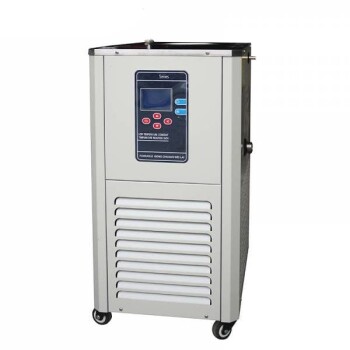
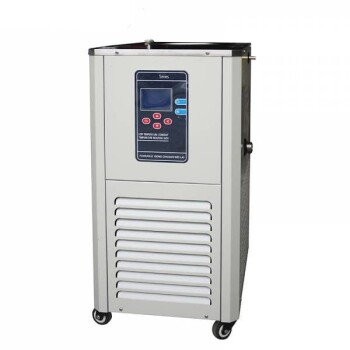
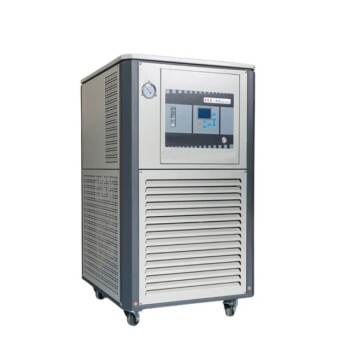
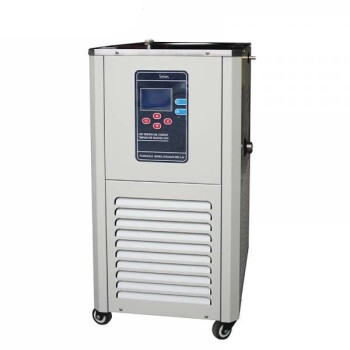
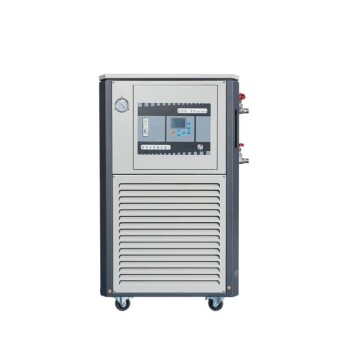
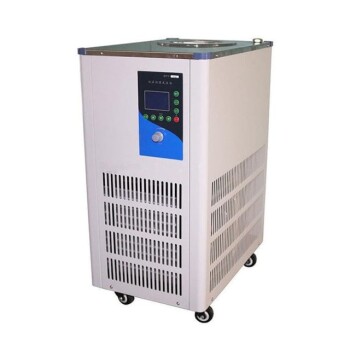
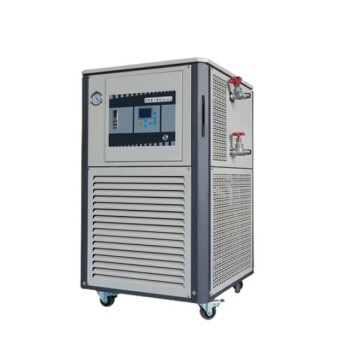
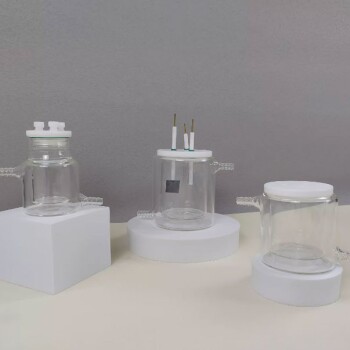
The technical necessity of a circulating constant temperature water bath system lies in its ability to enforce precise thermal regulation. In chlorate production, this system is required to maintain the electrochemical and chemical reactors within a strict 60–80°C window. By stabilizing this environment, the system directly dictates the efficiency of the reaction kinetics and prevents the formation of unwanted byproducts.
Core Takeaway Temperature in chlorate production is a lever for both speed and purity. A circulating water bath system is critical because it locks the process into an optimal thermal state, simultaneously accelerating production rates and minimizing waste to ensure consistent, high-quality output.
The Physics of Reaction Control
Optimizing Reaction Kinetics
Chlorate generation is driven by electrochemical and chemical pathways that are highly temperature-dependent.
The circulating water bath ensures the system operates within the optimal 60–80°C range. This specific thermal energy helps overcome activation barriers, effectively accelerating reaction kinetics. Without this external thermal aid, the reaction rates would slow significantly, reducing overall throughput.
Suppressing Side Reactions
In complex chemical workflows, efficient energy use is defined by where that energy goes.
If the temperature deviates from the optimal range, the system becomes susceptible to competing, undesirable reaction pathways. The constant temperature bath acts as a stabilizer, ensuring energy drives the target reaction while side reactions are actively suppressed. This maximizes the conversion of raw materials into the desired product rather than waste.
Ensuring Process Reliability
Achieving Batch-to-Batch Consistency
Industrial workflows depend on the ability to reproduce results identically every time.
Because chlorate generation efficiency is linked to temperature, any fluctuation creates variability in the final product. The "circulating" nature of the system eliminates hot or cold spots, ensuring consistent product quality. This uniformity allows operators to predict yields accurately and maintain strict quality control standards.
Stabilizing Conversion Rates
The conversion of precursors into chlorine dioxide requires a stable thermal baseline.
The water bath system absorbs or provides heat as needed to maintain equilibrium during the process. This stability is essential for maintaining high chlorine dioxide conversion rates. It prevents the volatility that often plagues static or uncontrolled thermal environments.
Critical Operational Considerations
The Risk of Thermal Drift
The efficiency gains described are entirely dependent on maintaining the specific 60–80°C window.
If the system fails to circulate effectively or drifts outside this range, the benefits reverse immediately. Lower temperatures will stall reaction kinetics, while higher temperatures may degrade the product or introduce safety risks. The system acts as a necessary constraint against these operational failures.
Reliance on Uniformity
The "circulating" function is just as important as the temperature setting.
A static heat source would allow localized temperature gradients (hotspots) to form within the reactor. These gradients can trigger localized side reactions, undermining the process repeatability that the system is designed to protect.
Making the Right Choice for Your Goal
To maximize the value of your thermal control system, align your operational settings with your specific production targets:
- If your primary focus is Production Volume: Target the upper end of the thermal range (near 80°C) to maximize the acceleration of reaction kinetics.
- If your primary focus is Product Purity: Prioritize the flow rate of the circulation system to ensure absolute thermal uniformity, which is the key to suppressing side reactions.
Precise thermal management is the defining factor that transforms a volatile chemical reaction into a reliable industrial process.
Summary Table:
| Feature | Impact on Chlorate Production | Benefit |
|---|---|---|
| Precise Thermal Control | Maintains 60–80°C window | Optimizes reaction kinetics and speed |
| Uniform Circulation | Eliminates hot and cold spots | Ensures batch-to-batch consistency |
| Side Reaction Suppression | Minimizes energy diversion to waste | Increases final product purity |
| Process Stabilization | Maintains equilibrium during conversion | High chlorine dioxide conversion rates |
Elevate Your Production Precision with KINTEK
Don't let thermal instability compromise your chemical yields. KINTEK specializes in advanced laboratory solutions, providing high-performance circulating constant temperature water baths, cooling solutions (ULT freezers, chillers), and specialized electrolytic cells tailored for demanding industrial workflows like chlorate production.
Whether you are scaling battery research or optimizing chemical reactors, our comprehensive range of high-temperature furnaces, hydraulic presses, and premium consumables ensures your lab achieves maximum efficiency and repeatable results.
Ready to stabilize your process and maximize purity? Contact our experts today to find the perfect thermal control system for your facility.
References
- Mayra Kerolly Sales Monteiro, Manuel A. Rodrigo. Towards the production of chlorine dioxide from electrochemically <scp><i>in‐situ</i></scp> produced solutions of chlorate. DOI: 10.1002/jctb.7073
This article is also based on technical information from Kintek Solution Knowledge Base .
Related Products
- High Temperature Constant Temperature Heating Circulator Water Bath Chiller Circulator for Reaction Bath
- 50L Chiller Water Bath Cooling Circulator Low Temperature Constant Temperature Reaction Bath
- 30L Chiller Water Bath Cooling Circulator Low Temperature Constant Temperature Reaction Bath
- 10L Chilling Circulator Cooling Water Bath Low Temperature Constant Temperature Reaction Bath
- 40L Chiller Water Bath Cooling Circulator Low Temperature Constant Temperature Reaction Bath
People Also Ask
- How do constant temperature circulators impact weight-loss immersion tests? Ensure Precision in Corrosion Analysis
- How does a constant temperature circulator support the leaching reaction of gold scrap? Optimize Gold Recovery Results
- Why is a constant temperature water bath used for precursor storage in CVD? Achieve Stable Nanocrystalline SiC Deposition
- Why is a high-precision constant temperature water bath necessary for anaerobic digestion? Ensure Success at 37±0.02°C
- Why are constant temperature water baths critical in thiourea leaching? Master Gold Recovery with Precision Heat