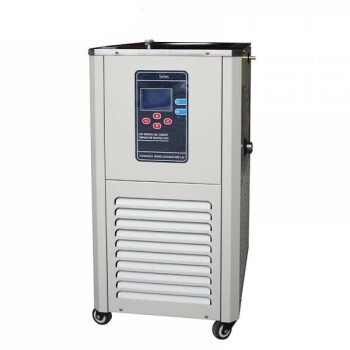
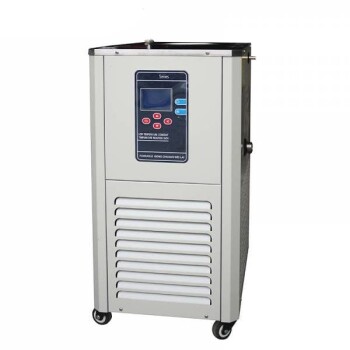
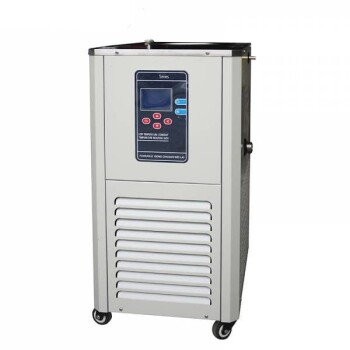
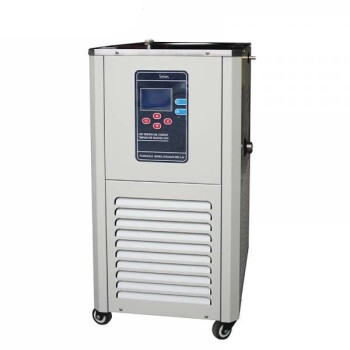
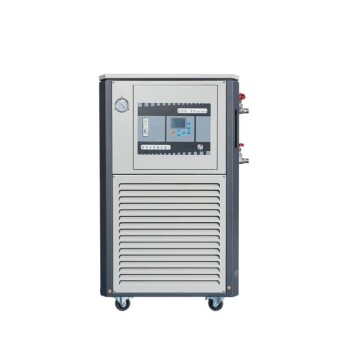
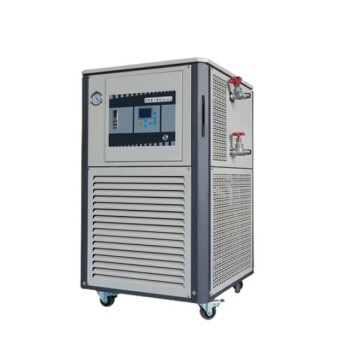
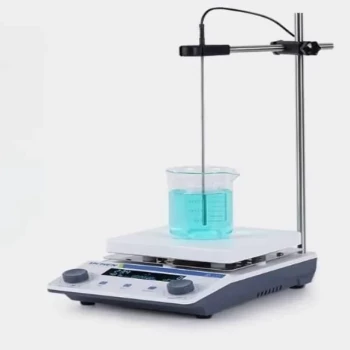
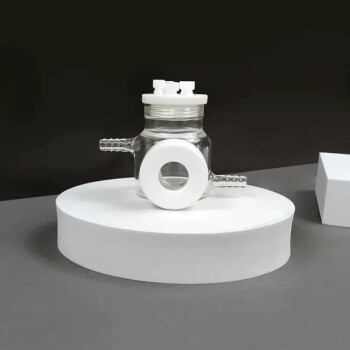
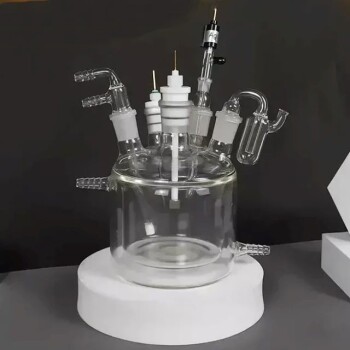
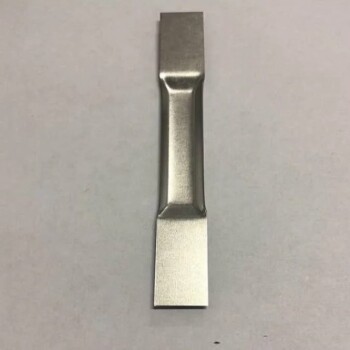
A constant temperature water bath system acts as the critical stabilizer for your electropolishing environment. It utilizes external circulation heating or heat exchange mechanisms to maintain the polishing solution within a glass electrolytic cell at a precise, fixed temperature, often around 55°C. By locking in the thermal conditions, this system prevents fluctuations that would otherwise alter the fundamental physics of the process.
Electropolishing is an inherently temperature-sensitive electrochemical process. The water bath system ensures that the viscosity and conductivity of the electrolyte remain stable, guaranteeing a constant anode dissolution rate and reproducible surface finish.
The Physics of the Electrolyte
To understand the role of the water bath, you must look beyond the equipment and into the chemistry of the solution.
Stabilizing Viscosity and Conductivity
The properties of your electrolyte are not static; they change rapidly with temperature. Viscosity (fluid thickness) and conductivity (ability to carry current) are directly tied to thermal energy.
A constant temperature bath prevents the solution from thickening or thinning during the experiment. This ensures that the movement of ions remains predictable and steady throughout the entire polishing cycle.
Regulating Anode Dissolution
The core mechanism of electropolishing is anode dissolution, where the metal surface is removed electrochemically.
If the temperature fluctuates, the rate at which the metal dissolves changes. By clamping the temperature at a specific set point, the water bath ensures the dissolution rate remains constant, preventing under-polishing or excessive material loss.
Impact on Surface Quality
For experiments focused on the physical outcome—the look and feel of the steel—temperature control is non-negotiable.
Consistency of Flatness and Gloss
The aesthetic and functional qualities of stainless steel, specifically surface flatness and gloss, depend on a steady reaction rate.
Without thermal regulation, a single experiment could yield uneven results. The water bath ensures that the leveling and brightening effects occur uniformly across the sample.
Ensuring Experimental Validity
Beyond the physical surface, the water bath plays a vital role in the integrity of the data collected during experiments.
Eliminating Thermal Error
Electrochemical parameters, such as pitting potential and passive current density, are highly sensitive to thermal variance.
If the temperature shifts even slightly, it introduces experimental error that can be mistaken for a material property change. The water bath eliminates this variable, ensuring that any observed changes are due to the material, not the environment.
Ensuring Data Comparability
When testing different variables—such as immersion times or chemical concentrations—you need a baseline.
A constant temperature environment allows you to compare data across different treatment processes strictly. It ensures that result A and result B are truly comparable because the thermal variable has been isolated and neutralized.
Operational Considerations and Trade-offs
While essential for precision, introducing a water bath system creates specific operational dynamics that must be managed.
Increased Setup Complexity
Unlike simple immersion, a water bath system requires external circulation or heat exchange setups.
This adds a layer of complexity to the hardware configuration. You must manage coolant or heating fluid flow in addition to the electrolyte itself, requiring more bench space and setup time.
Thermal Inertia
Water baths provide stability, but they do not change temperature instantly.
There is often a lag time required to reach the target temperature (e.g., heating to 55°C). Experiments cannot begin immediately; you must account for a stabilization period to ensure the entire volume of the electrolyte has reached thermal equilibrium.
Making the Right Choice for Your Goal
The specific value of the water bath depends on what you are trying to measure or achieve in your experiment.
- If your primary focus is Surface Finish (Gloss/Flatness): Prioritize the system's ability to maintain high temperatures (e.g., 55°C) to stabilize viscosity and ensure a uniform anode dissolution rate.
- If your primary focus is Electrochemical Data (Corrosion/Pitting): Rely on the system to eliminate thermal variance, ensuring that measurements of pitting potential and current density are statistically valid and comparable.
Precision in temperature control is the difference between a rough trial and a reproducible scientific process.
Summary Table:
| Key Parameter | Role of Water Bath System | Benefit for Electropolishing |
|---|---|---|
| Viscosity & Conductivity | Maintains electrolyte fluid properties | Ensures stable and predictable ion movement |
| Anode Dissolution | Locks in the metal removal rate | Prevents under-polishing or excessive material loss |
| Surface Quality | Standardizes leveling and brightening | Guarantees consistent flatness and high-gloss finish |
| Data Integrity | Eliminates thermal variance errors | Ensures experimental validity and comparability |
| Thermal Equilibrium | Provides a steady 55°C environment | Prevents fluctuations that alter electrochemical physics |
Elevate Your Material Research with KINTEK Precision
Achieving the perfect surface finish or accurate electrochemical data requires more than just chemistry—it requires absolute thermal stability. KINTEK specializes in high-performance laboratory equipment designed for the most demanding stainless steel electropolishing experiments.
From constant temperature water bath systems and electrolytic cells to our comprehensive range of high-temperature furnaces, cooling solutions (ULT freezers), and hydraulic presses, we provide the tools needed to eliminate variables and ensure reproducibility.
Ready to optimize your lab's performance? Contact our experts today to find the perfect equipment and consumables for your specific research needs.
References
- Paweł Lochyński, Maciej Karczewski. Electrochemical Reduction of Industrial Baths Used for Electropolishing of Stainless Steel. DOI: 10.1155/2018/8197202
This article is also based on technical information from Kintek Solution Knowledge Base .
Related Products
- High Temperature Constant Temperature Heating Circulator Water Bath Chiller Circulator for Reaction Bath
- 50L Chiller Water Bath Cooling Circulator Low Temperature Constant Temperature Reaction Bath
- 10L Chilling Circulator Cooling Water Bath Low Temperature Constant Temperature Reaction Bath
- 30L Chiller Water Bath Cooling Circulator Low Temperature Constant Temperature Reaction Bath
- 40L Chiller Water Bath Cooling Circulator Low Temperature Constant Temperature Reaction Bath
People Also Ask
- What is the necessity of a circulating water bath in chlorate production? Optimize Yield & Purity with Precision
- How do constant temperature circulators impact weight-loss immersion tests? Ensure Precision in Corrosion Analysis
- How does a constant temperature circulator support the leaching reaction of gold scrap? Optimize Gold Recovery Results
- Why is a constant temperature water bath used for precursor storage in CVD? Achieve Stable Nanocrystalline SiC Deposition
- Why is a high-precision constant temperature water bath necessary for anaerobic digestion? Ensure Success at 37±0.02°C