Precision polishing of a Glassy Carbon Electrode (GCE) is essential because it establishes a standardized, chemically inert, and highly conductive surface that serves as the foundation for electrochemical testing. By removing surface oxidation and physical contaminants, polishing ensures that the recorded electrical signals reflect the intrinsic performance of the graphitic carbon nitride rather than the impurities or resistance of the substrate. This process is critical for achieving the high sensitivity and repeatability required to evaluate how specific material pretreatments affect catalytic activity.
Core Takeaway: A precision polished GCE provides a flat, non-reactive platform that eliminates background interference, ensuring that all measured redox activity and charge transfer data are directly attributable to the graphitic carbon nitride catalyst itself.
The Role of Surface Preparation in Signal Integrity
Eliminating Background Interference and Oxide Layers
Glassy carbon is prized for its wide electrochemical window and chemical inertness, but its surface naturally accumulates oxide films and contaminants over time. Precision polishing with alumina slurry removes these layers, creating a "clean slate" that prevents the substrate from contributing its own redox peaks to the data.
Optimizing Interfacial Charge Transfer
A mirror-like finish significantly reduces interfacial charge transfer resistance between the electrode and the catalyst ink. This low-resistance contact is vital for accurately measuring the peak-to-peak spacing and peak current during cyclic voltammetry (CV) and electrochemical impedance spectroscopy (EIS).
Maximizing Surface Uniformity
The flatness of a polished GCE allows for a uniform coating of the graphitic carbon nitride catalyst layer. An uneven or rough surface can lead to localized variations in current density, which compromises the scientific accuracy and repeatability of the test results.
Enhancing the Evaluation of Graphitic Carbon Nitride
Quantifying Active Site Exposure
Graphitic carbon nitride often undergoes various pretreatment processes to improve its performance. A polished GCE provides the stable environment needed to measure how these treatments influence the exposure of electrochemically active sites and the overall electronic conductivity of the material.
Isolation of Intrinsic Catalytic Activity
Because a polished GCE is non-porous and exhibits no background catalytic activity, the measured current response is derived solely from the catalyst. This isolation is crucial for determining the true efficiency of oxygen reduction or other redox reactions specific to the graphitic carbon nitride.
Reliability in Corrosive Environments
The chemical stability and inertness of a high-purity GCE make it an ideal support in acidic or alkaline electrolytes. This stability ensures that the platform does not degrade or react during long-term testing, preserving the integrity of the evaluation throughout the entire potential range.
Understanding the Trade-offs and Technical Pitfalls
Risks of Residual Polishing Media
While polishing is necessary, residual alumina particles can remain trapped on the electrode surface if cleaning is insufficient. These particles can inadvertently block active areas or create false signals, making thorough ultrasonic cleaning after polishing a non-negotiable step.
Balancing Smoothness and Adhesion
While a mirror finish is ideal for signal clarity, an extremely smooth surface can sometimes lead to poor catalyst adhesion. If the catalyst ink peels or flakes off during the test, the resulting data will show a significant and misleading drop in performance.
Time Intensity and Human Error
Precision polishing is a manual, time-consuming process that requires consistency to ensure repeatability across different tests. Variations in polishing pressure or duration can lead to slight differences in surface roughness, potentially introducing subtle discrepancies in the electrochemical data.
Best Practices for Effective Characterization
How to Apply This to Your Project
- If your primary focus is high sensitivity: Use progressively finer alumina slurries (down to 0.05 μm) to achieve a mirror finish that minimizes background noise.
- If your primary focus is data repeatability: Standardize the duration and pressure of the polishing cycle to ensure the electrode surface is identical for every catalyst batch.
- If your primary focus is catalyst durability: Ensure the electrode is completely dry and the catalyst ink is properly annealed to prevent delamination from the polished surface.
By meticulously preparing the glassy carbon surface, you ensure that every electron measured is a direct reflection of your material’s potential.
Summary Table:
| Feature of Polished GCE | Impact on Electrochemical Evaluation |
|---|---|
| Oxide Layer Removal | Eliminates background interference and false redox peaks. |
| Mirror-like Finish | Reduces charge transfer resistance for precise CV and EIS data. |
| Surface Uniformity | Ensures a uniform catalyst coating and consistent current density. |
| Chemical Inertness | Isolates the intrinsic catalytic activity of the material. |
Elevate Your Electrochemical Research with KINTEK
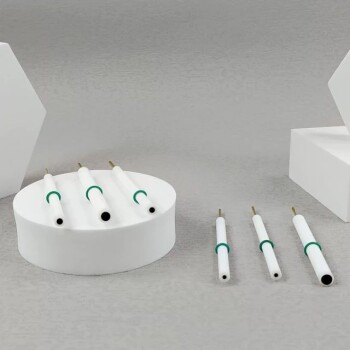
Precision in the lab starts with the right tools. KINTEK specializes in high-performance laboratory equipment, offering a premium selection of glassy carbon electrodes, electrolytic cells, and electrodes designed for high-sensitivity material characterization.
Beyond electrochemistry, our comprehensive portfolio includes high-temperature furnaces, hydraulic presses, and advanced cooling solutions to support your entire research workflow. Whether you are optimizing graphitic carbon nitride catalysts or developing next-gen battery technologies, KINTEK provides the reliability and precision you need to achieve repeatable, publication-quality results.
Contact KINTEK Today to explore our full range of consumables and equipment tailored to your specific application!
References
- Ganesh Kesavan, Alexander Star. Optimizing dicyandiamide pretreatment conditions for enhanced structure and electronic properties of polymeric graphitic carbon nitride. DOI: 10.1039/d3tc02412a
This article is also based on technical information from Kintek Solution Knowledge Base .
Related Products
- Glassy Carbon Electrochemical Electrode
- Glassy Carbon Sheet RVC for Electrochemical Experiments
- Conductive Carbon Cloth Carbon Paper Carbon Felt for Electrodes and Batteries
- Copper Sulfate Reference Electrode for Laboratory Use
- Graphite Disc Rod and Sheet Electrode Electrochemical Graphite Electrode
People Also Ask
- How do the glassy carbon electrode, SCE, and graphite rod work together in an enzymatic fuel cell? Optimize EFC Testing
- Why is glassy carbon selected for mediator-assisted indirect oxidation of glycerol? The Key to Unbiased Research
- What are the functions of a glassy carbon electrode in CV testing of antioxidants? Enhance Your Redox Analysis Accuracy
- What characteristics make glassy carbon electrodes suitable as anodes? Ideal for Pure Molten Salt Electrolysis
- What are the primary physicochemical reasons for selecting a carbon electrode as the anode in aluminum recovery? 5 Keys