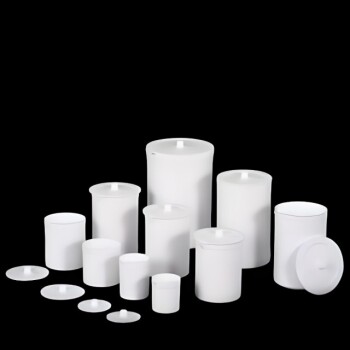
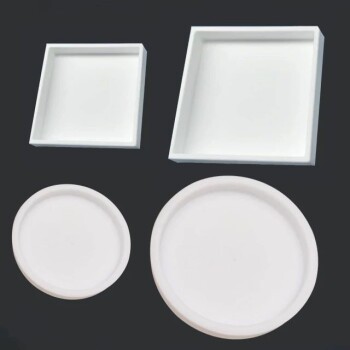
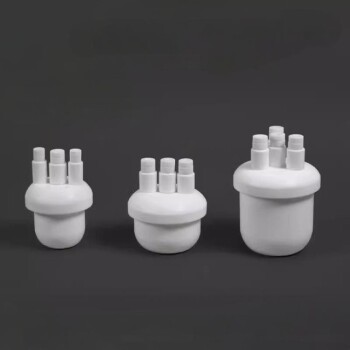
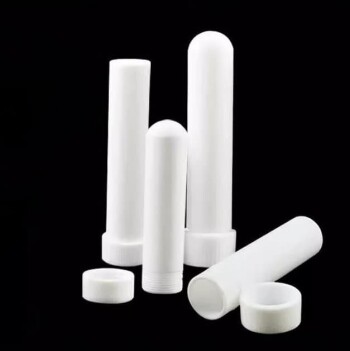
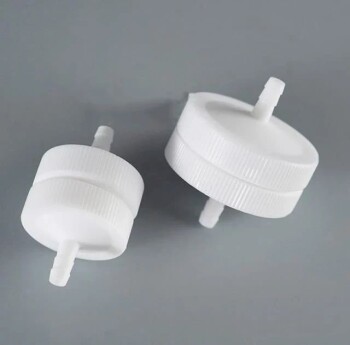
The use of a PTFE liner is indispensable because it serves as a chemically inert barrier between the corrosive synthesis environment and the metal reactor body. It protects the stainless steel autoclave from aggressive electrolytes and organic solvents while preventing metal ions from contaminating the $\text{Fe}_3\text{O}_4$ product. This dual-action protection ensures both the structural integrity of the equipment and the chemical purity of the synthesized nanoparticles.
A PTFE liner is a critical safety and purity component that prevents chemical corrosion of the reactor vessel while facilitating the high-pressure conditions necessary for solvothermal crystal growth. Without it, the reaction would likely fail due to equipment degradation or material contamination.
Chemical Protection and Corrosion Resistance
Shielding Against Aggressive Electrolytes
The synthesis of $\text{Fe}_3\text{O}_4$ often involves strong electrolytes and organic solvents that become highly reactive under pressure. PTFE (polytetrafluoroethylene) provides exceptional chemical resistance, preventing these substances from attacking the reactor walls.
Preserving the Structural Integrity of the Reactor
High-pressure reactors are typically constructed from stainless steel, which is susceptible to pitting and stress corrosion. The liner ensures that the reaction liquid never makes direct contact with the steel, extending the lifespan of the equipment.
Withstanding Subcritical Solvent Conditions
In solvothermal synthesis, solvents are heated above their normal boiling points, significantly increasing their solubility and reactivity. The chemical inertness of PTFE ensures the liner itself does not degrade or react when exposed to these aggressive subcritical fluids.
Ensuring Product Purity and Experimental Accuracy
Elimination of Metal Ion Leaching
If the reaction solution directly contacts the stainless steel body, metal ions like chromium or nickel can leach into the mixture. This contamination can alter the magnetic properties and crystal structure of the $\text{Fe}_3\text{O}_4$ nanoparticles.
Maintaining a Sterile Reaction Environment
PTFE prevents the introduction of impurities that could act as unintended catalysts or nucleating agents. This allows for precise control over the chemical stoichiometric ratio and the production of uniform nanometer-scale powders.
Consistency in Long-Duration Reactions
$\text{Fe}_3\text{O}_4$ synthesis often requires extended reaction times to achieve desired crystallinity. The stability of PTFE ensures that the environment remains constant from the beginning to the end of the process.
Maintaining the Solvothermal Environment
Facilitating Autogenous Pressure
The PTFE liner, often combined with a matching seal, helps maintain a gas-tight environment within the autoclave. This allows for the generation of autogenous pressure, which is the primary driver for the nucleation and growth of magnetite crystals.
Thermal Stability and Heat Transfer
PTFE remains stable at the common synthesis temperatures of 160°C to 200°C. It allows for consistent heat distribution throughout the sample, ensuring that the crystallization process occurs uniformly.
Preventing Solvent Leakage
Exceptional sealing properties prevent organic solvents like ethanol or ethylene glycol from escaping as vapors. This maintains the stability of the reaction system and ensures that the internal pressure remains at the required levels.
Understanding the Trade-offs and Limitations
Temperature Ceilings
While PTFE is stable at common synthesis temperatures, it has a strict upper limit, typically around 250°C. Exceeding this temperature can cause the liner to soften, deform, or release toxic fluorinated vapors.
Differences in Thermal Expansion
PTFE has a much higher coefficient of thermal expansion than the stainless steel surrounding it. Rapid heating or cooling can cause the liner to warp or crack, potentially leading to a breach of the seal.
Pressure Limitations
The liner provides chemical protection, but it does not provide structural strength. Users must ensure the outer steel vessel is rated for the pressures generated by the specific solvent and temperature used in the synthesis.
How to Apply This to Your Project
Recommendations for Safe and Effective Synthesis
- If your primary focus is product purity: Always inspect the PTFE liner for staining or scratches before use to ensure no residual contaminants from previous experiments are present.
- If your primary focus is equipment longevity: Never use the reactor without the liner, as the combination of high heat and electrolytes will cause rapid, irreversible damage to the stainless steel threads and walls.
- If your primary focus is experimental safety: Ensure the filling ratio of the liner (typically 60-80%) is strictly followed to prevent over-pressurization during the heating cycle.
Using a PTFE liner is the most effective way to balance the aggressive chemistry of magnetite synthesis with the need for high-purity results and laboratory safety.
Summary Table:
| Feature | Function in Fe3O4 Synthesis | Key Benefit |
|---|---|---|
| Chemical Inertness | Acts as a barrier against aggressive electrolytes | Prevents reactor corrosion and pitting |
| Contamination Control | Eliminates metal ion leaching from stainless steel | Ensures high purity of magnetic nanoparticles |
| Sealing Capability | Facilitates autogenous pressure generation | Enables consistent solvothermal crystal growth |
| Thermal Stability | Maintains integrity up to 250°C | Uniform heat distribution for stoichiometric control |
| Safety Protection | Contains reactive subcritical solvents | Extends reactor lifespan and ensures lab safety |
Elevate Your Nanoparticle Research with KINTEK
Precision and purity are the cornerstones of successful material synthesis. KINTEK specializes in high-performance laboratory equipment tailored for advanced research. Our robust high-temperature high-pressure reactors and autoclaves, equipped with premium PTFE liners and ceramic crucibles, provide the perfect environment for consistent $\text{Fe}_3\text{O}_4$ solvothermal synthesis.
Beyond reactors, we offer a comprehensive suite of tools, including:
- Crushing, milling, and sieving systems for post-synthesis processing.
- Hydraulic presses for pellet preparation.
- Cooling solutions like ULT freezers and freeze dryers.
- Advanced furnace systems (CVD, PECVD, Vacuum) for high-temperature treatments.
Ensure the longevity of your equipment and the integrity of your results. Contact us today to find the ideal reactor solution for your lab!
References
- Congcong Lu, Maiyong Zhu. Construction of Fe3O4@Fe2P Heterostructures as Electrode Materials for Supercapacitors. DOI: 10.3390/batteries9060326
This article is also based on technical information from Kintek Solution Knowledge Base .
Related Products
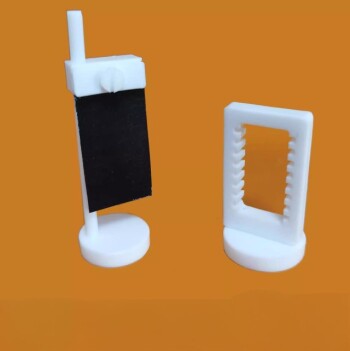
- Custom PTFE Teflon Parts Manufacturer for Hydrothermal Synthesis Reactor Polytetrafluoroethylene Carbon Paper and Carbon Cloth Nano-growth
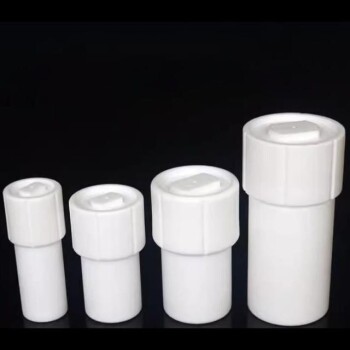
- Custom PTFE Teflon Parts Manufacturer for Reagent Wide Mouth Fine Mouth Sample High Temperature Bottles
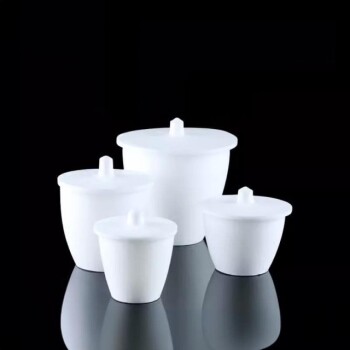
- Custom Machined and Molded PTFE Teflon Parts Manufacturer with PTFE Crucible and Lid
- Stainless High Pressure Autoclave Reactor Laboratory Pressure Reactor
- Custom PTFE Teflon Parts Manufacturer for Microwave Digestion Tank
People Also Ask
- What is the function of a PTFE reactor in MXene etching? Ensure Safe, High-Purity MAX Phase Conversion
- Why is a PTFE reactor required for titanium-based nano-ceramic coating solutions? Ensure Chemical Inertness & Purity
- Why must a Polytetrafluoroethylene (PTFE) reactor be used for Ti3C2TX MXene etching? Ensure Safety and Purity
- Why are PTFE reactors preferred for silver phosphate glass testing? Ensure Purity and Kinetic Accuracy
- What are the advantages of using polytetrafluoroethylene (PTFE) liners in hydrothermal synthesis reactors? High Purity