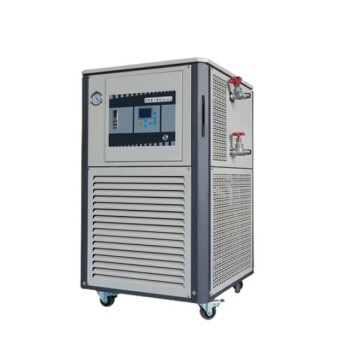
A hydrothermal synthesis reactor is strictly required to generate the specific combination of elevated temperature and autogenous pressure that molecular sieve precursors cannot encounter in open systems. By sealing the reaction mixture, the reactor allows solvents to exceed their boiling points, creating a unique physicochemical environment where silicate and aluminate components dissolve, become highly reactive, and undergo the complex polycondensation necessary for crystal growth.
The reactor functions not just as a vessel, but as a catalyst for structural organization. It forces reactants into a subcritical state where template agents can effectively guide the assembly of precise, uniform pore structures that define the material's performance.
The Mechanics of the Reactor Environment
Achieving Autogenous Pressure
The fundamental role of the reactor is to create autogenous pressure. When the sealed vessel is heated—typically between 45°C and 100°C for standard syntheses, though sometimes higher—the solvent vaporizes but cannot escape.
This builds internal pressure naturally (autogenously) without external compressors. This pressure is the critical variable that drives the reaction kinetics forward.
Altering Solvent Properties
Under these hydrothermal conditions, the physical properties of the solvent (usually water or alcohol) change drastically. Viscosity decreases, and the ability to dissolve inorganic precursors increases significantly.
This enables the dissolution of silicon, aluminum, and metal sources that are ordinarily insoluble or inert. Once dissolved, these materials can re-condense in a controlled manner to form the desired molecular framework.
Guiding Structural Formation
Facilitating Polycondensation
The reactor environment is essential for the polycondensation reaction. This is the chemical process where silicate components link together to form extended networks.
Without the sustained heat and pressure of the reactor, these reactions would either not occur or would result in amorphous, disordered solids rather than crystalline structures.
The Role of Template Agents
Inside the reactor, "template agents" act as molds for the growing crystal. The high-pressure environment forces the silicate and aluminate species to wrap around these templates.
This guided assembly ensures the final material has a specific, repeatable pore structure. This determines the molecular sieve's ability to filter or adsorb specific molecules later in its lifecycle.
Dynamic Control for Membranes
For specific applications like molecular sieve membranes, the reactor setup often includes rotating blades or dynamic stirring mechanisms.
This mechanical agitation is crucial for preventing sedimentation. It promotes uniform nucleation, ensuring that the crystal layer grows continuously and evenly across the surface of porous supports, such as alumina.
Understanding the Trade-offs
Sensitivity to Process Parameters
While the reactor enables precise control, the process is highly sensitive. Slight deviations in the reactor's temperature or pressure can lead to the formation of unwanted phases or impurities.
You must maintain strict regulation of the thermal profile. If the pressure drops or the temperature fluctuates, the crystallinity and grain size will vary, potentially ruining the batch.
Equipment and Safety Constraints
Operating a hydrothermal reactor introduces safety complexities regarding high-pressure vessels. The equipment requires robust sealing mechanisms and safety valves to handle the autogenous pressure generated by solvents.
Furthermore, the "sealed" nature of the batch process limits the ability to adjust reactant concentrations mid-reaction. Once the reactor is closed and heated, the chemistry is committed until the cycle is complete.
Making the Right Choice for Your Goal
The type of hydrothermal configuration you utilize should be dictated by the specific morphology you require from the precursor.
- If your primary focus is synthesizing uniform membranes: Prioritize reactors equipped with dynamic stirring or rotating blades to ensure even coverage on supports.
- If your primary focus is crystal purity and specific pore architecture: Focus on reactors with high-precision temperature control to maintain the exact solvothermal conditions required for the template to function.
- If your primary focus is novel material discovery: Ensure your reactor is rated for pressures well above your target operating range to allow for safe experimentation with higher temperatures and different solvents.
The hydrothermal reactor is the gateway to controlling matter at the molecular level, turning inert powders into highly structured, functional materials.
Summary Table:
| Feature | Role in Molecular Sieve Synthesis |
|---|---|
| Autogenous Pressure | Drives reaction kinetics and forces precursors into a subcritical state. |
| High Temperature | Exceeds solvent boiling points to dissolve inert silicate and aluminate sources. |
| Polycondensation | Facilitates the chemical linking of components into crystalline networks. |
| Template Guidance | Ensures species wrap around mold agents for uniform, repeatable pore sizes. |
| Dynamic Stirring | Prevents sedimentation and promotes uniform nucleation for membrane growth. |
Elevate Your Material Research with KINTEK Precision
Unlock the full potential of your molecular sieve synthesis with KINTEK’s advanced laboratory solutions. We specialize in high-performance hydrothermal synthesis reactors and autoclaves designed to maintain the rigorous temperature and pressure profiles your research demands.
From high-temperature furnaces and CVD systems to our specialized crushing, milling, and hydraulic press equipment, KINTEK provides the comprehensive tools needed for superior crystal purity and structural control. Our expert-grade laboratory equipment ensures safety, precision, and repeatability for the most demanding material discoveries.
Ready to optimize your synthesis process? Contact us today to find the perfect reactor for your lab!
References
- Honda Wu. Particulate and membrane molecular sieves prepared to adsorb carbon dioxide in packed and staggered adsorber. DOI: 10.2298/ciceq170821007w
This article is also based on technical information from Kintek Solution Knowledge Base .
Related Products
- High Pressure Laboratory Autoclave Reactor for Hydrothermal Synthesis
- Custom PTFE Teflon Parts Manufacturer for Hydrothermal Synthesis Reactor Polytetrafluoroethylene Carbon Paper and Carbon Cloth Nano-growth
- Customizable Laboratory High Temperature High Pressure Reactors for Diverse Scientific Applications
- Electric Rotary Kiln Small Rotary Furnace Biomass Pyrolysis Plant
- Mini SS High Pressure Autoclave Reactor for Laboratory Use
People Also Ask
- What role does a high-pressure reactor (autoclave) play in the synthesis of NiCuFe-LDH? Master Hydrothermal Growth
- What Role Does a High-Pressure Reactor or Autoclave Play in HA Catalyst Synthesis? Achieve High Surface Area Materials
- What equipment is required for hydrothermal synthesis of Ga0.25Zn4.67S5.08? Optimize Your Semiconductor Production
- What is the function of a high-pressure reactor in the hydrothermal synthesis of boehmite? Expert Process Insights
- What role does an autoclave play in the synthesis of MnO2 nanofibers? Mastering Hydrothermal Growth