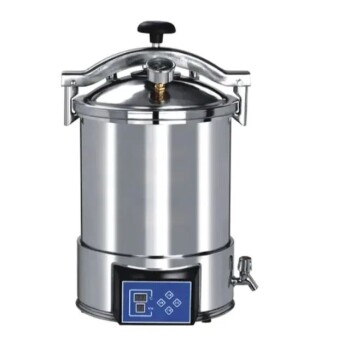
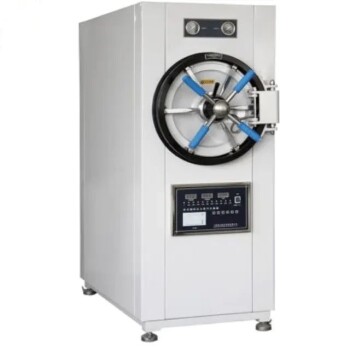
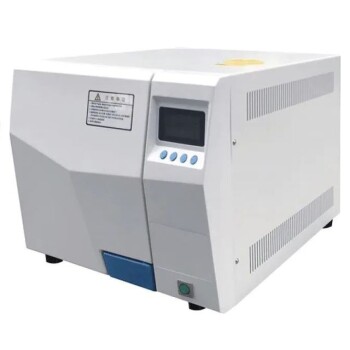
The high-pressure hydrothermal autoclave acts as the primary catalyst for structural engineering in the synthesis of Cerium-doped magnesium-aluminum layered double hydroxides (MgAlCe-LDH). It creates a closed, constant-temperature environment at 140 °C, which is essential for driving the controlled hydrolysis and co-precipitation crystallization of metal cations.
The autoclave’s high-pressure environment is not merely for heating; it is the specific mechanism that forces Cerium ions to effectively replace Aluminum ions within the lattice, ensuring the material achieves its necessary hexagonal plate morphology.
The Mechanics of Hydrothermal Synthesis
Creating the Ideal Reaction Environment
The fundamental role of the autoclave is to establish and maintain a closed system.
By sealing the reactants and maintaining a constant temperature of 140 °C, the device generates high pressure. This environment facilitates the controlled hydrolysis of the metal cations, a process that would be difficult to regulate in an open or low-pressure setup.
Enabling Ionic Substitution
For MgAlCe-LDH to function correctly, Cerium must integrate into the crystal structure.
The hydrothermal conditions created by the autoclave enable Cerium ions to effectively replace a portion of the Aluminum ions. This substitution is critical for the chemical composition of the final layered double hydroxide.
Determining Crystal Morphology
Beyond chemical composition, the physical shape of the material is dictated by the autoclave's environment.
The steady high-pressure and thermal conditions ensure complete crystal development. This results in the formation of a regular hexagonal plate morphology, preventing the creation of irregular or amorphous structures.
Critical Process Requirements
The Necessity of a Closed System
The reference highlights that this process relies on a closed system.
Unlike open-air synthesis, this method does not allow for the addition or removal of reagents once the process begins. The pressure required to drive the co-precipitation crystallization is generated internally and relies on the vessel remaining sealed.
Temperature Precision
The process is specifically calibrated to 140 °C.
Deviating from this specific thermal set-point could disrupt the hydrolysis rate. Without this precise thermal energy within the pressurized vessel, the effective replacement of Aluminum by Cerium may be compromised.
Making the Right Choice for Your Goal
To ensure the successful synthesis of MgAlCe-LDH, align your process parameters with the following objectives:
- If your primary focus is Chemical Doping: Ensure the autoclave remains a fully closed system to generate the pressure required for Cerium to substitute Aluminum ions.
- If your primary focus is Crystal Structure: Maintain the temperature strictly at 140 °C to guarantee the formation of regular hexagonal plates and complete crystal development.
The autoclave provides the indispensable thermodynamic conditions required to transform a simple mixture of cations into a structured, doped layered double hydroxide.
Summary Table:
| Parameter | Role in Synthesis | Impact on MgAlCe-LDH |
|---|---|---|
| Environment | Closed System (Pressurized) | Drives controlled hydrolysis and co-precipitation crystallization. |
| Temperature | Constant 140 °C | Ensures complete crystal development and uniform growth rate. |
| Mechanism | Ionic Substitution | Facilitates the replacement of Aluminum ions with Cerium ions in the lattice. |
| Morphology | Structural Engineering | Guarantees the formation of a regular hexagonal plate structure. |
Elevate Your Advanced Material Synthesis with KINTEK
Precision is non-negotiable when synthesizing complex materials like MgAlCe-LDH. KINTEK specializes in high-performance laboratory equipment, offering a premium range of high-temperature high-pressure reactors and autoclaves designed to maintain the rigorous thermodynamic conditions your research demands.
Whether you are working on chemical doping, crystal engineering, or battery research, our solutions—including muffle furnaces, crushing systems, and specialized electrolytic cells—provide the reliability needed for reproducible results.
Ready to optimize your laboratory's capabilities? Contact us today to find the perfect equipment for your application and experience the KINTEK advantage in precision engineering.
References
- Yanan Li, Qi Wang. Study on Preparation and Flame-Retardant Mechanism of Cerium-Doped Mg-Al Hydrotalcite. DOI: 10.3390/coatings15010068
This article is also based on technical information from Kintek Solution Knowledge Base .
Related Products
- High Pressure Laboratory Autoclave Reactor for Hydrothermal Synthesis
- Mini SS High Pressure Autoclave Reactor for Laboratory Use
- Stainless High Pressure Autoclave Reactor Laboratory Pressure Reactor
- Customizable High Pressure Reactors for Advanced Scientific and Industrial Applications
- Laboratory High Pressure Horizontal Autoclave Steam Sterilizer for Lab Use
People Also Ask
- What role does a high-pressure reactor (autoclave) play in the synthesis of NiCuFe-LDH? Master Hydrothermal Growth
- What Role Does a High-Pressure Reactor or Autoclave Play in HA Catalyst Synthesis? Achieve High Surface Area Materials
- What equipment is required for hydrothermal synthesis of Ga0.25Zn4.67S5.08? Optimize Your Semiconductor Production
- What is the function of a high-pressure reactor in the hydrothermal synthesis of boehmite? Expert Process Insights
- What role does an autoclave play in the synthesis of MnO2 nanofibers? Mastering Hydrothermal Growth