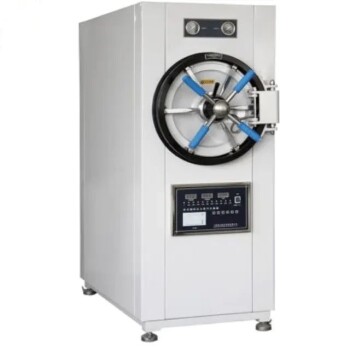
The Teflon-lined stainless steel autoclave functions as a high-pressure, corrosion-resistant reactor that enables the one-step synthesis of rGO/TiO2 nanocomposites. By creating a sealed environment, it allows solvents to reach temperatures and pressures well above their atmospheric limits, facilitating the simultaneous chemical reduction of graphene oxide (GO) and the crystallization of titanium dioxide (TiO2).
Core Insight: The autoclave’s dual-layer design is essential for material purity. The stainless steel shell contains the immense pressure required to drive the reaction, while the inner Teflon lining creates a chemically inert barrier that prevents metallic contamination during the sensitive formation of semiconductor heterostructures.
Creating the Hydrothermal Environment
Elevating Reaction Parameters
The primary function of the autoclave is to maintain a sealed, high-pressure system. In the synthesis of rGO/TiO2, the reactor allows the internal temperature to reach levels (such as 120°C) where solvents would normally boil away.
Increasing Precursor Solubility
Because the vessel is sealed, the pressure increases as the temperature rises. This high-pressure environment significantly enhances the solubility of precursors. It forces reactants into contact that might remain separated under standard atmospheric conditions.
The Critical Role of the Teflon Lining
Ensuring Chemical Inertness
Hydrothermal synthesis often involves strong acids, bases, or reactive ions that can corrode standard metals. The Teflon (PTFE) lining acts as a protective shield.
Preventing Sample Contamination
If the reaction mixture touched the stainless steel shell, iron or nickel ions could leach into your nanocomposite. The Teflon lining ensures that the rGO/TiO2 structures remain pure, maintaining the specific electronic properties required for efficient charge transfer.
Facilitating Nanocomposite Formation
Simultaneous Reduction and Integration
The autoclave enables a "one-step" process. The thermodynamic conditions inside the vessel drive the reduction of graphene oxide (GO) into reduced graphene oxide (rGO).
Anchoring TiO2 Particles
Simultaneously, these conditions promote the crystallization of TiO2. The pressurized environment forces the TiO2 particles to integrate directly onto the surface of the rGO sheets.
Forming Efficient Heterostructures
This intimate contact creates a stable interface (heterojunction). This structure is vital for applications like photocatalysis because it ensures efficient charge transfer between the TiO2 and the conductive rGO network.
Understanding the Trade-offs
Temperature Limitations of Teflon
While Teflon is chemically robust, it is thermally sensitive. It typically softens or deforms at temperatures exceeding 200°C to 250°C. For rGO/TiO2 synthesis at 120°C, this is well within safety limits, but higher-temperature protocols may require alternative liners (like PPL).
Safety Risks of High Pressure
The sealed nature of the vessel turns it into a pressure bomb if mishandled. Calculating the filling factor (usually 60-80% of volume) is critical to prevent dangerous over-pressurization as the liquid expands.
Making the Right Choice for Your Project
To ensure the success of your nanocomposite synthesis, consider the following specific goals:
- If your primary focus is high-purity electronic properties: Ensure your Teflon liner is free of scratches or defects to prevent metallic leaching from the outer shell.
- If your primary focus is crystal morphology control: precise control of the autoclave temperature (e.g., holding strictly at 120°C) is the main lever for dictating the size and shape of the TiO2 particles on the rGO sheets.
The autoclave is not just a container; it is the thermodynamic tool that forces disparate materials to bond into a unified, high-performance functional composite.
Summary Table:
| Feature | Function in rGO/TiO2 Synthesis | Benefit to Nanocomposite |
|---|---|---|
| Stainless Steel Shell | Maintains high-pressure containment | Allows reaction above solvent boiling points |
| Teflon (PTFE) Lining | Provides a chemically inert barrier | Prevents metallic contamination and leaching |
| Sealed Environment | Increases precursor solubility | Facilitates simultaneous reduction and crystallization |
| Thermal Control | Regulates reaction temperature (e.g., 120°C) | Dictates TiO2 particle size and rGO integration |
Elevate Your Material Research with KINTEK Precision
Achieving the perfect heterojunction in rGO/TiO2 nanocomposites requires uncompromising equipment reliability. KINTEK specializes in high-performance laboratory solutions, providing the industry-leading high-temperature high-pressure reactors and autoclaves essential for sensitive hydrothermal synthesis.
Our Teflon-lined reactors ensure maximum chemical purity and pressure safety for your most critical experiments. Beyond autoclaves, we offer a comprehensive range of crushing and milling systems, furnaces, and PTFE consumables designed for advanced materials science.
Ready to optimize your synthesis results? Contact our technical experts today to find the perfect reactor configuration for your laboratory needs.
References
- Fengna Dai, Youhai Yu. Preparation and Characterization of Reduced Graphene Oxide /TiO2 Blended Polyphenylene sulfone Antifouling Composite Membrane With Improved Photocatalytic Degradation Performance. DOI: 10.3389/fchem.2021.753741
This article is also based on technical information from Kintek Solution Knowledge Base .
Related Products
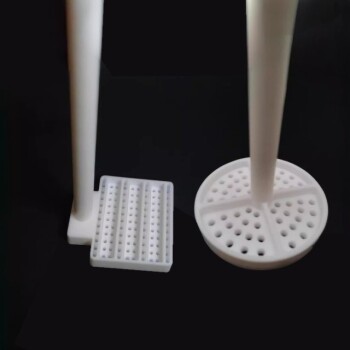
- Custom PTFE Teflon Parts Manufacturer Corrosion Resistant Cleaning Rack Flower Basket
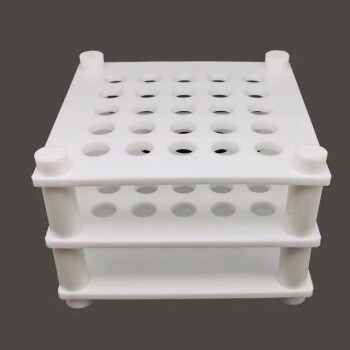
- Custom PTFE Teflon Parts Manufacturer for Centrifuge Tube Racks
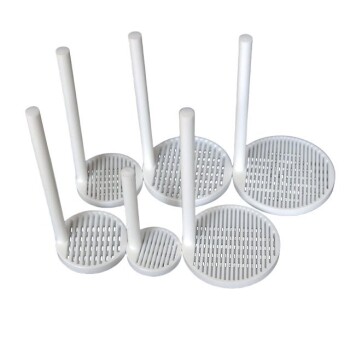
- Custom PTFE Teflon Parts Manufacturer for Cleaning Racks
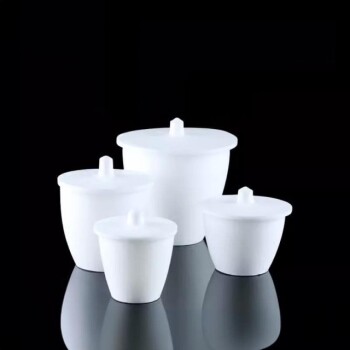
- Custom Machined and Molded PTFE Teflon Parts Manufacturer with PTFE Crucible and Lid
- Custom Machined and Molded PTFE Teflon Parts Manufacturer for Laboratory ITO FTO Conductive Glass Cleaning Flower Basket
People Also Ask
- What is the maximum operating temperature for a PTFE cleaning basket? Avoid Catastrophic Failure at 260°C
- How should a PTFE cleaning basket be stored when not in use? Maximize Lifespan & Prevent Contamination
- What is the correct way to place items into a PTFE cleaning basket? Master the Art of Perfect, Repeatable Cleaning
- What maintenance procedures are recommended for a PTFE cleaning basket? Extend Equipment Life & Ensure Process Purity
- How should a PTFE cleaning basket be cleaned and dried after use? Ensure Purity and Prevent Cross-Contamination