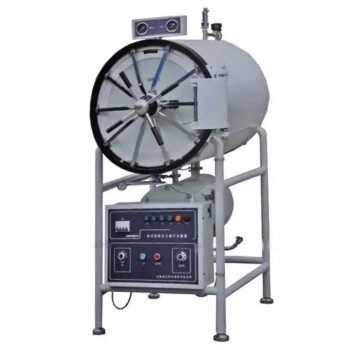
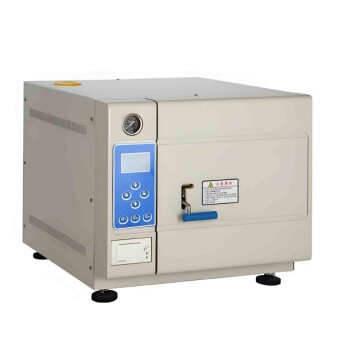
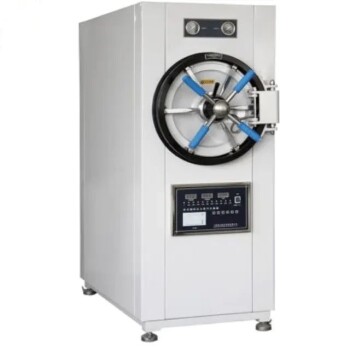
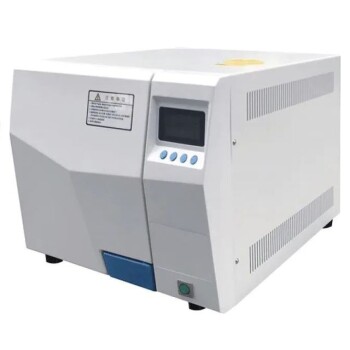
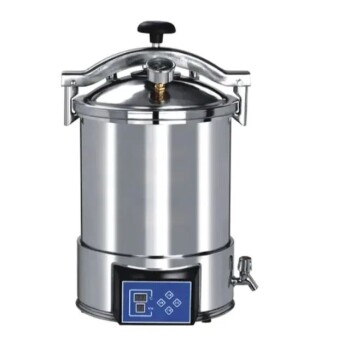
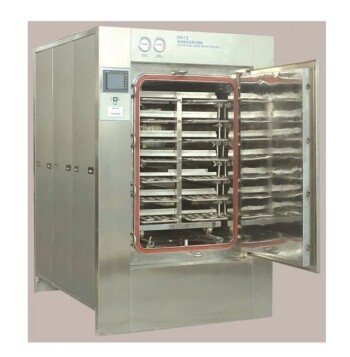
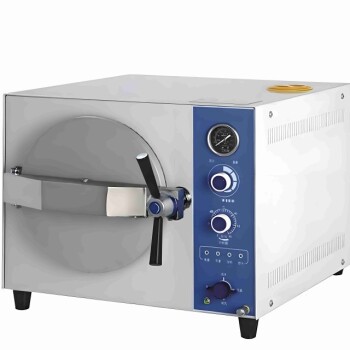
A hydrothermal reactor functions as a specialized synthesis vessel designed to generate the high-temperature and high-pressure conditions necessary for growing metal oxide shells directly onto polymer cores. By sealing the reaction environment, the autoclave forces the in-situ hydrolysis and subsequent crystallization of metal precursors onto the nanofiber surface. This results in a composite material where the shell is not merely attached, but intimately integrated with the fiber.
The reactor's critical value lies in its ability to facilitate in-situ growth, creating a chemical and physical bond between the core and shell that is significantly stronger than connections formed by simple physical deposition.
The Mechanism of In-Situ Growth
Creating the Reaction Environment
The autoclave creates a closed system that allows water (or solvent) to exceed its normal boiling point, generating high pressure.
This extreme environment increases the solubility of reactants and accelerates chemical kinetics that would be impossible at standard room conditions.
Hydrolysis and Crystallization
Under these conditions, metal precursors dissolved in the solution undergo hydrolysis.
Instead of precipitating randomly in the solution, the high pressure drives these precursors to crystallize directly onto the surface of the polymer nanofibers.
Formation of the Core-Shell Structure
This direct crystallization builds a uniform layer around the fiber, creating the defining "core-shell" architecture.
The result is a "tightly wrapped" metal oxide layer that completely encapsulates the polymer core.
Achieving Superior Structural Integrity
Stronger Interfacial Interactions
The primary advantage of using a hydrothermal reactor is the strength of the interface between the polymer and the metal oxide.
Because the crystals grow directly on the fiber surface (in-situ), the adhesion is far superior to methods that rely on physical deposition or coating after the fact.
Enhanced Durability
This strong interaction ensures that the composite membrane remains stable during use.
The tightly wrapped structure prevents the shell from peeling or detaching, maintaining performance over multiple cycles of operation.
Enhancing Photocatalytic Performance
Improved Charge Carrier Separation
The close contact between the polymer core and the metal oxide shell is critical for photocatalytic applications.
A tight interface facilitates the efficient transfer of electrons and holes, enhancing the separation efficiency of charge carriers.
Operational Efficiency
Better charge separation directly translates to higher reactivity in the final material.
The hydrothermal process ensures that the structural conditions required for this high-level electronic performance are met.
Understanding the Trade-offs
Thermal Constraints of the Polymer
While the reactor enables strong crystallization, the high temperatures required can pose a risk to the polymer core.
You must ensure the polymer nanofibers possess enough thermal stability to withstand the hydrothermal conditions without melting or degrading.
Process Visibility
The autoclave is a closed "black box" system, meaning you cannot observe the reaction as it happens.
This requires precise control over precursor concentrations and reaction times to prevent over-growth or agglomeration without visual feedback.
Making the Right Choice for Your Goal
When deciding whether to employ a hydrothermal reactor for your composite membranes, consider your specific performance targets.
- If your primary focus is mechanical longevity: Use this method to ensure the shell remains intact during repeated recycling and handling.
- If your primary focus is photocatalytic efficiency: Rely on this technique to minimize interfacial resistance and maximize charge carrier separation.
By leveraging the high-pressure environment of the autoclave, you move beyond simple mixtures to create a truly integrated composite material.
Summary Table:
| Feature | Role in Core-Shell Synthesis |
|---|---|
| Environment | Generates high-temperature and high-pressure conditions |
| Process | Facilitates in-situ hydrolysis and crystallization |
| Adhesion | Creates strong chemical/physical bonds (not simple coating) |
| Benefit | Ensures structural integrity and enhanced charge carrier separation |
| Structure | Uniform encapsulation of polymer core by metal oxide shell |
Elevate Your Materials Synthesis with KINTEK
Are you looking to achieve superior structural integrity and photocatalytic performance in your composite membranes? KINTEK specializes in providing high-performance laboratory equipment designed for the most demanding research.
Our premium range of high-temperature high-pressure reactors and autoclaves is specifically engineered to facilitate precise in-situ growth for core-shell architectures. Whether you are developing advanced polymer-metal oxide composites or exploring battery research, our comprehensive portfolio—including high-temperature furnaces, crushing systems, and specialized consumables like PTFE and ceramics—ensures your lab has the tools to succeed.
Ready to optimize your synthesis process? Contact our technical experts today to find the perfect hydrothermal solution for your target applications!
References
- Senuri Kumarage, Nilwala Kottegoda. Application of Metal/Metal Oxide Doped Electrospun Nanofiber Membranes in Sustainable Catalysis. DOI: 10.31357/vjs.v25i01.5922
This article is also based on technical information from Kintek Solution Knowledge Base .
Related Products
- High Pressure Laboratory Autoclave Reactor for Hydrothermal Synthesis
- Stainless High Pressure Autoclave Reactor Laboratory Pressure Reactor
- Customizable High Pressure Reactors for Advanced Scientific and Industrial Applications
- Mini SS High Pressure Autoclave Reactor for Laboratory Use
- Customizable Laboratory High Temperature High Pressure Reactors for Diverse Scientific Applications
People Also Ask
- What role does a high-pressure reactor (autoclave) play in the synthesis of NiCuFe-LDH? Master Hydrothermal Growth
- What Role Does a High-Pressure Reactor or Autoclave Play in HA Catalyst Synthesis? Achieve High Surface Area Materials
- What equipment is required for hydrothermal synthesis of Ga0.25Zn4.67S5.08? Optimize Your Semiconductor Production
- What is the function of a high-pressure reactor in the hydrothermal synthesis of boehmite? Expert Process Insights
- What role does an autoclave play in the synthesis of MnO2 nanofibers? Mastering Hydrothermal Growth