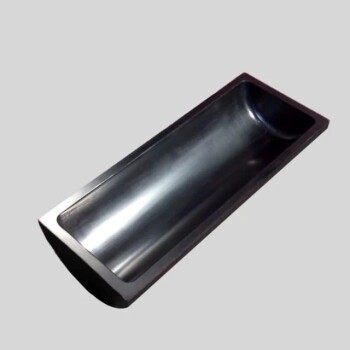
The specific advantages of using quartz reaction vessels in laboratory-scale supercritical water experiments are their superior chemical inertness and optical transparency. Unlike standard metallic vessels, quartz allows researchers to eliminate wall effects while maintaining the ability to visually monitor the reaction in real-time.
Quartz vessels act as a neutral observer, ensuring that the data you collect reflects the true chemistry of the fluid rather than the catalytic influence of the reactor walls.
Ensuring Chemical Accuracy
Minimizing Catalytic Interference
In many high-pressure experiments, the reactor vessel itself can become an unintended variable. Metallic reactor walls often act as catalysts, accelerating or altering the reaction pathways.
Quartz significantly mitigates this issue due to its chemical inertness. By using quartz, you ensure that the reaction rates and products observed are intrinsic to the supercritical fluid and the reactants, rather than artifacts of the container material.
Preserving Data Integrity
For fundamental research, isolating the reaction is critical. The inert nature of quartz minimizes contamination and side reactions.
This makes quartz vessels particularly valuable when establishing baseline kinetic data, where even slight catalytic effects from metal alloys could skew the results.
Leveraging Visual Data
In-Situ Observation of Phase Changes
One of the defining challenges of supercritical water research is understanding phase behavior. Quartz provides the necessary transparency to see inside the reactor while it is under operation.
This allows researchers to directly observe the transition from liquid to supercritical fluid. Visual confirmation of these phase changes provides immediate verification that the target experimental conditions have been achieved.
Monitoring Reaction Processes
Beyond simple phase transitions, transparency enables the real-time observation of reaction processes.
Researchers can visually track changes in color, precipitation, or homogeneity within the fluid. This qualitative data complements quantitative measurements, offering a holistic view of the experiment that opaque metal vessels cannot provide.
Understanding the Trade-offs
The Constraint of Scale
It is important to note that these advantages are specifically highlighted for laboratory-scale batch research.
While quartz offers superior data purity for fundamental studies, its application is generally limited to smaller scales compared to the robust metallic reactors used in industrial processing.
The Cost of Opaqueness
Choosing not to use quartz involves a significant trade-off in visibility. Relying solely on metallic vessels forces you to depend entirely on external sensors (temperature and pressure) without visual validation.
This "blind" approach can mask phenomena that would be immediately obvious in a transparent quartz vessel, such as unexpected phase separation or localized precipitation.
Making the Right Choice for Your Goal
To determine if quartz is the right material for your specific experiment, consider your primary objectives:
- If your primary focus is determining accurate reaction kinetics: Choose quartz to eliminate the variable of catalytic interference from metallic walls.
- If your primary focus is studying phase behavior: Choose quartz to leverage its transparency for direct, in-situ observation of the fluid's state.
By prioritizing inertness and visibility, quartz vessels provide the clarity needed for high-precision laboratory research.
Summary Table:
| Advantage | Benefit for Research | Key Feature |
|---|---|---|
| Chemical Inertness | Prevents wall-catalyzed side reactions | Neutral surface material |
| Optical Transparency | Allows in-situ observation of phase changes | Clear quartz construction |
| Data Integrity | Ensures results reflect true fluid chemistry | Minimal contamination |
| Visual Monitoring | Tracks color changes and precipitation | Real-time qualitative data |
Elevate Your Laboratory Precision with KINTEK
Unlock the full potential of your supercritical water research with KINTEK's specialized equipment. Whether you require the high-purity chemical inertness of quartz reaction vessels or the robust durability of our high-temperature high-pressure reactors and autoclaves, we provide the tools necessary for groundbreaking discoveries.
Our extensive portfolio—ranging from muffle and vacuum furnaces to crushing systems and PTFE consumables—is designed to support researchers in achieving unparalleled data integrity.
Ready to eliminate variables and gain visual clarity in your experiments?
Contact KINTEK today to find the perfect solution for your lab.
References
- Florentina Maxim, Speranţa Tănăsescu. Functional Materials for Waste-to-Energy Processes in Supercritical Water. DOI: 10.3390/en14217399
This article is also based on technical information from Kintek Solution Knowledge Base .
Related Products
- Stainless High Pressure Autoclave Reactor Laboratory Pressure Reactor
- Customizable High Pressure Reactors for Advanced Scientific and Industrial Applications
- Visual High-Pressure Reactor for In-Situ Observation
- Laboratory Rapid Thermal Processing (RTP) Quartz Tube Furnace
- Carbon Graphite Boat -Laboratory Tube Furnace with Cover
People Also Ask
- Why is a laboratory high-pressure reactor necessary for synthesizing fly ash-based zeolite? Achieve Pure Crystallization
- Why is a laboratory high-pressure reactor used in the hydrothermal synthesis of hydroxyapatite catalysts?
- What role does a laboratory high-pressure reactor play in the leaching process of spent cathode materials? Optimize Recovery
- What conditions do laboratory high-pressure reactors provide for HTC? Optimize Your Biochar Production Processes
- How are high-pressure reactors used to prepare metaphosphate electrocatalysts? Master In-Situ Precursor Growth