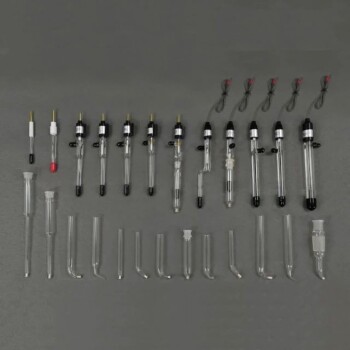
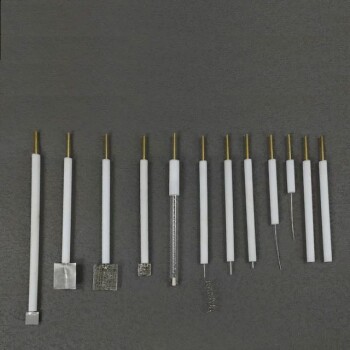
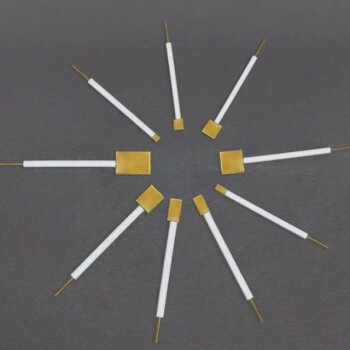
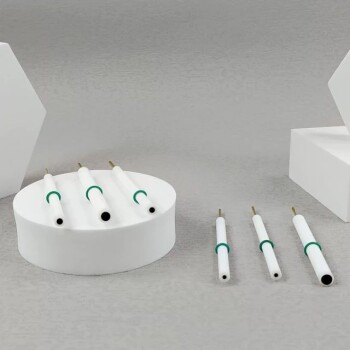
The Saturated Calomel Electrode (SCE) serves as the fundamental anchor for system stability. It is required because it provides a highly stable standard reference potential, which allows for the accurate monitoring and precise control of the working electrode’s polarization potential. This accuracy is a physical prerequisite for successfully screening and activating the specific microbial communities needed to degrade pollutants.
By providing a fixed reference point, the SCE enables the precise potential control necessary to select specific electroactive microbes, turning the system into a targeted engine for pollutant degradation.
The Mechanics of Precision Control
Establishing a Stable Baseline
In bioelectrochemical systems, the behavior of the working electrode is dynamic. To control it, you must measure its potential against a value that does not change.
The SCE is utilized specifically because it provides this highly stable standard reference potential. It acts as the immutable zero-point against which all other changes are measured and adjusted.
Enabling Accurate Polarization
The goal is to strictly control the polarization potential of the working electrode.
By positioning the SCE near the working electrode—typically integrated via a multi-channel potentiostat—you ensure that the potential applied is accurate. This setup allows for real-time monitoring and adjustment, eliminating fluctuations that could disrupt the system.
The Biological Implication
Screening Microbial Communities
The precision provided by the SCE is not just about electrical accuracy; it is about biological selection.
Specific electroactive microbial communities require distinct potential ranges to thrive. By maintaining a precise potential, you can effectively "screen" the environment, selecting only the microbes capable of performing the desired task.
Activating Pollutant Degradation
Once the correct community is selected, the potential must be maintained to drive their activity.
This precise potential control is the physical prerequisite for activating the metabolism of these microbes. When controlled correctly, this induces the efficient degradation of target pollutants.
Critical Considerations for Implementation
The Importance of Proximity
The physical placement of the SCE is as critical as the electrode itself.
As noted in standard protocols, the SCE must be positioned near the working electrode. If the distance is too great, you risk inaccurate readings that misrepresent the true polarization potential experienced by the microbes.
Equipment Integration
The SCE is a tool that requires a robust control system.
To achieve the necessary precision, the SCE is typically used in conjunction with a multi-channel potentiostat. The stability of the electrode relies on this hardware to effectively monitor and adjust the potential difference.
Optimizing Your Experimental Setup
To ensure the success of your bioelectrochemical system, focus on the relationship between your reference and working electrodes.
- If your primary focus is measurement accuracy: Ensure the SCE is positioned physically close to the working electrode to minimize resistance and ensure the monitored potential reflects reality.
- If your primary focus is biological efficiency: Use the stability of the SCE to lock in the exact polarization potential required to activate your specific target microbial community.
Precise potential control is the bridge between electrochemical theory and practical pollutant degradation.
Summary Table:
| Feature | Role in Bioelectrochemical Systems |
|---|---|
| Reference Stability | Provides an immutable zero-point for measuring working electrode potential |
| Polarization Control | Enables exact monitoring and adjustment via multi-channel potentiostats |
| Biological Selection | Precisely 'screens' and selects specific electroactive microbial communities |
| Degradation Catalyst | Acts as the physical prerequisite for activating pollutant-degrading metabolisms |
Maximize Your Research Precision with KINTEK
Ensure the stability of your bioelectrochemical experiments with high-performance reference electrodes and measurement tools from KINTEK. Whether you are screening microbial communities or optimizing pollutant degradation, our comprehensive portfolio—ranging from electrolytic cells and electrodes to potentiostat-compatible accessories and advanced ceramic consumables—provides the accuracy your lab demands.
Ready to elevate your electrochemical control? Contact our technical experts today to discover how KINTEK’s specialized laboratory equipment can drive your breakthrough results.
References
- Nesrine Saidi, Habib Chouchane. Enhanced bioelectrochemical degradation of Thiabendazole using biostimulated Tunisian hypersaline sediments: kinetics, efficiency, and microbial community shifts. DOI: 10.3389/fmicb.2024.1529841
This article is also based on technical information from Kintek Solution Knowledge Base .
Related Products
- Reference Electrode Calomel Silver Chloride Mercury Sulfate for Laboratory Use
- Copper Sulfate Reference Electrode for Laboratory Use
- Gold Disc Electrode
- Platinum Sheet Electrode for Laboratory and Industrial Applications
- Platinum Auxiliary Electrode for Laboratory Use
People Also Ask
- What is the function of a reference electrode? Master Precision in Three-Electrode Reactor Reconstruction
- What is the recommended maintenance for the filling solution of a reference electrode? A Guide to Stable & Accurate Readings
- Which electrode is used as a ground reference? Master the Key to Accurate Electrochemical Measurements
- What is the reference electrode in potentiometry? The Key to Stable & Accurate Measurements
- Which electrode is used as a reference? A Guide to Accurate Electrochemical Measurements