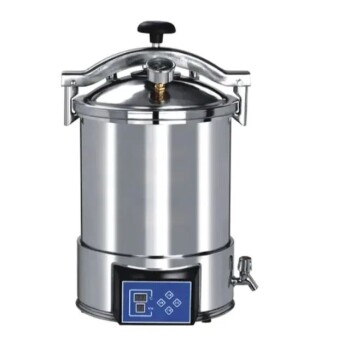
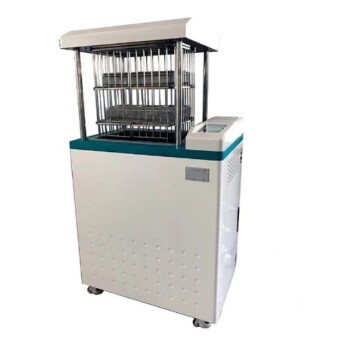
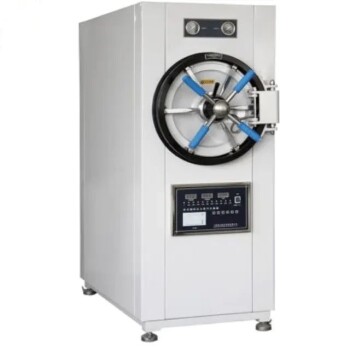
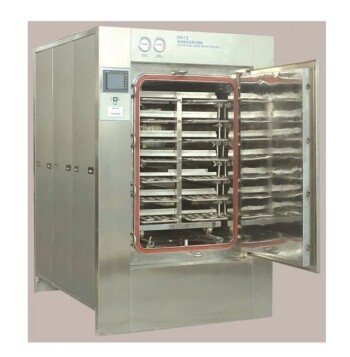
The autoclave serves as a critical environmental simulator. It is strictly required to replicate the extreme high-temperature and high-pressure hydrogen conditions that 5Cr-0.5Mo steel equipment faces during active service. By creating this controlled environment, engineers can rigorously test the durability of the bond between the base metal and the protective cladding.
By facilitating high-pressure hydrogen charging followed by rapid decompression, the autoclave exposes the material interface to the exact stresses that cause failure. This validates the integrity of the cladding bond and ensures the equipment can withstand long-term exposure without dangerous disbonding.
Simulating Hostile Service Environments
Replicating Extreme Parameters
5Cr-0.5Mo steel is frequently employed in heavy industrial applications involving intense heat and pressure.
The autoclave allows researchers to recreate these specific service parameters safely within a laboratory setting. This ensures that the test results accurately reflect how the material will behave in the field.
The Hydrogen Charging Process
The primary function of the autoclave in this context is hydrogen charging.
Under high pressure and temperature, hydrogen atoms are forced to diffuse through the stainless steel cladding. These atoms accumulate at the transition zone between the cladding and the 5Cr-0.5Mo base metal.
The Mechanism of Testing
Triggering Stress via Rapid Decompression
Once the material is saturated with hydrogen, the autoclave is used to execute a rapid decompression test.
This process simulates sudden operational changes, such as system shutdowns or emergency venting scenarios. It is the critical "stress test" moment for the material.
Evaluating Interface Integrity
When external pressure drops effectively to zero, the hydrogen trapped at the interface expands rapidly.
If the bond is weak, this expansion creates internal pressure capable of separating the cladding from the base. The autoclave test identifies whether the interface is strong enough to resist this crack expansion and disbonding.
Understanding the Constraints
Simulation vs. Reality
While the autoclave is excellent for stress testing, it represents an accelerated simulation of failure conditions.
It focuses on immediate mechanical resistance to pressure changes. It may not fully capture the subtle, cumulative degradation of materials over decades of continuous, lower-stress operation.
Operational Complexity
Handling high-pressure hydrogen at high temperatures requires rigorous safety protocols.
The equipment and safety measures required to run an autoclave test add significant complexity and cost to the evaluation process compared to standard mechanical testing.
Ensuring Material Reliability
To use these findings effectively for your 5Cr-0.5Mo projects:
- If your primary focus is operational safety: Use autoclave data to verify that the cladding interface can survive the rapid pressure drops associated with emergency shutdowns.
- If your primary focus is quality control: distinct autoclave cycles should be used to batch-test manufacturing consistency, ensuring the bonding process remains uniform across different production runs.
The autoclave provides the definitive proof needed to ensure your protective cladding remains an integrated part of the vessel rather than a potential point of failure.
Summary Table:
| Feature | Function in Hydrogen Disbonding Test |
|---|---|
| Environment Simulation | Replicates high-temperature, high-pressure hydrogen service conditions. |
| Hydrogen Charging | Forces hydrogen diffusion into the cladding interface at specific parameters. |
| Rapid Decompression | Simulates emergency shutdowns to trigger expansion stress at the bond. |
| Integrity Validation | Identifies susceptibility to crack expansion and cladding separation. |
| Safety Verification | Ensures material reliability for heavy industrial and vessel applications. |
Secure Your Critical Infrastructure with KINTEK Precision
Ensure the integrity of your 5Cr-0.5Mo steel equipment with KINTEK’s advanced testing solutions. KINTEK specializes in high-temperature high-pressure reactors and autoclaves specifically designed to simulate the most hostile industrial environments.
Whether you are conducting hydrogen disbonding tests or quality control for cladding layers, our comprehensive range of laboratory equipment—including muffle and vacuum furnaces, crushing systems, and hydraulic presses—is engineered for safety and accuracy. Don't compromise on operational safety; partner with KINTEK to validate your material reliability.
Contact us today to find the perfect autoclave for your laboratory needs!
References
- Krishnan Sivaraman, Abhishek Singh. An Experimental Investigation on Welding of 5Cr- 0.5Mo Material for Heat Exchanger Application. DOI: 10.18090/samriddhi.v15i01.02
This article is also based on technical information from Kintek Solution Knowledge Base .
Related Products
- Mini SS High Pressure Autoclave Reactor for Laboratory Use
- High Pressure Laboratory Autoclave Reactor for Hydrothermal Synthesis
- Stainless High Pressure Autoclave Reactor Laboratory Pressure Reactor
- Desktop Fast High Pressure Laboratory Autoclave Sterilizer 16L 24L for Lab Use
- Laboratory High Pressure Horizontal Autoclave Steam Sterilizer for Lab Use
People Also Ask
- Why use high-pressure reactors for molecular sieve synthesis? Unlock Superior Crystallinity and Framework Control
- What are the advantages of using a high-pressure reactor like an autoclave? Maximize Liquefaction Speed & Yield
- What is the function of a high-pressure reactor autoclave? Enhancing Cu/N Co-Doped Carbon Catalyst Synthesis
- Why are high-pressure reactors or autoclaves necessary for the synthesis of new functional materials? Unlock Precision.
- How are high-pressure reactors used to prepare metaphosphate electrocatalysts? Master In-Situ Precursor Growth