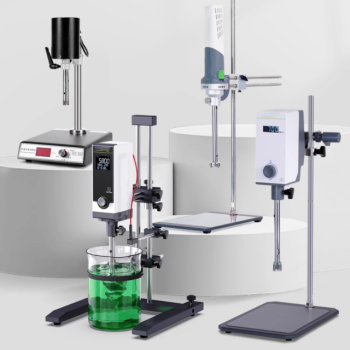
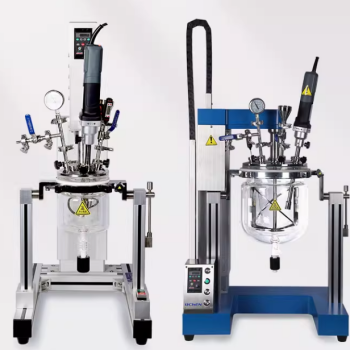
An industrial ultrasonic homogenizer is the primary tool for cellular disruption in mixed microbial cultures. It utilizes high-frequency mechanical vibrations to generate intense cavitation effects, which rupture microbial cell walls. This process releases intracellular value-added products—specifically polyhydroxyalkanoates (PHA) granules—while simultaneously reducing the density and viscosity of the mixture for practical application.
By converting a dense biological suspension into a uniform, low-viscosity formula, ultrasonic homogenization ensures the bioproduct can effectively penetrate porous materials like recycled concrete.
The Mechanics of Extraction
Creating Cavitation Effects
The core mechanism of an ultrasonic homogenizer is not simple agitation, but cavitation. High-frequency vibrations create microscopic bubbles in the liquid that expand and collapse violently.
Rupturing Cell Walls
The shockwaves generated by collapsing bubbles physically break apart the tough outer membranes of the microbial culture. This mechanical disruption is necessary to access intracellular substances that are otherwise locked inside the cell.
Releasing PHA Granules
Once the cell walls are breached, the system releases polyhydroxyalkanoates (PHA) granules. These intracellular substances are the active components required for the bioproduct's functional performance.
Optimizing Physical Properties
Reducing Viscosity and Density
Raw microbial cultures are often thick and heterogeneous. The homogenization process significantly lowers both the density and viscosity of the suspension.
Creating a Uniform Formula
The process eliminates clumps and creates a consistent, homogeneous mixture. This transformation converts a raw biological slurry into a stable, engineered formula ready for industrial use.
Application Benefits
Improving Permeability
The reduction in viscosity serves a specific downstream purpose: permeability. A thinner, more uniform fluid can penetrate the micropores of recycled concrete surfaces much more effectively than a dense suspension.
Ease of Application
A homogenized fluid is easier to spray or spread. This ensures the bioproduct covers the target surface evenly, maximizing the efficacy of the treatment on the concrete.
Understanding the Trade-offs
Energy Intensity
Ultrasonic homogenization is an energy-intensive process. While effective at breaking cells, the high-frequency vibrations generate significant heat which must be managed to prevent degrading the bioproduct.
Shear Sensitivity
The process relies on high shear forces. While necessary to break cell walls, excessive processing time can potentially damage the polymer chains of the released PHA if not carefully monitored.
Making the Right Choice for Your Goal
To maximize the value of your microbial bioproduct, align your processing parameters with your end goals:
- If your primary focus is Extraction Efficiency: Prioritize sufficient cavitation intensity to ensure complete rupture of cell walls for maximum PHA recovery.
- If your primary focus is Concrete Treatment: Focus on achieving the lowest possible viscosity to ensure the fluid creates a deep, durable bond with the recycled aggregate.
Ultrasonic homogenization bridges the gap between raw biological potential and practical industrial application.
Summary Table:
| Feature | Mechanical Mechanism | Impact on Bioproduct |
|---|---|---|
| Cell Disruption | Acoustic Cavitation | Ruptures tough cell walls to release intracellular PHA granules. |
| Viscosity Reduction | High Shear Forces | Transforms dense microbial slurries into thin, low-viscosity formulas. |
| Formula Uniformity | Microscopic Agitation | Eliminates clumping to create a stable, homogeneous suspension. |
| Material Penetration | Physical Refinement | Increases permeability for applications like concrete surface treatment. |
Maximize Your Bioprocess Efficiency with KINTEK
Elevate your laboratory and industrial output with KINTEK’s high-performance ultrasonic homogenizers. Whether you are extracting PHA from mixed microbial cultures or refining biological slurries for construction materials, our advanced systems deliver the precise cavitation intensity and shear control your research demands.
Our laboratory solutions include:
- Processing Excellence: Industrial-grade homogenizers, shakers, and cooling solutions (ULT freezers, freeze dryers) to protect heat-sensitive bioproducts.
- Material Analysis: Precision crushing, milling, and sieving systems for comprehensive material characterization.
- Specialized Equipment: High-temperature reactors, autoclaves, and hydraulic presses for advanced material synthesis.
From cell disruption to stable formula creation, KINTEK provides the essential consumables—including PTFE and ceramics—to ensure zero contamination and maximum durability. Contact us today to find the perfect homogenization solution for your bioprocessing goals!
References
- Lorena Serrano-González, Andrés Juan-Valdés. Use of Bioproducts Derived from Mixed Microbial Cultures Grown with Crude Glycerol to Protect Recycled Concrete Surfaces. DOI: 10.3390/ma14082057
This article is also based on technical information from Kintek Solution Knowledge Base .
Related Products
- High Shear Homogenizer for Pharmaceutical and Cosmetic Applications
- High Performance Lab Homogenizer for Pharma Cosmetics and Food R&D
- Lab Sterile Slapping Type Homogenizer for Tissue Mashing and Dispersing
- Laboratory High Throughput Tissue Grinding Mill Grinder
- Laboratory Disc Rotary Mixer for Efficient Sample Mixing and Homogenization
People Also Ask
- Why Use a High Shear Homogenizer for Cathode Slurries? Optimize Double-Layer Solid-State Battery Production
- What is the function of high-shear dispersion equipment in corona-resistant nanocomposites? Elevate Your Insulation
- What is the necessity of using an industrial-grade high-shear homogenizer for biomass washing? Ensure Process Efficiency
- What are the advantages of using a high-shear homogenizer for BED/GMA coatings? Achieve Superior Nano-Dispersion
- What role does a high-shear homogenizer play in ODC catalyst suspensions? Unlock Superior Electrochemical Efficiency