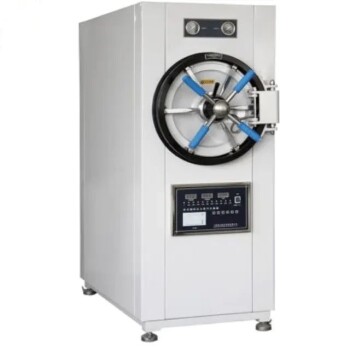
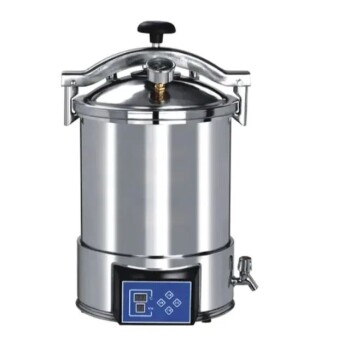
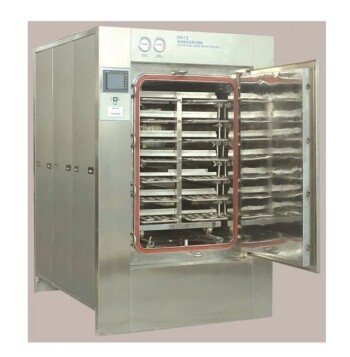
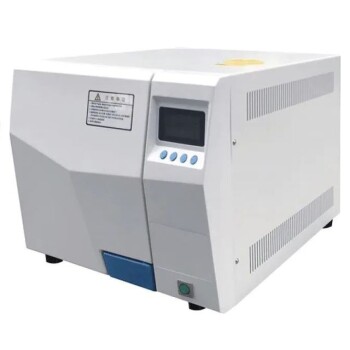
In any modern laboratory, using an autoclave is essential because it provides a level of sterilization that simple cleaning cannot. It utilizes high-pressure saturated steam to destroy all forms of microbial life, including highly resistant bacterial spores, which are often immune to boiling or chemical disinfectants. This process ensures that laboratory tools, growth media, and other materials are truly sterile and free from contaminants that could compromise experimental results.
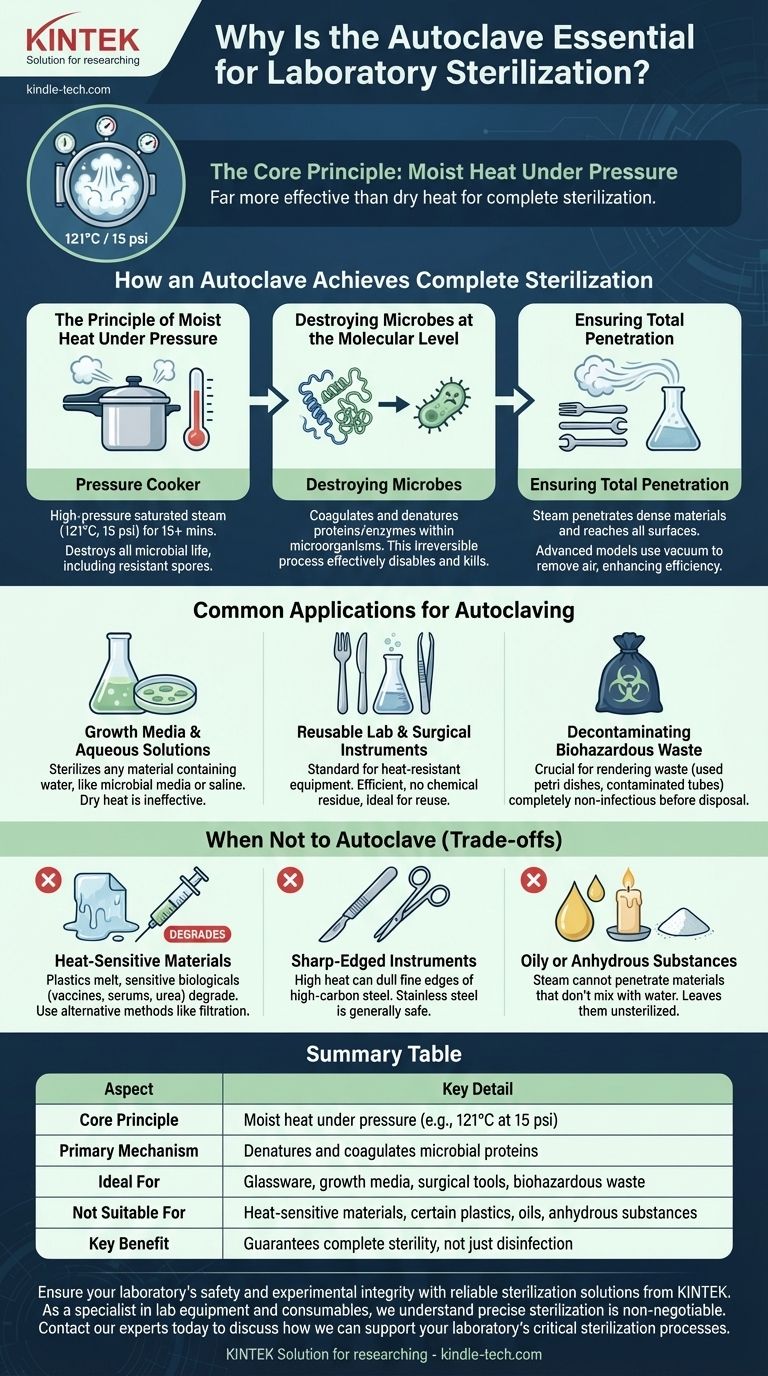
An autoclave's importance lies not just in heating, but in its use of moist heat under pressure. This combination is uniquely effective at penetrating materials and denaturing the essential proteins of all microorganisms, guaranteeing complete sterilization rather than just disinfection.
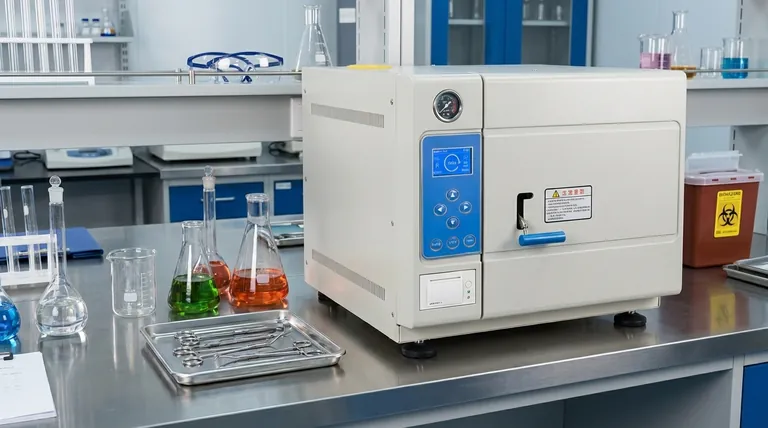
How an Autoclave Achieves Complete Sterilization
To understand why the autoclave is a cornerstone of laboratory safety and accuracy, we must look at the principles behind its operation. It isn't merely a high-temperature oven; it's a precision instrument.
The Principle of Moist Heat Under Pressure
An autoclave works by creating steam and then increasing the pressure within its sealed chamber. A typical setting is 121°C (250°F) at 15 psi (pounds per square inch) of pressure for at least 15 minutes. This environment of high-pressure steam is far more effective at transferring heat and killing microbes than dry heat at the same temperature.
Destroying Microbes at the Molecular Level
The true power of moist heat is its ability to coagulate and denature proteins and enzymes within microorganisms. This process is irreversible. By fundamentally altering the structure of these essential molecules, the autoclave effectively disables and kills even the most resilient bacteria and spores.
Ensuring Total Penetration
Steam under pressure can penetrate dense materials and reach every surface of the items inside, from the inside of a flask to the joints of a surgical instrument. Some advanced autoclaves first create a vacuum to remove all air, allowing the steam to inject more efficiently and ensuring no air pockets can shield microbes from sterilization.
Common Applications for Autoclaving
The reliability of autoclaving makes it the default choice for sterilizing a wide range of laboratory materials.
Growth Media and Aqueous Solutions
Any material containing water, such as microbial growth media or saline solutions, must be sterilized in an autoclave. Dry heat methods are ineffective for these items.
Reusable Lab and Surgical Instruments
Autoclaving is the standard for sterilizing heat-resistant equipment like glassware, stainless steel surgical tools, and durable plasticware. Its efficiency and lack of chemical residue make it ideal for items that will be reused.
Decontaminating Biohazardous Waste
Before disposal, all waste that has come into contact with microorganisms (such as used petri dishes or contaminated tubes) must be decontaminated. The autoclave renders this waste completely non-infectious, which is a critical step in laboratory safety protocols.
Understanding the Trade-offs: When Not to Autoclave
Despite its advantages, an autoclave is not a universal solution. Using it on the wrong materials can destroy your equipment or be completely ineffective.
Heat-Sensitive Materials
Many substances degrade under high heat. This includes certain plastics that will melt, as well as sensitive biological solutions like vaccines, serums, or compounds like urea that must be sterilized by other methods, such as filtration.
Sharp-Edged Instruments
The high heat of an autoclave can dull the fine edges of high-grade carbon steel scalpels or scissors. While stainless steel is generally safe, delicate or high-carbon instruments may require alternative sterilization methods to preserve their sharpness.
Oily or Anhydrous Substances
The autoclave's mechanism relies entirely on steam. Therefore, it cannot sterilize substances that do not mix with water, such as oils, waxes, or dry powders. The steam will simply fail to penetrate these materials, leaving them unsterilized.
Making the Right Sterilization Decision
To maintain the integrity of your research and equipment, you must choose the appropriate method for the material at hand.
- If your primary focus is sterilizing heat-stable glassware, media, or surgical tools: The autoclave is your most reliable, economical, and effective method for achieving complete sterility.
- If you are working with heat-sensitive plastics, certain chemicals, or oils: You must use an alternative like filtration or chemical sterilization, as the autoclave will cause damage or be ineffective.
- If your goal is to decontaminate biohazardous waste before disposal: The autoclave is the gold standard for rendering the waste non-infectious and ensuring safe handling.
Understanding when and why to use an autoclave is fundamental to conducting safe, repeatable, and effective science.
Summary Table:
| Aspect | Key Detail |
|---|---|
| Core Principle | Moist heat under pressure (e.g., 121°C at 15 psi) |
| Primary Mechanism | Denatures and coagulates microbial proteins |
| Ideal For | Glassware, growth media, surgical tools, biohazardous waste |
| Not Suitable For | Heat-sensitive materials, certain plastics, oils, anhydrous substances |
| Key Benefit | Guarantees complete sterility, not just disinfection |
Ensure your laboratory's safety and experimental integrity with reliable sterilization solutions from KINTEK.
As a specialist in lab equipment and consumables, we understand that precise, dependable sterilization is non-negotiable. KINTEK provides autoclaves designed to meet the rigorous demands of modern laboratories, ensuring your tools and media are completely sterile and free from contaminants that could compromise your work.
Let us help you select the right autoclave for your specific needs. Contact our experts today to discuss how we can support your laboratory's critical sterilization processes.
Visual Guide
Related Products
- Portable High Pressure Laboratory Autoclave Steam Sterilizer for Lab Use
- Laboratory Horizontal Autoclave Steam Sterilizer Lab Microcomputer Sterilizer
- Desktop Fast High Pressure Laboratory Autoclave Sterilizer 16L 24L for Lab Use
- Portable Digital Display Automatic Laboratory Sterilizer Lab Autoclave for Sterilization Pressure
- Desktop Fast Laboratory Autoclave Sterilizer 35L 50L 90L for Lab Use
People Also Ask
- What role does a laboratory autoclave play in HEA corrosion research? Key to Validating Advanced Reactor Materials
- What are the two types of autoclave used in the laboratory? Gravity vs. Pre-Vacuum Explained
- What is the primary function of a laboratory autoclave in the pre-treatment of medical plastic waste for liquid fuel?
- Why is a laboratory autoclave necessary for Postgate Medium B (PMB)? Ensure Pure SRB Cultures & Accurate MIC Research
- What is a laboratory autoclave? A Guide to Sterilization with Pressurized Steam