Yttria-stabilized zirconia (YSZ) is the industry standard for mixing NaSICON precursors because it uniquely bridges the gap between mechanical efficiency and chemical purity. It provides the high density required to pulverize extremely hard raw materials while maintaining a chemical inertness that prevents the introduction of performance-degrading impurities into the solid electrolyte.
The selection of grinding media is a critical process variable that directly dictates the electrochemical success of the final material. YSZ is chosen because it delivers the kinetic energy needed to refine stubborn precursors like zirconium silicate without contaminating the delicate ceramic matrix.
Mechanical Efficiency: The Density Factor
Generating High Kinetic Energy
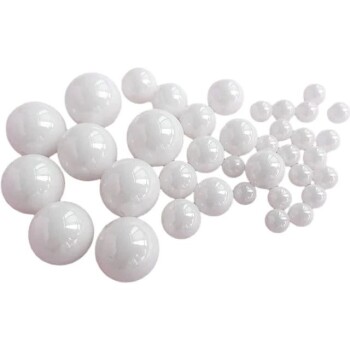
To effectively mix and refine powders, the grinding media must deliver significant impact force. YSZ beads possess a high density, which translates directly into superior kinetic energy during the milling process.
Overcoming Hard Raw Materials
NaSICON precursors often include extremely hard components, such as zirconium silicate (ZrSiO4). Lower-density media would struggle to break these materials down efficiently.
Refining Particle Size
The high kinetic energy provided by YSZ ensures the raw materials are refined to the necessary particle size. This refinement is essential for achieving a homogenous mixture and ensuring the proper phase formation during subsequent sintering.
Chemical Integrity: The Purity Factor
Preventing Contamination
The most critical advantage of YSZ is its chemical inertness. During extended grinding cycles, inferior media can degrade and shed material into the batch.
Eliminating Metallic Impurities
Using YSZ avoids the introduction of metallic impurities, which are common when using steel media. As confirmed by electron probe microanalysis (EPMA-WDS), YSZ maintains the high purity of the ceramic matrix.
Preserving Electrochemical Performance
Foreign impurities in a solid electrolyte can severely impede ionic conductivity. By ensuring that wear products do not contaminate the powder, YSZ protects the final electrochemical performance of the NaSICON material.
Understanding the Trade-offs: Wear Resistance
The inevitability of Wear
No grinding media is completely immune to abrasion. However, YSZ offers superior wear resistance compared to other ceramic options.
The Consequence of Media Degradation
If media wears down too quickly, it alters the stoichiometry of the batch. The incredibly low wear rate of YSZ minimizes this risk, ensuring that the chemical composition of your precursor powder remains stable throughout the process.
Making the Right Choice for Your Project
To ensure the highest quality NaSICON electrolyte, align your processing parameters with your performance goals:
- If your primary focus is electrochemical stability: Prioritize YSZ media to eliminate the risk of metallic or chemical contamination that could block ion conduction.
- If your primary focus is processing efficiency: Rely on the high density of YSZ to reduce milling times and effectively fracture hard precursors like ZrSiO4.
High-performance solid electrolytes begin with high-purity processing; YSZ is the tool that secures that foundation.
Summary Table:
| Feature | Advantage of YSZ in NaSICON Processing | Impact on Final Material |
|---|---|---|
| High Density | Delivers maximum kinetic energy during milling | Efficiently pulverizes hard zirconium silicate |
| Chemical Inertness | Prevents leaching of foreign elements | Maintains high purity and electrochemical stability |
| Wear Resistance | Minimizes media degradation and abrasion | Preserves precise stoichiometry of the batch |
| Material Compatibility | Avoids metallic contamination (unlike steel) | Ensures optimal ionic conductivity in electrolytes |
Elevate Your Solid State Battery Research with KINTEK
Achieving the perfect NaSICON electrolyte requires more than just the right precursors—it demands high-purity processing tools. KINTEK specializes in precision laboratory equipment and consumables designed for the most rigorous material science applications.
Whether you need ultra-durable yttria-stabilized zirconia (YSZ) grinding media, high-performance crushing and milling systems, or specialized high-temperature furnaces for sintering your ceramic matrix, we provide the tools that guarantee electrochemical success.
From PTFE consumables and crucibles to high-pressure reactors and battery research tools, KINTEK is your partner in advancing energy storage technology. Contact us today to optimize your lab's workflow and material purity!
Related Products
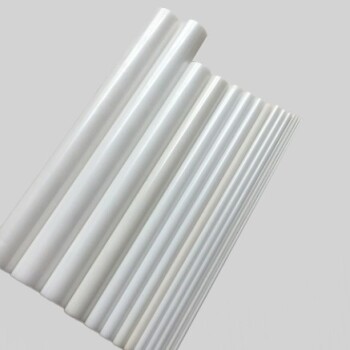
- Precision Machined Yttrium Stabilized Zirconia Ceramic Rod for Engineering Advanced Fine Ceramics
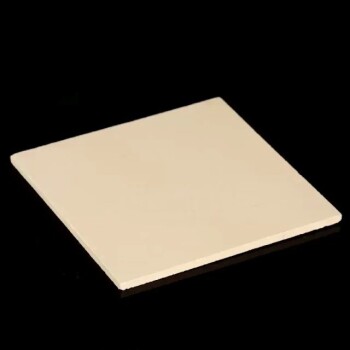
- Precision Machined Yttria Stabilized Zirconia Ceramic Plate for Engineering Advanced Fine Ceramics
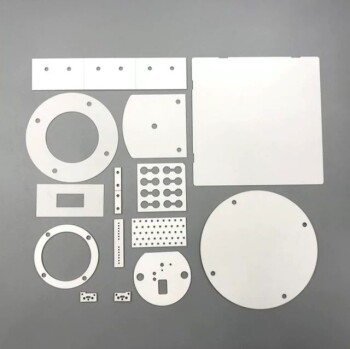
- Custom-Made Alumina Zirconia Special-Shaped Ceramic Plates for Engineering Advanced Fine Ceramics Processing
- Precision Machined Zirconia Ceramic Ball for Engineering Advanced Fine Ceramics
People Also Ask
- What is the purpose of adding yttria to zirconia? Master High-Performance Ceramic Stability and Strength
- What type of zirconia is most commonly used in dentistry? Choose Between Strength and Aesthetics
- What are the applications of zirconia ceramics? Unlock High-Performance Solutions for Extreme Environments
- Why are yttria-stabilized zirconia grinding media preferred for Si2N2O? Master High-Purity Ceramic Milling
- What are the useful applications of ceramics? Unlock High-Performance Solutions for Your Industry