Pretreating a Glassy Carbon Electrode (GCE) with alumina polishing powder is a mandatory procedure to remove surface contaminants, insulating oxide layers, and physical scratches. This process restores the electrode to a pristine, mirror-like state, ensuring that the subsequently applied catalyst layer adheres firmly and uniformly. By standardizing the physical and chemical condition of the substrate, polishing eliminates background interference and ensures that the measured electrochemical response is a true reflection of the catalyst's performance.
Alumina polishing serves as the foundational step in electrochemical testing by creating a reproducible, high-purity interface. This process minimizes contact resistance and ensures that electron transfer kinetics are governed by the catalyst rather than surface impurities or substrate irregularities.
Removing Physical and Chemical Obstacles
Elimination of Oxide Layers and Contaminants
Over time or through previous use, GCE surfaces naturally develop oxide films and adsorb organic or metallic contaminants from the environment. These layers act as insulating barriers that impede the flow of electrons between the substrate and the active catalyst. Using micron-sized alumina powder mechanically shears away these impurities, exposing the pure carbon lattice required for high-conductivity applications.
Restoration of Physical Surface Integrity
Physical scratches and micro-deformities on the GCE surface can lead to non-uniform electric field distributions and inconsistent catalyst loading. Polishing with a sequence of increasingly fine alumina slurries (such as 0.3 μm followed by 0.05 μm) grinds down these irregularities. The resulting mirror-like finish provides a standardized topography that is essential for scientific comparison across multiple tests.
Optimizing the Catalyst-Substrate Interface
Ensuring Uniform Film Formation
For electrocatalytic tests, catalysts are typically applied as a slurry or ink. A polished, smooth surface allows this ink to spread evenly and form a consistent film thickness across the entire electrode area. If the surface is rough or contaminated, the catalyst may flake off or aggregate in scratches, leading to "hot spots" or areas of poor electrical contact that skew the data.
Enhancing Charge Transfer Kinetics
The efficiency of an electrocatalyst is often measured by its ability to facilitate rapid electron transfer. A clean GCE surface significantly reduces interfacial charge transfer resistance, allowing for more sensitive and accurate measurements during techniques like Cyclic Voltammetry (CV) and Electrochemical Impedance Spectroscopy (EIS). This ensures that the observed kinetic data relates specifically to the catalyst's MOF or composite structure rather than substrate-related bottlenecks.
Understanding the Trade-offs and Pitfalls
The Risk of Residual Alumina
While alumina is necessary for cleaning, the powder particles themselves can become embedded in the carbon surface if the electrode is not cleaned thoroughly after polishing. These residual particles are electrochemically inactive and can block active sites, potentially leading to a decrease in the measured current density. It is critical to perform post-polishing sonication in deionized water or ethanol to remove all abrasive traces.
Mechanical Wear and Geometry Shifts
Repetitive, aggressive polishing can eventually alter the geometric surface area of the electrode if not performed on a flat, level surface. If the electrode face becomes rounded or slanted, the calculated current density (which depends on the surface area) will be inaccurate. Users must maintain a consistent, perpendicular pressure during the polishing motion to preserve the electrode's flat profile.
How to Apply This to Your Project
Making the Right Choice for Your Goal
- If your primary focus is high repeatability: Ensure a standardized polishing routine using the same particle sizes and durations for every test to maintain a consistent effective surface area.
- If your primary focus is fundamental kinetic studies: Prioritize the removal of all oxide layers by using the finest 0.05 μm alumina finish to minimize interfacial resistance.
- If your primary focus is catalyst adhesion for long-term stability: Use a thorough sonication step after polishing to ensure the "mirror finish" is free of loose debris before applying the catalyst ink.
Proper GCE pretreatment transforms the substrate from a variable into a constant, ensuring your electrocatalytic data is both reliable and scientifically defensible.
Summary Table:
| Feature | Pretreatment Action | Impact on Electrocatalysis |
|---|---|---|
| Surface Purity | Removes oxides & organic contaminants | Minimizes background noise & interference |
| Topography | Polishing to a mirror-like finish | Ensures uniform catalyst film thickness |
| Conductivity | Mechanical shearing of insulating layers | Lowers interfacial charge transfer resistance |
| Repeatability | Standardizing substrate condition | Ensures reproducible results across tests |
Elevate Your Electrochemical Research with KINTEK
Precision in the lab starts with high-quality equipment and consumables. KINTEK specializes in providing researchers with the reliable tools needed for groundbreaking discoveries. From high-performance electrolytic cells and electrodes for precise electrocatalytic testing to high-temperature furnaces (muffle, vacuum, CVD) and high-pressure reactors for advanced material synthesis, we offer a comprehensive range of laboratory solutions.
Whether you are focusing on battery research, catalyst development, or material science, KINTEK delivers the durability and accuracy your project demands. Contact our experts today to find the perfect equipment for your laboratory!
References
- Amna A. Kotp, Abeer Enaiet Allah. Evaluating the electrocatalytic activity of flower-like Co-MOF/CNT nanocomposites for methanol oxidation in basic electrolytes. DOI: 10.1039/d3ra05105f
This article is also based on technical information from Kintek Solution Knowledge Base .
Related Products
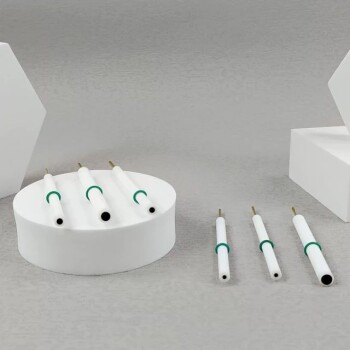
- Glassy Carbon Electrochemical Electrode
- Glassy Carbon Sheet RVC for Electrochemical Experiments
- Conductive Carbon Cloth Carbon Paper Carbon Felt for Electrodes and Batteries
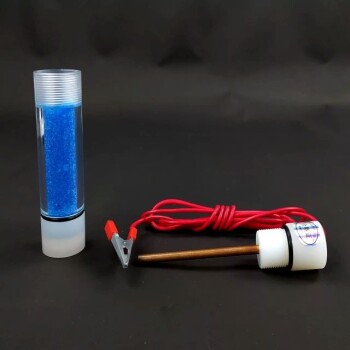
- Copper Sulfate Reference Electrode for Laboratory Use
- Graphite Disc Rod and Sheet Electrode Electrochemical Graphite Electrode
People Also Ask
- How do the glassy carbon electrode, SCE, and graphite rod work together in an enzymatic fuel cell? Optimize EFC Testing
- Why is glassy carbon selected for mediator-assisted indirect oxidation of glycerol? The Key to Unbiased Research
- What are the functions of a glassy carbon electrode in CV testing of antioxidants? Enhance Your Redox Analysis Accuracy
- What characteristics make glassy carbon electrodes suitable as anodes? Ideal for Pure Molten Salt Electrolysis
- What are the primary physicochemical reasons for selecting a carbon electrode as the anode in aluminum recovery? 5 Keys