The pretreatment of a glassy carbon electrode (GCE) requires a multi-step process centered on precision mechanical polishing and rigorous cleaning. Specifically, the surface must be polished with high-purity alumina powder to achieve a mirror-like finish, followed by ultrasonic cleaning and potential electrochemical activation. These steps are critical to removing oxide layers and contaminants, ensuring that catalytic nanomaterials adhere firmly to the surface for efficient electron transfer.
Core Takeaway: Proper pretreatment transitions the GCE from a passive substrate to a highly conductive interface. By achieving a pristine, mirror-like surface, you minimize contact resistance and provide the necessary foundation for stable, high-sensitivity glucose detection.
Mechanical Polishing: The Mirror Finish Standard
Precision Polishing Media
The primary requirement is the use of high-purity alumina (Al₂O₃) polishing powder. If the electrode surface is severely scratched or contaminated, a "rough-to-fine" approach is necessary, starting with larger grit sizes before moving to the finest powder.
Achieving Surface Uniformity
The goal of polishing is to produce a mirror-like finish that is free of visible defects. This physical transformation is essential because it ensures that the subsequent sensing layers—such as CuO@Cu2O/PNrGO nanomaterials—can be applied as a firm, uniform slurry.
Manual Surface Preparation
Before the intensive polishing begins, the surface should be gently wiped with a moist lens tissue. This simple step prevents larger debris from causing deep scratches during the mechanical polishing phase.
Cleaning and Surface Activation
Ultrasonic and Chemical Decontamination
After polishing, the electrode must undergo ultrasonic cleaning in deionized water or ethanol to remove residual alumina particles. For deeper decontamination, chemical methods such as soaking in nitric acid or a mixture of ammonia and ethanol are employed to strip away persistent organic impurities.
Electrochemical Activation
In many protocols, the GCE requires repeated polarization to activate the surface sites. This is typically achieved by cycling the potential—often between +0.8V and -1.8V—to ensure the electrode is electrochemically responsive before the glucose-sensing materials are loaded.
Rinsing and Drying Protocols
Post-experiment care is as important as initial preparation to prevent permanent surface degradation. Immediately rinse the surface with deionized water and ethanol, then allow it to air dry at room temperature to maintain the integrity of the carbon surface.
Understanding the Trade-offs and Pitfalls
The Risk of Over-Polishing
While a smooth surface is necessary, excessive or improper polishing can lead to the rounding of the electrode edges or the embedding of alumina particles into the carbon matrix. These embedded particles act as insulators, which can increase interfacial resistance and decrease the overall sensitivity of the biosensor.
Contamination During Storage
Glassy carbon is highly susceptible to atmospheric contamination. If a GCE is polished but left exposed to the lab environment for even a few hours, it can adsorb organic vapors that passivate the surface, leading to inconsistent glucose readings.
Mechanical Integrity of the Holder
The electrochemical connection is a frequent point of failure often mistaken for a surface issue. Periodically inspecting the clamping force of the electrode holder and the integrity of wire connections is vital to avoid "noise" that can be misattributed to poor surface pretreatment.
Making the Right Choice for Your Research Goal
How to Apply This to Your Project
To ensure your GCE provides reproducible data for non-enzymatic glucose sensing, tailor your pretreatment based on your specific experimental needs:
- If your primary focus is maximum sensitivity: Prioritize electrochemical activation and verify the surface area using a standard potassium ferricyanide redox test via cyclic voltammetry.
- If your primary focus is sensor longevity: Ensure strict adherence to the nitric acid storage protocol (1:1 solution) for short-term non-use to keep the surface hydrophilic and active.
- If your primary focus is material adhesion: Focus heavily on the ultrasonic cleaning phase to ensure no residual polishing powder prevents the nanomaterial slurry from bonding with the carbon.
A meticulously prepared electrode surface is the single most important factor in bridging the gap between a theoretical nanomaterial and a functional, high-performance glucose biosensor.
Summary Table:
| Pretreatment Step | Method / Media | Primary Objective |
|---|---|---|
| Mechanical Polishing | High-purity Al₂O₃ powder | Achieve a mirror finish and remove scratches |
| Cleaning | Ultrasonic (DI water/ethanol) | Remove residual polishing particles |
| Chemical Decontamination | Nitric acid or Ammonia/Ethanol | Strip organic impurities and contaminants |
| Surface Activation | Electrochemical polarization | Enhance electron transfer and responsiveness |
| Verification | Potassium ferricyanide test | Confirm active surface area via cyclic voltammetry |
Elevate your electrochemical research with KINTEK’s precision-engineered laboratory solutions. Whether you are developing non-enzymatic biosensors or exploring advanced material catalysis, we provide high-quality electrolytic cells, electrodes, and battery research tools tailored for accuracy. Our portfolio also features high-temperature high-pressure reactors, autoclaves, and hydraulic presses to support your most demanding experimental workflows. Contact KINTEK today to learn how our comprehensive range of equipment and consumables can ensure the reliability and reproducibility of your scientific breakthroughs.
References
- Qing Wei, Mingxi Wang. Porous nitrogen-doped reduced graphene oxide-supported CuO@Cu2O hybrid electrodes for highly sensitive enzyme-free glucose biosensor. DOI: 10.1016/j.isci.2023.106155
This article is also based on technical information from Kintek Solution Knowledge Base .
Related Products
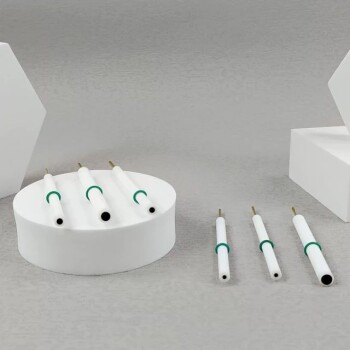
- Glassy Carbon Electrochemical Electrode
- Glassy Carbon Sheet RVC for Electrochemical Experiments
- Conductive Carbon Cloth Carbon Paper Carbon Felt for Electrodes and Batteries
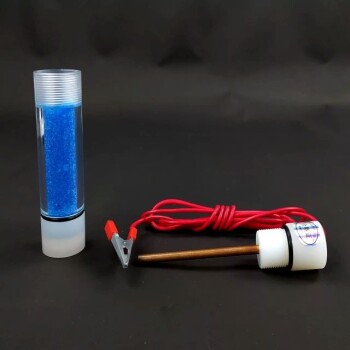
- Copper Sulfate Reference Electrode for Laboratory Use
- Graphite Disc Rod and Sheet Electrode Electrochemical Graphite Electrode
People Also Ask
- How do the glassy carbon electrode, SCE, and graphite rod work together in an enzymatic fuel cell? Optimize EFC Testing
- Why is glassy carbon selected for mediator-assisted indirect oxidation of glycerol? The Key to Unbiased Research
- What are the functions of a glassy carbon electrode in CV testing of antioxidants? Enhance Your Redox Analysis Accuracy
- What characteristics make glassy carbon electrodes suitable as anodes? Ideal for Pure Molten Salt Electrolysis
- What are the primary physicochemical reasons for selecting a carbon electrode as the anode in aluminum recovery? 5 Keys