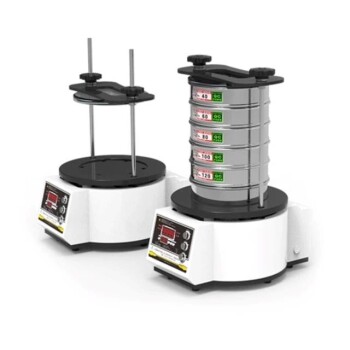
Precision sieving is the foundation of material predictability. Composite adsorbents require this processing to ensure highly uniform particle sizes, which are critical for obtaining accurate specific surface area data and maintaining stable diffusion paths. Without precision control, uneven particle distribution causes significant discrepancies in adsorption kinetics, rendering the material's performance unreliable for removing heavy metals or organic pollutants.
High-precision sieving eliminates the variables of size-driven kinetic lag and structural inconsistency. By standardizing the physical geometry of the adsorbent, engineers can guarantee repeatable performance and accurate characterization across various applications.
The Critical Link Between Uniformity and Adsorption Performance
Standardizing Specific Surface Area (SSA) Measurements
Precision sieving, often using standardized meshes like 0.149 mm, is essential for establishing the baseline surface area of a composite. In characterization, the specific surface area (SSA) is a primary metric of quality; if particle sizes vary, the resulting data is an average of extremes rather than a reflection of the material's true potential.
Stabilizing Diffusion Paths for Contaminant Removal
Adsorption relies on the movement of pollutants through the material's internal structure. Uniform particle distribution ensures that diffusion paths remain consistent, preventing "bottlenecks" or bypasses that occur when larger particles or fines disrupt the flow.
Eliminating Kinetic Discrepancies
When particles are sized unevenly, the rate of adsorption (kinetics) fluctuates across the sample. Precision sieving ensures that every gram of the composite reacts at a predictable rate, which is vital for designing industrial-scale filtration systems that must operate within strict time parameters.
Broader Implications for Composite Material Integrity
Mitigating Stress Concentration and Structural Defects
Beyond adsorption capacity, precision sieving protects the mechanical integrity of the composite. By removing oversized particles or accidental agglomerates, manufacturers prevent stress concentration points that could lead to fractures or structural failure under operational pressure.
Optimizing Heat and Mass Transfer Consistency
In processes like thermogravimetric analysis or plasma spraying, particle size dictates how energy moves through the material. Narrowing the size distribution to specific ranges (such as 80–120 μm) ensures that heat and mass transfer rates are identical for every particle, leading to a homogenous microstructure.
Improving Processing Flow and Packing Density
Whether the material is used in extrusion or mold filling, consistent particle fineness improves flowability. This results in uniform packing during "green body" formation or cold isostatic pressing, which directly increases the mechanical strength and density of the final sintered product.
Understanding the Trade-offs
While precision sieving is vital, it introduces specific operational challenges that must be managed. Sieve blinding (clogging) is a common issue when dealing with fine powders, which can reduce throughput and necessitate specialized ultrasonic or vibrating equipment.
Additionally, achieving a narrow particle size distribution often results in higher material waste, as "overs" and "unders" are removed from the production line. Engineers must balance the need for extreme precision with the economic realities of yield and processing time.
How to Apply Precision Sieving to Your Project
The level of precision required depends heavily on your final application and the sensitivity of your characterization equipment.
- If your primary focus is analytical accuracy: Utilize high-precision standard sieves (e.g., 45 μm or 0.149 mm) to ensure your specific surface area data and kinetic models are reproducible and scientifically sound.
- If your primary focus is structural durability: Prioritize the removal of "coarse defects" and large-particle impurities to prevent internal stress concentration and premature material fracture.
- If your primary focus is manufacturing efficiency: Use precision sieving to standardize the flowability and feeding rates of your raw powders, which reduces downtime during extrusion or mold filling.
Precision sieving transforms a raw, unpredictable mixture into a standardized technical material capable of high-performance adsorption.
Summary Table:
| Benefit Category | Impact on Composite Adsorbents | Key Technical Outcome |
|---|---|---|
| Analytical Accuracy | Standardizes Specific Surface Area (SSA) | Reproducible characterization data |
| Adsorption Kinetics | Ensures uniform diffusion paths | Predictable pollutant removal rates |
| Structural Integrity | Removes oversized particles & defects | Prevents stress concentration & fractures |
| Manufacturing | Improves powder flowability & packing | Homogenous density & mechanical strength |
Elevate Your Material Consistency with KINTEK
Precision starts with the right tools. At KINTEK, we specialize in high-performance laboratory equipment designed to transform raw mixtures into standardized technical materials. Whether you are optimizing composite adsorbents or developing advanced ceramics, our comprehensive range of precision sieving equipment, crushing and milling systems, and high-temperature furnaces (muffle, vacuum, CVD) ensures your materials meet the strictest performance benchmarks.
From achieving uniform particle distribution to perfecting sample preparation with our hydraulic pellet presses, KINTEK provides the reliability you need for scientific excellence.
Ready to enhance your lab's efficiency and material predictability? Contact our experts today for a tailored solution!
References
- Pengyang Bian, Qinqin Shao. Performance and Mechanism of Functionalized Water Hyacinth Biochar for Adsorption and Removal of Benzotriazole and Lead in Water. DOI: 10.3390/ijms24108936
This article is also based on technical information from Kintek Solution Knowledge Base .
Related Products
- Three-dimensional electromagnetic sieving instrument
- Laboratory Vibratory Sieve Shaker Machine for Dry and Wet Three-Dimensional Sieving
- Laboratory Test Sieves and Sieving Machines
- Custom PTFE Teflon Parts Manufacturer for PTFE Mesh F4 Sieve
- Laboratory Wet Three-Dimensional Vibratory Sieve Shaker Machine
People Also Ask
- Why is sieving equipment essential for the classification of processed bio-activated carbon? Optimize Performance
- What are the limitations of sieving? Understanding the Constraints of Particle Size Analysis
- What are advantages and disadvantages of sieving method? A Guide to Reliable & Cost-Effective Particle Sizing
- How is sieving important? The Critical Role of Particle Size Analysis in Quality Control
- What is sieving and how does it work? A Guide to Accurate Particle Size Analysis