A gas ballast valve functions by purposely introducing a small, controlled leak of ambient air into the pump's compression chamber. This influx of air increases the internal pressure, forcing the discharge valve to open earlier in the compression cycle. By ejecting the gas mixture sooner, condensable vapors are expelled while they are still in a gaseous state, preventing them from turning into liquid inside the pump.
The core function of a gas ballast is preventive maintenance through physics: it sacrifices the pump's ability to reach its deepest vacuum level in exchange for preventing internal condensation that destroys pump oil and corrodes internal components.
The Mechanics of Vapor Handling
The Condensation Problem
When a vacuum pump compresses gas, it increases the pressure of that gas. If the gas contains vapors—such as water or solvents—this compression can force them to reach their saturation point.
Once saturation is reached, the vapor turns into a liquid (condensates). This liquid mixes with the pump oil, turning it into sludge and compromising lubrication.
How the Ballast Intervenes
The gas ballast valve introduces ambient air into the chamber during the compression phase. This increases the total volume of gas being compressed.
Because there is more gas in the chamber, the pressure required to open the exhaust valve is reached much faster.
Timing the Discharge
The key mechanism here is timing. The discharge valve opens earlier because the added air helps "fill" the chamber's pressure requirement.
Because the valve opens sooner, the process vapors are ejected before they are compressed enough to turn into liquid. They leave the pump harmlessly as gas along with the ballast air.
Understanding the Trade-offs
Impact on Vacuum Depth
The primary trade-off is a reduction in performance. When you open the gas ballast valve, you are essentially creating a controlled leak.
This prevents the pump from reaching its ultimate vacuum (the lowest possible pressure). As long as the ballast is open, the background pressure inside the pump will be higher.
Protection vs. Performance
While you lose vacuum depth, you gain significant operational reliability. Using the ballast protects the oil from contamination.
This extends the life of the oil and reduces the frequency of maintenance. However, it renders the pump temporarily less effective for applications requiring extreme high vacuum.
Making the Right Choice for Your Goal
To maximize both pump life and performance, you must actively manage the valve based on the stage of your process.
- If your primary focus is handling wet loads or solvents: Open the gas ballast valve to purge contaminants and keep vapors in a gaseous state, protecting your oil.
- If your primary focus is achieving maximum vacuum: Close the gas ballast valve once the system is dry to allow the pump to pull down to its ultimate low-pressure limit.
By understanding this mechanism, you can use the ballast to purge moisture initially, then close it to finish your process at peak efficiency.
Summary Table:
| Feature | Gas Ballast Open | Gas Ballast Closed |
|---|---|---|
| Primary Goal | Prevent condensation & oil contamination | Achieve maximum ultimate vacuum |
| Exhaust Timing | Opens earlier in compression cycle | Opens at peak compression |
| Vapor State | Vapors remain gaseous for discharge | Vapors may condense into liquid |
| Vacuum Depth | Reduced (higher background pressure) | Optimized (lowest possible pressure) |
| Maintenance | Extends oil life and pump durability | Higher risk of oil sludge & corrosion |
Protect Your Laboratory Investment with KINTEK
Don't let vapor condensation compromise your research or damage your equipment. KINTEK specializes in providing high-performance laboratory solutions, from advanced vacuum systems and rotary evaporators to high-temperature furnaces and precision hydraulic presses.
Our team of experts can help you select the right tools and accessories—including high-quality vacuum components—to ensure your processes run at peak efficiency while minimizing maintenance costs. Whether you are working on battery research, material synthesis, or complex chemical reactions, KINTEK has the expertise and consumables to support your success.
Ready to optimize your vacuum performance? Contact our technical experts today to find the perfect equipment for your specific application requirements.
Related Products
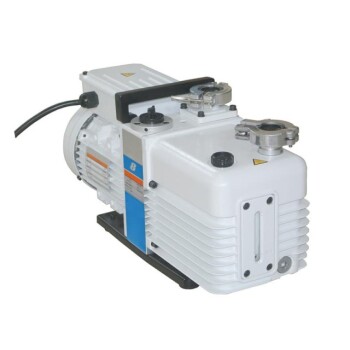
- Laboratory Rotary Vane Vacuum Pump for Lab Use
- 304 316 Stainless Steel Vacuum Ball Valve Stop Valve for High Vacuum Systems
- Custom PTFE Teflon Parts Manufacturer for Air Valve Applications
- Custom PTFE Teflon Parts Manufacturer for PTFE Ball Valve Seat
People Also Ask
- What is the use of rotary vacuum pump? A Guide to Reliable Rough Vacuum for Labs & Industry
- What is the vacuum level of a rotary vacuum pump? Achieve Medium Vacuum for Your Lab or Industry
- What is the difference between a single-stage and a two-stage rotary vane pump? Choosing the Right Vacuum Depth
- How does the performance of single-stage and two-stage rotary vane pumps compare? Optimize Your Vacuum Efficiency
- How does a Rotary Vane Pump operate? Discover Efficient Vacuum Technology for Your Lab