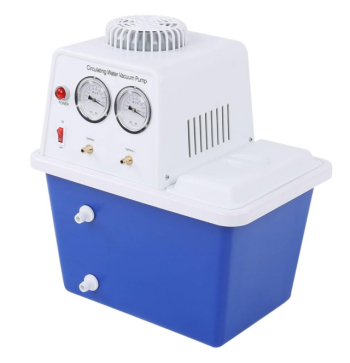
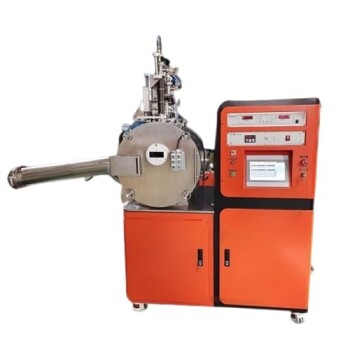
To ensure the integrity of the final component, a laboratory vacuum pump is essential for removing residual air and moisture from the PM-HIP capsule prior to sealing. This evacuation process creates a high-vacuum environment that eliminates the catalysts required for oxidation. Without this step, trapped oxygen and water vapor would react with the metal powders and substrates during the high-temperature processing cycles.
Core Takeaway Evacuation is the critical defense against material degradation. By removing air and moisture, you prevent the formation of continuous oxide films that block diffusion bonding, ensuring the chemical purity and mechanical strength of the final part.
The Critical Role of Vacuum in PM-HIP
Eliminating Contaminants
The primary function of the vacuum pump is to physically extract the atmosphere from within the capsule.
This includes removing residual air and moisture that are naturally present in the environment.
Leaving these elements inside the capsule creates a reactive environment that endangers the metallurgical process.
Preventing High-Temperature Oxidation
The Powder Metallurgy Hot Isostatic Pressing (PM-HIP) process involves extreme thermal cycles, often reaching temperatures as high as 1121°C.
At these elevated temperatures, oxidation rates accelerate dramatically.
If oxygen or moisture remains in the capsule, the metal powders will oxidize rapidly, compromising the material's composition.
Protecting the Diffusion Interface
For a successful bond, the interface between particles must remain chemically pure.
The presence of oxidizers leads to the formation of continuous oxide films at the diffusion interface.
These films act as a barrier, preventing the metal particles from diffusing into one another and creating a solid, cohesive bond.
The Consequence of Process Failure
Mechanical Weakness
The ultimate goal of PM-HIP is to achieve superior mechanical performance.
If oxide films are allowed to form, they create weak points within the microstructure.
This results in a diffusion-bonded region with significantly reduced strength and reliability.
Chemical Impurity
Beyond mechanical structure, the chemical makeup of the alloy is at risk.
Oxidation alters the surface chemistry of the metal powders.
This degradation results in a final component that fails to meet the strict chemical purity standards required for high-performance applications.
Ensuring Reliability in PM-HIP
If your primary focus is Mechanical Performance:
- Ensure deep evacuation to prevent oxide films from acting as barriers to diffusion bonding.
If your primary focus is Chemical Purity:
- Prioritize the removal of moisture to eliminate oxygen sources that degrade the alloy's composition during heat cycles.
By effectively utilizing a vacuum pump, you transform a bundle of raw powder into a unified, high-performance component capable of withstanding extreme conditions.
Summary Table:
| Feature | Impact of Vacuum Evacuation | Risk of No Vacuum |
|---|---|---|
| Atmosphere Control | Removes air and moisture | Trapped oxygen and water vapor |
| Oxidation Prevention | Eliminates catalysts for oxidation | Rapid oxidation at temperatures up to 1121°C |
| Bond Quality | Enables pure diffusion interface | Continuous oxide films block bonding |
| Mechanical Properties | Cohesive, high-strength structure | Weak points and reduced reliability |
| Chemical Purity | Maintains alloy composition | Surface chemistry degradation |
Elevate Your PM-HIP Results with KINTEK Precision
Don't let oxidation compromise your high-performance components. KINTEK specializes in advanced laboratory equipment designed for rigorous material science applications. From high-performance laboratory vacuum pumps for capsule evacuation to high-temperature furnaces, isostatic presses, and crushing and milling systems, we provide the tools you need for chemical purity and mechanical excellence.
Our experts are ready to help you optimize your PM-HIP workflow and select the ideal consumables, including ceramics and crucibles, tailored to your specific research needs. Contact us today to enhance your laboratory's efficiency!
References
- Benjamin Sutton, David Gandy. Assessment of Powder Metallurgy-Hot Isostatic Pressed Nozzle-to-Safe End Transition Joints. DOI: 10.1115/pvp2017-65776
This article is also based on technical information from Kintek Solution Knowledge Base .
Related Products
- 304 316 Stainless Steel Vacuum Ball Valve Stop Valve for High Vacuum Systems
- Molybdenum Tungsten Tantalum Evaporation Boat for High Temperature Applications
- Ultra-High Vacuum Flange Aviation Plug Glass Sintered Airtight Circular Connector for KF ISO CF
- Stainless Steel Quick Release Vacuum Chain Three-Section Clamp
- KF Ultra-High Vacuum Observation Window Stainless Steel Flange Sapphire Glass Sight Glass
People Also Ask
- What is high vacuum used for? Essential for Particle Beams and Advanced Lab Instruments
- Why is a high vacuum system necessary when measuring the hydrogen solubility of aluminum? Ensure Data Purity
- Why is a high vacuum system essential during the monitoring of volatiles in the graphite expansion process? Ensure Precision
- Why are Viton O-rings utilized for sealing in carbochlorination experimental setups? Ensure Safety and Seal Integrity
- What is the relationship between temperature and pressure in a vacuum? Mastering Thermal Control for Optimal Vacuum Performance