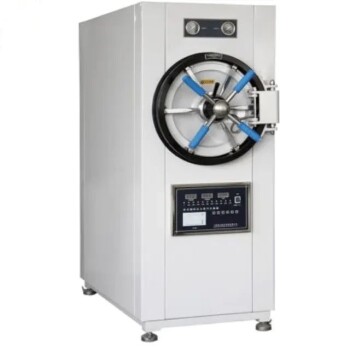
The High-Pressure Autoclave functions as the central reaction vessel that enables the precise physicochemical transformation of precursor materials. By establishing a sealed, high-temperature environment (typically around 100°C) under constant pressure, it drives the hydrolysis and polycondensation of silicon (TEOS) and titanium (TTIP) sources. This controlled setting is essential for surfactants to effectively guide the ordered self-assembly of these components, resulting in specific two-dimensional or three-dimensional mesoporous frameworks.
The autoclave provides more than just heat; it creates a pressurized, subcritical environment that enhances precursor solubility and reaction kinetics. This enables the formation of highly ordered, crystalline structures with uniform doping that standard atmospheric heating cannot achieve.
Driving the Chemical Mechanism
Facilitating Hydrolysis and Polycondensation
The primary function of the autoclave is to drive the chemical breakdown and recombination of precursors.
Inside the sealed vessel, the constant pressure and temperature force the silicon (TEOS) and titanium (TTIP) sources to undergo hydrolysis.
This is immediately followed by polycondensation, where these hydrolyzed molecules link together to form the backbone of the material.
Enabling Ordered Self-Assembly
The autoclave creates the stable conditions necessary for surfactant-guided assembly.
In this environment, surfactants act as templates, organizing the polymerizing silicate and titanate species into specific structures.
This process results in the formation of ordered 2D or 3D mesoporous frameworks, which define the catalyst's final geometry.
Enhancing Material Properties
Accessing the Subcritical State
By sealing aqueous solutions at high temperatures, the autoclave brings the solvent into a subcritical state.
This significantly increases the solubility of precursors and accelerates reaction kinetics.
The result is a more homogeneous mixture where reactants interact more efficiently than they would at atmospheric pressure.
Improving Crystallinity and Stability
The high-pressure hydrothermal environment promotes higher crystallinity in the active components.
It strengthens the chemical bonding between different phases of the material, such as between the support and active sites.
This enhanced structural integrity improves the material's photocatalytic stability and charge transfer efficiency.
Precise Control of Doping and Morphology
The sealed environment facilitates the uniform integration of doping elements (such as Lanthanum or Titanium) into the crystal lattice.
It regulates crystal growth, allowing for the creation of specific shapes, such as regular spherical morphologies or ordered channels.
This precision leads to increased oxygen vacancies and optimized surface functional groups, directly boosting catalytic performance.
Understanding the Trade-offs
The "Black Box" Limitation
Because the reaction occurs in a sealed, thick-walled steel vessel, real-time monitoring is difficult.
Operators cannot easily adjust parameters like pH or agitation once the heating cycle begins.
This requires the precursor mixture to be perfectly prepared before the unit is sealed.
Safety and Equipment Constraints
Operating at high pressures and temperatures introduces inherent safety risks requiring strict protocols.
The equipment is heavier and more expensive than standard reflux setups.
Reproducibility relies heavily on the precise control of the temperature ramp and cooling rates, which varies between autoclave models.
Making the Right Choice for Your Goal
To maximize the effectiveness of hydrothermal synthesis, align your process parameters with your specific catalytic requirements:
- If your primary focus is Structural Regularity: Ensure the temperature and pressure remain constant to allow surfactants to strictly guide the self-assembly of the mesoporous framework.
- If your primary focus is Catalytic Activity: Utilize the high-pressure environment to drive the uniform integration of doping metals, creating more active sites and oxygen vacancies.
- If your primary focus is Long-Term Stability: Extend the hydrothermal duration to enhance crystallinity and strengthen the chemical bonds between the phases.
The High-Pressure Autoclave is not merely a heating device, but a tool for enforcing thermodynamic conditions that dictate the atomic-level architecture of your catalyst.
Summary Table:
| Feature | Impact on Catalyst Synthesis | Benefit to Material Properties |
|---|---|---|
| Subcritical State | Increases precursor solubility and kinetics | Highly homogeneous crystalline structures |
| Sealed Environment | Enables constant pressure and temperature | Uniform integration of doping elements (La, Ti) |
| Controlled Heating | Drives hydrolysis and polycondensation | Formation of ordered 2D/3D mesoporous frameworks |
| Hydrothermal Aging | Strengthens chemical bonding between phases | Enhanced photocatalytic stability and charge transfer |
Elevate Your Material Research with KINTEK Precision
Unlock the full potential of your hydrothermal synthesis with KINTEK’s high-temperature high-pressure reactors and autoclaves. Specifically engineered for demanding laboratory environments, our equipment provides the precise thermal and pressure control necessary to develop highly ordered mesoporous frameworks, advanced battery materials, and specialized catalysts.
Why choose KINTEK?
- Comprehensive Laboratory Solutions: From crushing and milling systems to vacuum furnaces and isostatic presses.
- Specialized Expertise: We provide the tools required for uniform doping, enhanced crystallinity, and superior material stability.
- Total Support: High-quality consumables including PTFE products, ceramics, and crucibles to complement your research.
Ready to achieve superior structural regularity and catalytic activity? Contact our technical experts today to find the perfect solution for your lab!
References
- Shiuan‐Shinn Lee, Min-Chang Wu. Study of the structure and characteristics of mesoporous TiO<sub>2</sub> photocatalyst, and evaluation of its factors on gaseous formaldehyde removal by the analysis of ANOVA and S/N ratio. DOI: 10.1039/c8ra03557a
This article is also based on technical information from Kintek Solution Knowledge Base .
Related Products
- Mini SS High Pressure Autoclave Reactor for Laboratory Use
- High Pressure Laboratory Autoclave Reactor for Hydrothermal Synthesis
- Stainless High Pressure Autoclave Reactor Laboratory Pressure Reactor
- Desktop Fast High Pressure Laboratory Autoclave Sterilizer 16L 24L for Lab Use
- Laboratory High Pressure Horizontal Autoclave Steam Sterilizer for Lab Use
People Also Ask
- Why use high-pressure reactors for molecular sieve synthesis? Unlock Superior Crystallinity and Framework Control
- What are the advantages of using a high-pressure reactor like an autoclave? Maximize Liquefaction Speed & Yield
- What is the function of a high-pressure reactor autoclave? Enhancing Cu/N Co-Doped Carbon Catalyst Synthesis
- Why are high-pressure reactors or autoclaves necessary for the synthesis of new functional materials? Unlock Precision.
- How are high-pressure reactors used to prepare metaphosphate electrocatalysts? Master In-Situ Precursor Growth