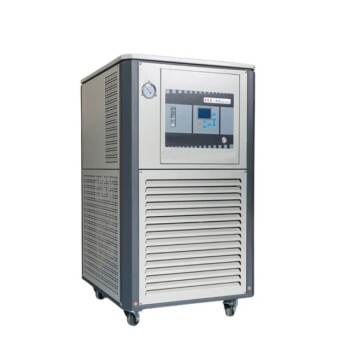
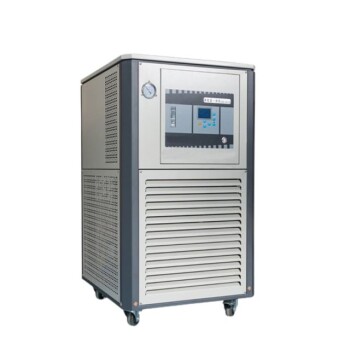
A high-pressure hydrothermal reactor facilitates the conversion of waste mushroom substrates by creating a sealed, aqueous environment at approximately 180°C under autogenous pressure. This specific condition triggers critical thermochemical reactions—specifically dehydration, decarboxylation, and polymerization—to transform loose biomass into dense, functional hydrochar.
Core Takeaway: By utilizing the moisture inherent in the waste as a reaction medium, this technology bypasses the need for energy-intensive pre-drying. The reactor's high-pressure environment fundamentally alters the material's microstructure, upgrading agricultural waste into high-value adsorbents or efficient solid fuels.
The Thermochemical Transformation Process
Creating the Critical Environment
The reactor operates by maintaining a sealed environment that reaches temperatures around 180°C. Because the system is closed, the heating process generates autogenous pressure (often reaching 2 to 10 MPa).
The Role of Subcritical Water
Under these high-pressure conditions, water remains in a liquid state even above its normal boiling point. This increases the water's density and solvation capacity, allowing it to act as an acid-base catalytic medium. This facilitates the hydrolysis of polysaccharides without requiring external chemical catalysts.
Driving Chemical Reactions
The environment triggers deep thermochemical conversions. The primary mechanisms are dehydration (removal of water molecules) and decarboxylation (removal of carboxyl groups). Simultaneously, polymerization (or polycondensation) occurs, restructuring the carbon lattice of the biomass.
Structural and Functional Enhancements
Developing Surface Chemistry
The hydrothermal process significantly increases the number of surface functional groups on the resulting hydrochar. Specifically, it promotes the formation of aromatic and oxygen-rich groups. These chemical features are essential for the material's reactivity and ability to interact with other substances.
Optimizing Pore Structure
The reactor facilitates the creation of a rich, mesoporous structure within the hydrochar. This structural evolution drastically increases the specific surface area. For example, this development has been shown to increase the adsorption capacity for heavy metals, such as Cadmium ions (Cd2+), from roughly 28 mg/L in raw substrate to 92 mg/L in the finished hydrochar.
Improving Fuel Characteristics
For energy applications, the process alters the combustion kinetics of the material. The thermochemical treatment lowers the combustion activation energy, making the hydrochar a more efficient and viable alternative to traditional solid fuels.
Understanding the Trade-offs
Process Conditions vs. Equipment Cost
While the reactor allows for the processing of wet biomass, the requirement for high-pressure containment (up to 10 MPa) necessitates robust, expensive equipment. The capital cost for safety-rated high-pressure vessels is significantly higher than atmospheric processing equipment.
Precision vs. Complexity
The sealed nature of the reactor offers high reproducibility and precise control over phase composition. However, this increases operational complexity. Maintaining exact temperature and pressure ratios is critical; slight deviations can alter the morphology and dispersibility of the final product, potentially degrading its performance as an adsorbent.
Making the Right Choice for Your Goal
The utility of hydrochar produced in this manner depends on your specific end-use application.
- If your primary focus is Environmental Remediation: Prioritize the development of the pore structure and surface functional groups, as these directly correlate to a 3x increase in heavy metal adsorption capacity.
- If your primary focus is Bioenergy Production: Focus on the polymerization and decarboxylation rates, as these mechanisms reduce the combustion activation energy and improve the fuel's burning efficiency.
By leveraging the unique properties of high-pressure hydrothermal carbonization, you turn a disposal liability into a functional asset with measurable economic value.
Summary Table:
| Feature | Process Detail | Impact on Hydrochar |
|---|---|---|
| Medium | Subcritical Water (180°C) | Acts as a catalyst; eliminates pre-drying |
| Pressure | Autogenous (2-10 MPa) | Alters microstructure & solvation capacity |
| Chemistry | Decarboxylation & Polymerization | Increases aromaticity & functional groups |
| Structure | Mesoporous Development | Boosts Cd2+ adsorption from 28 to 92 mg/L |
| Energy | Reduced Activation Energy | Enhances combustion efficiency as solid fuel |
Maximize Your Biomass Potential with KINTEK
Ready to transform agricultural waste into high-value hydrochar? KINTEK specializes in advanced high-temperature high-pressure reactors and autoclaves designed to withstand demanding hydrothermal conditions. Whether you are optimizing pore structures for environmental remediation or improving fuel kinetics for bioenergy, our robust laboratory systems provide the precision and safety required for subcritical water research.
Empower your research with KINTEK’s industry-leading equipment:
- High-Pressure Reactors: Engineered for safe, autogenous pressure containment.
- Advanced Milling & Sieving: For perfect feedstock preparation.
- Comprehensive Support: Expert solutions for battery research, ceramics, and more.
Contact KINTEK Today to Upgrade Your Lab
References
- В. И. Иващенко, Petro Mazur. Radiation-resistant high-entropy boride (TiZrNbHfTa)B2 coatings: Experiment and theory. DOI: 10.21175/rad.abstr.book.2023.19.16
This article is also based on technical information from Kintek Solution Knowledge Base .
Related Products
- Customizable Laboratory High Temperature High Pressure Reactors for Diverse Scientific Applications
- High Pressure Laboratory Autoclave Reactor for Hydrothermal Synthesis
- Customizable High Pressure Reactors for Advanced Scientific and Industrial Applications
- Stainless High Pressure Autoclave Reactor Laboratory Pressure Reactor
- Mini SS High Pressure Autoclave Reactor for Laboratory Use
People Also Ask
- How do high-pressure and high-temperature reactors ensure the effective treatment of lignocellulosic wastewater in WAO?
- What equipment is required for high-pressure high-temperature reactions? Master Extreme Chemistry Safely
- How do you control high pressure in a reactor? A Guide to Safe & Stable Operation
- Why is argon better than nitrogen for inert atmosphere? Ensure Absolute Reactivity & Stability
- How does initial oxygen pressure affect the wet oxidation of pharmaceutical sludge? Master Your Oxidation Depth