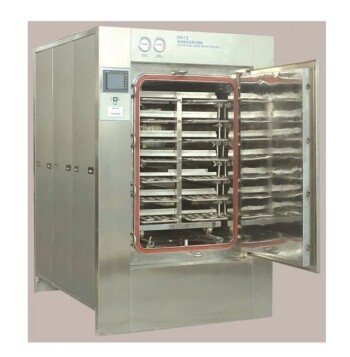
The high-pressure stainless steel autoclave functions as the critical reaction vessel for synthesizing robust BiVO4 composite catalysts. By generating self-produced pressure in a sealed environment at temperatures around 180 °C, it forces the in-situ growth of BiVO4 onto support materials like biochar and graphitic carbon nitride. This pressurized approach yields structural qualities that atmospheric synthesis simply cannot replicate.
The sealed, high-pressure environment enhances the crystallinity of active components and strengthens the chemical bonding between phases, significantly improving both charge transfer efficiency and the catalyst's long-term photocatalytic stability.
The Mechanics of Enhanced Performance
Boosting Crystallinity Through Pressure
Unlike open-air methods, the autoclave creates a self-produced pressure environment.
This pressure, combined with heat, acts as a driving force that significantly improves the crystallinity of the BiVO4 active components. Higher crystallinity means fewer structural defects, which is essential for high-performance catalysis.
Strengthening Interfacial Bonding
The autoclave promotes the in-situ growth of BiVO4 directly onto the surface of substrates.
This process creates a tight, cohesive interface between the BiVO4 and the support material (such as biochar). The result is stronger chemical bonding between the different phases, preventing the catalyst from delaminating or degrading during use.
Optimizing Charge Transfer
The physical improvements in structure directly impact the electronic behavior of the catalyst.
Because the crystalline structure is more uniform and the bonds are stronger, charge transfer efficiency is notably increased. This allows electrons to move more freely through the composite, maximizing the photocatalytic reaction rate.
The Critical Role of Reactor Design
Ensuring Purity with PTFE Liners
While the stainless steel body handles the pressure, the internal PTFE (polytetrafluoroethylene) liner is vital for chemical purity.
This liner provides exceptional chemical inertness, preventing the reaction solution from contacting the metal walls. This eliminates the risk of corrosion and prevents impurity metal ions from leaching into the BiVO4, ensuring the catalyst maintains a high specific surface area and high purity.
Controlling Morphology and Nucleation
The autoclave maintains a stable, subcritical hydrothermal condition over extended periods.
This consistent environment allows for the uniform nucleation of the precursor solution. It promotes directional growth, enabling the formation of specific heterostructures—such as nanosheets or nanorods—which are necessary for optimizing the catalyst's surface interactions.
Understanding the Trade-offs
Process Complexity vs. Atmospheric Synthesis
Using an autoclave introduces higher complexity compared to simple atmospheric heating.
It requires precise temperature control (e.g., maintaining 150°C to 180°C) to ensure the pressure generated is safe and effective. If the temperature fluctuates, the nucleation process may become inconsistent, leading to poor catalyst morphology.
Material Limitations
The reliance on a sealed vessel means the reaction is limited by the volume of the autoclave.
Furthermore, while the PTFE liner protects against impurities, it has thermal limits. Exceeding the design temperature of the liner can cause deformation or degradation, potentially contaminating the very catalyst you are trying to protect.
Making the Right Choice for Your Goal
To maximize the potential of your BiVO4 composite catalysts, align your synthesis parameters with your specific performance targets:
- If your primary focus is Photocatalytic Stability: Utilize the high-pressure environment to maximize chemical bonding strength between the BiVO4 and its substrate.
- If your primary focus is Electronic Efficiency: Target higher temperatures (around 180 °C) to enhance crystallinity, which directly correlates to improved charge transfer.
- If your primary focus is Chemical Purity: Ensure your autoclave utilizes a high-quality PTFE liner to prevent metal ion contamination from the stainless steel shell.
By leveraging the pressure and containment of the autoclave, you transform a simple mixture into a highly integrated, durable catalytic system.
Summary Table:
| Feature | Impact on BiVO4 Catalysts | Synthesis Benefit |
|---|---|---|
| Self-Produced Pressure | Enhances structural crystallinity | Reduces defects for high-performance catalysis |
| In-Situ Growth | Strengthens interfacial chemical bonding | Prevents delamination and improves stability |
| PTFE Liner | Provides chemical inertness and purity | Eliminates corrosion and metal ion contamination |
| Sealed Environment | Promotes uniform nucleation | Enables controlled morphology (nanosheets/rods) |
| Subcritical Conditions | Optimizes charge transfer efficiency | Maximizes photocatalytic reaction rates |
Elevate Your Materials Synthesis with KINTEK Precision
Unlock the full potential of your photocatalytic research with KINTEK’s premium high-pressure high-pressure reactors and autoclaves. Specifically designed for demanding hydrothermal synthesis, our equipment ensures the precise temperature and pressure control required to achieve superior crystallinity and interfacial bonding in BiVO4 composites.
Why choose KINTEK for your laboratory?
- Comprehensive Range: From high-temperature furnaces and crushing systems to advanced PTFE-lined autoclaves and electrolytic cells.
- Built for Purity: Our chemical-inert solutions prevent contamination, ensuring your catalysts maintain high specific surface areas.
- Expertise in Energy Research: We provide essential tools for battery research, cooling solutions, and hydraulic presses to support your entire workflow.
Ready to optimize your catalyst performance? Contact our technical experts today to find the perfect autoclave solution for your lab!
References
- Yi Li, Zhibao Liu. Visible-Light-Driven Z-Type Pg-C3N4/Nitrogen Doped Biochar/BiVO4 Photo-Catalysts for the Degradation of Norfloxacin. DOI: 10.3390/ma17071634
This article is also based on technical information from Kintek Solution Knowledge Base .
Related Products
- Stainless High Pressure Autoclave Reactor Laboratory Pressure Reactor
- Mini SS High Pressure Autoclave Reactor for Laboratory Use
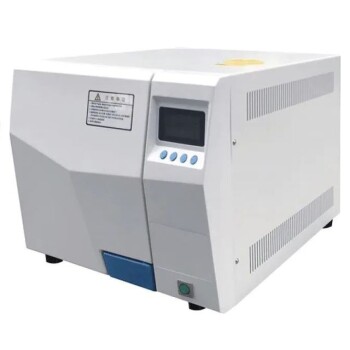
- Desktop Fast High Pressure Laboratory Autoclave Sterilizer 16L 24L for Lab Use
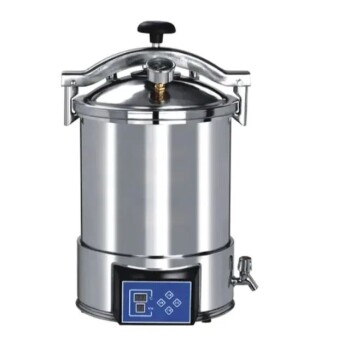
- Portable High Pressure Laboratory Autoclave Steam Sterilizer for Lab Use
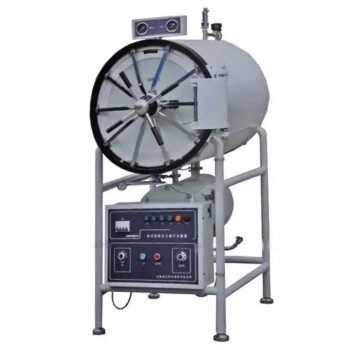
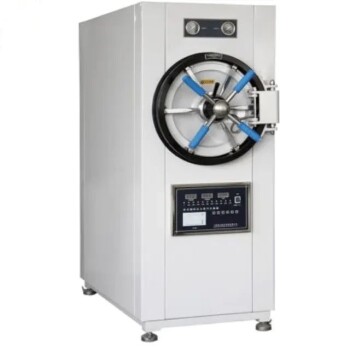
- Laboratory High Pressure Horizontal Autoclave Steam Sterilizer for Lab Use
People Also Ask
- Why is a laboratory high-pressure reactor necessary for synthesizing fly ash-based zeolite? Achieve Pure Crystallization
- Why is a laboratory high-pressure reactor used in the hydrothermal synthesis of hydroxyapatite catalysts?
- What role does a laboratory high-pressure reactor play in the leaching process of spent cathode materials? Optimize Recovery
- What conditions do laboratory high-pressure reactors provide for HTC? Optimize Your Biochar Production Processes
- How are high-pressure reactors used to prepare metaphosphate electrocatalysts? Master In-Situ Precursor Growth