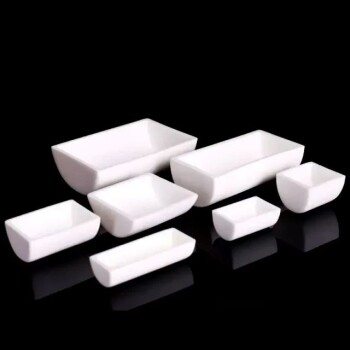
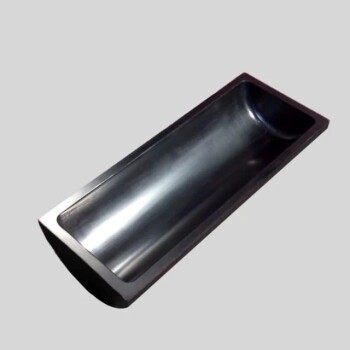
The primary advantages of using a ceramic boat for Strontium Titanate calcination are its exceptional chemical inertness and high-temperature structural stability. These carriers prevent unwanted chemical reactions with the Strontium Titanate precursors, ensuring the final powder remains high-purity and free from contaminants. Their open-top design facilitates maximum gas-solid contact for the complete oxidative decomposition of organic components, while their thermal shock resistance allows for precise temperature management without risk of container failure.
Using ceramic boats ensures the chemical and structural integrity of Strontium Titanate powders by providing a non-reactive, thermally stable environment that promotes uniform heating and efficient organic removal.
Maintaining Material Purity and Integrity
Chemical Inertness at High Temperatures
Ceramic boats are specifically chosen for their ability to remain chemically stable even at temperatures exceeding 1000°C. This inertness is critical when processing Strontium Titanate, as it prevents the carrier from reacting with active elements like strontium and titanium.
Prevention of Volatile Contamination
High-purity ceramic materials do not release volatile contaminants during the heating process. This ensures that the precursor powder remains untainted by foreign elements, which is essential for maintaining the precise stoichiometric ratios required for high-quality electronic ceramics.
Preservation of Physicochemical Properties
Because the boat does not interact with the raw materials or reaction products, the resulting powder retains its intended microscopic features. This leads to high purity in the final catalyst or ceramic components, ensuring the accuracy of subsequent physicochemical analysis.
Enhancing Calcination Efficiency
Optimizing Gas-Solid Interaction
The open structure of a ceramic boat allows synthetic air or process gases within a tube furnace to come into full contact with the sample. This exposure is vital for the complete oxidative decomposition of organic binders or precursors within the Strontium Titanate mix.
Uniform Thermal Distribution
Ceramic boats typically feature a flat surface that allows precursor powders to be spread in a thin, even layer. This geometry ensures that the material is heated uniformly, leading to a final product that is highly consistent in both crystal structure and chemical composition.
Precise Spatial Control
The rigid structure of the boat allows for precise positioning of the reaction sources within the "sweet spot" of a tube furnace. This control is necessary to regulate the diffusion paths of gas-phase components and ensure repeatable experimental results.
Structural Resilience and Safety
Superior Thermal Shock Resistance
High-temperature ceramic boats are engineered to withstand rapid temperature fluctuations without cracking. This stability allows researchers to move samples quickly between temperature zones or perform quenching without compromising the integrity of the carrier.
High-Temperature Structural Strength
Unlike metal carriers that may warp or soften, ceramic boats maintain their mechanical shape at extreme temperatures. They are often rated for temperatures up to 1500°C to provide a significant safety margin when performing standard 1000°C to 1100°C calcination cycles.
Understanding the Trade-offs
Fragility and Handling
While ceramics excel in thermal environments, they are inherently brittle and susceptible to mechanical impact. Dropping or mishandling a boat can result in immediate fracture, potentially losing the sample and requiring a full furnace cleaning.
Porosity and Cleaning
Lower-quality ceramic boats may possess a degree of surface porosity that can trap trace amounts of previous samples. To maintain the highest purity standards, boats must be rigorously cleaned or dedicated to specific material types to avoid cross-contamination.
Thermal Lag
Ceramics have a lower thermal conductivity than metals, which can result in a slight thermal lag during rapid heating phases. Users must account for the time it takes for the internal mass of the powder to reach the target temperature set by the furnace controller.
How to Apply This to Your Project
Making the Right Choice for Your Goal
- If your primary focus is Maximum Purity: Prioritize high-purity alumina or specialized ceramic boats to eliminate the risk of trace element migration into your Strontium Titanate.
- If your primary focus is High Throughput: Use wider, flatter boats to maximize the surface area-to-volume ratio, ensuring faster gas exchange and more uniform calcination.
- If your primary focus is Rapid Thermal Cycling: Select boats specifically rated for "High Thermal Shock Resistance" to prevent structural failure during quenching or fast-cooling protocols.
Choosing a high-quality ceramic boat is a fundamental step in ensuring that your Strontium Titanate powders achieve the chemical precision and structural uniformity required for advanced technological applications.
Summary Table:
| Key Feature | Benefit | Impact on Strontium Titanate |
|---|---|---|
| Chemical Inertness | Prevents reactions with Sr and Ti | Maintains high stoichiometric purity |
| Open-Top Design | Maximizes gas-solid interaction | Ensures complete oxidative decomposition |
| Flat Geometry | Provides uniform heat distribution | Consistent crystal structure & composition |
| Thermal Resilience | High thermal shock resistance | Prevents cracking during rapid cycles |
Elevate Your Material Synthesis with KINTEK’s Precision Lab Solutions
Achieving high-purity Strontium Titanate requires more than just heat; it demands a contamination-free environment. KINTEK specializes in providing premium laboratory equipment and consumables designed for the most rigorous research standards.
Our extensive portfolio includes:
- High-Temperature Furnaces: Muffle, tube, rotary, vacuum, CVD, and atmosphere furnaces.
- Precision Consumables: High-purity ceramic boats, crucibles, and PTFE products.
- Processing Equipment: Crushing, milling, and hydraulic presses (pellet, hot, isostatic).
- Advanced Research Tools: High-pressure reactors, electrolytic cells, and battery research consumables.
Don't let impurities or thermal instability compromise your results. Contact KINTEK today to find the perfect furnace and carrier solutions for your high-temperature applications!
References
- Mahsa Abedi, Zsolt Pap. Influence of Rapid Heat Treatment on the Photocatalytic Activity and Stability of Strontium Titanates against a Broad Range of Pollutants. DOI: 10.3390/catal13020219
This article is also based on technical information from Kintek Solution Knowledge Base .
Related Products
- Ceramic Evaporation Boat Set Alumina Crucible for Laboratory Use
- Aluminized Ceramic Evaporation Boat for Thin Film Deposition
- Alumina Al2O3 Ceramic Crucible Semicircle Boat with Lid for Engineering Advanced Fine Ceramics
- Molybdenum Tungsten Tantalum Special Shape Evaporation Boat
- Tungsten Evaporation Boat for Thin Film Deposition
People Also Ask
- Why is an alumina boat selected for catalyst precursors? Ensure Sample Purity at 1000 °C
- Why are high-purity ceramic boats used for lignin activation? Ensure Purity & Thermal Stability
- Why is an alumina boat and Ti3AlC2 powder bed necessary for Ti2AlC sintering? Protect MAX Phase Purity
- Why use an alumina boat for high-temperature carbon activation? Ensure Maximum Material Purity & Thermal Stability
- Why are high-purity alumina crucibles used for liquid lead corrosion experiments? Ensure Data Accuracy at 550°C