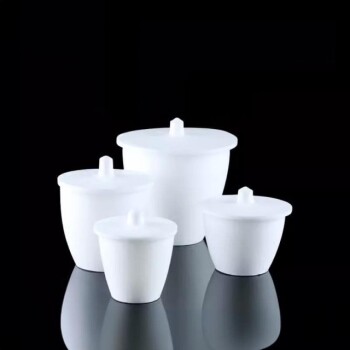
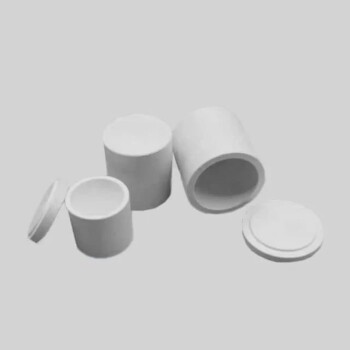
High-purity alumina is the industry standard for these experiments because it remains chemically inert when exposed to liquid lead at 550°C. Unlike stainless steel, aluminum oxide possesses extremely low solubility in molten lead, preventing the container material from dissolving into the melt and altering the chemical composition of the fluid environment.
Core Takeaway The use of alumina is critical for data integrity, not just containment. Using a reactive container like stainless steel would contaminate the liquid lead with iron and chromium, making it impossible to distinguish whether observed corrosion is coming from your test sample or the container walls.
The Chemistry of Containment
Low Solubility in Liquid Lead
The primary reason for rejecting stainless steel in favor of alumina is solubility. Liquid lead is a universal solvent for many metals, particularly at elevated temperatures like 550°C.
If you were to use a stainless steel container, the liquid lead would aggressively attack the container walls. This results in the dissolution of the steel's components—primarily iron, chromium, and nickel—directly into the molten lead.
Chemical Inertness
High-purity alumina (typically >99.7%) creates a stable barrier. According to the primary reference, aluminum oxide is chemically inert in liquid lead environments.
This inertness ensures that the container acts solely as a physical vessel, rather than a chemical participant. It prevents the introduction of external metallic impurities that would otherwise skew the baseline chemistry of the experiment.
Ensuring Data Accuracy
Isolating the Corrosion Source
The goal of the experiment is to measure the corrosion rate of a specific test sample (such as T91 or FeCrAl). To do this accurately, you must ensure that the test sample is the only source of metallic ions entering the liquid lead.
If the container is also corroding, the liquid lead becomes saturated with corrosion products from the walls. This saturation can artificially slow down the corrosion of your test sample, leading to false, overly optimistic corrosion rate data.
Preserving Selective Leaching Evidence
Corrosion in liquid lead often manifests as selective leaching, where specific elements are stripped from an alloy.
Alumina crucibles allow researchers to observe this leaching process in isolation. Because the alumina does not contribute elements to the melt, any dissolved metals found in the post-test liquid lead can be definitively attributed to the test specimen.
Preventing Oxide Film Interference
Experimental accuracy also depends on studying how oxide films form and self-heal on the alloy surface.
Metallic impurities released from a stainless steel container could interfere with these delicate surface reactions. Alumina maintains the purity of the liquid lead, ensuring that oxide film formation is governed strictly by the interaction between the specimen and the melt.
Understanding the Trade-offs
Mechanical Brittleness
While chemically superior, alumina lacks the mechanical ductility of stainless steel. It is brittle and prone to cracking under physical stress or impact.
Care must be taken during the loading of heavy lead ingots or samples to avoid fracturing the crucible before the experiment begins.
Thermal Shock Sensitivity
Alumina has lower thermal shock resistance compared to metals. Rapid heating or cooling can cause catastrophic failure of the crucible.
Experiments must be designed with controlled temperature ramps (heating and cooling rates) to prevent the vessel from cracking due to thermal expansion mismatches.
Pressure Limitations
Alumina cannot withstand high internal pressures on its own. In experiments requiring pressurized liquid lead, alumina is often used as a liner inside a stainless steel pressure vessel.
This hybrid approach utilizes steel for structural integrity while the alumina liner isolates the corrosive liquid from the steel wall, preventing secondary reactions.
Making the Right Choice for Your Goal
To ensure your experimental setup yields valid results, align your material choice with your specific data requirements:
- If your primary focus is accurate corrosion rates: You must use high-purity alumina to prevent container dissolution from masking the true degradation rate of your sample.
- If your primary focus is studying oxide film formation: You must use alumina to maintain a high-purity melt that does not chemically interfere with surface passivation mechanisms.
- If your primary focus is high-pressure testing: You should use a stainless steel pressure vessel fitted with a high-purity alumina liner to combine structural safety with chemical isolation.
In summary, alumina is not chosen for its strength, but for its invisibility; it ensures the corrosion you measure is the corrosion that actually happened.
Summary Table:
| Feature | High-Purity Alumina (>99.7%) | Stainless Steel Containers |
|---|---|---|
| Chemical Inertness | High; resistant to molten lead | Low; susceptible to dissolution |
| Data Integrity | Preserves sample-only leaching | Contaminates melt with Fe/Cr/Ni |
| Solubility in Lead | Extremely Low | High at 550°C |
| Thermal Sensitivity | High (Requires controlled ramps) | Low (Ductile) |
| Best Use Case | Precision corrosion studies | High-pressure structural vessels |
Achieve Unmatched Experimental Precision with KINTEK
Maximize the integrity of your liquid lead and high-temperature research with KINTEK’s premium laboratory solutions. From high-purity alumina crucibles and ceramics that prevent cross-contamination to advanced high-temperature muffle and vacuum furnaces for precise thermal control, we provide the tools necessary for rigorous scientific validation.
Whether you are studying selective leaching in high-pressure reactors or conducting delicate surface passivation tests, KINTEK offers a comprehensive portfolio including crushing systems, hydraulic presses, and essential PTFE consumables tailored for materials science and battery research.
Ready to elevate your lab's data accuracy? Contact our technical experts today to find the perfect equipment and consumables for your specific application.
References
- F. García Ferré, Fabio Di Fonzo. Corrosion and radiation resistant nanoceramic coatings for lead fast reactors. DOI: 10.1016/j.corsci.2017.05.011
This article is also based on technical information from Kintek Solution Knowledge Base .
Related Products
- Arc-Shaped Alumina Ceramic Crucible High Temperature Resistant for Engineering Advanced Fine Ceramics
- Alumina Al2O3 Ceramic Crucible Semicircle Boat with Lid for Engineering Advanced Fine Ceramics
- Engineering Advanced Fine Ceramics Alumina Crucibles (Al2O3) for Thermal Analysis TGA DTA
- Engineering Advanced Fine Ceramics Alumina Al2O3 Crucible With Lid Cylindrical Laboratory Crucible
- Engineering Advanced Fine Alumina Al2O3 Ceramic Crucible for Laboratory Muffle Furnace
People Also Ask
- Why Use Alumina Crucibles & Powder Burial for NaSICON? Ensure Phase Purity and Prevent Elemental Volatilization
- What is the primary purpose of using alumina crucibles for LLTO ceramics? Optimize Your High-Temperature Sintering
- Why are alumina crucibles and mother powder essential for LATP sintering? Optimize Your Solid Electrolyte Performance
- Primary considerations for choosing alumina crucibles and quartz tubes in indium intercalation: Ensure Material Purity
- Why is an alumina crucible selected for the CaCl2-NaCl molten salt system? Ensure High Purity and Thermal Stability