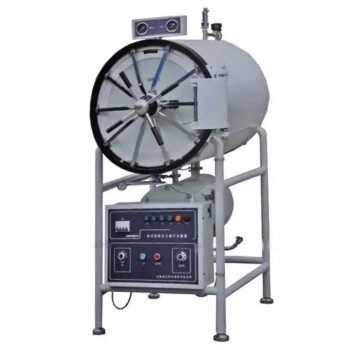
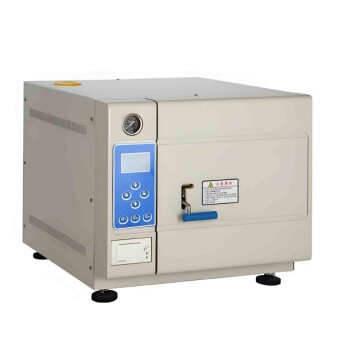
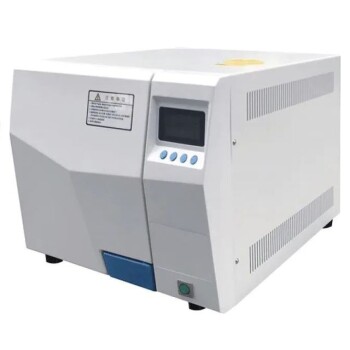
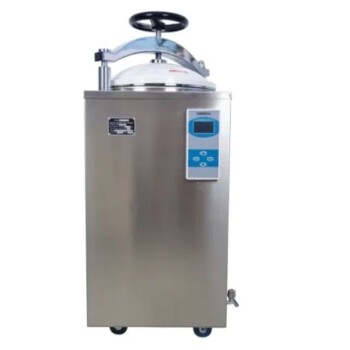
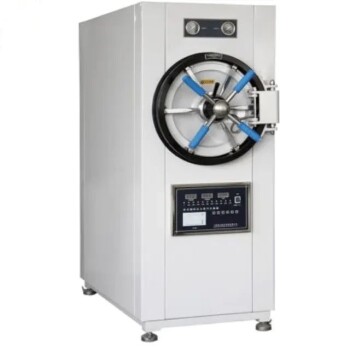
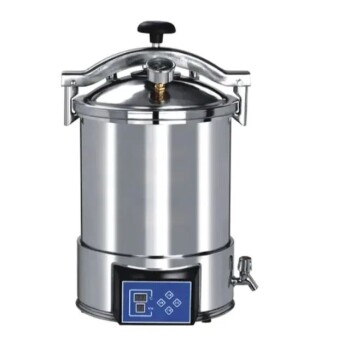
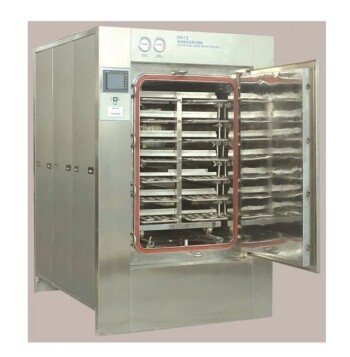
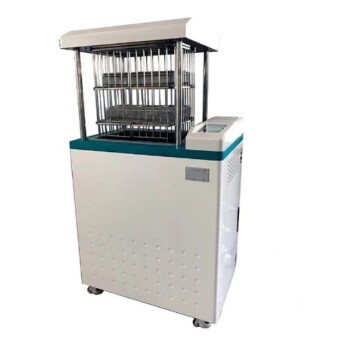
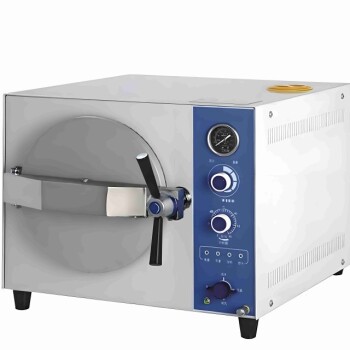
Large-capacity autoclaves are the critical enablers of secondary high-temperature steam curing for molded calcium silicate. By subjecting specimens to a controlled environment of high heat and high pressure, this equipment drives essential micro-structural changes that standard curing cannot achieve, resulting in vastly improved mechanical and thermal properties.
The core value of this process is the transformation of the material's internal structure. Through high-pressure steam curing, the autoclave promotes crystal cross-linking and reorganization, allowing the final product to withstand operating temperatures exceeding 1000 °C.
The Mechanism of Structural Transformation
Promoting Crystal Growth
The autoclave utilizes high-temperature steam to create an environment that accelerates the growth of calcium silicate crystals. This aggressive thermal treatment ensures the material evolves beyond its initial molded state.
Internal Structural Reorganization
Under high pressure, the internal structure of the specimen undergoes significant reorganization. This aligns the internal components of the material for better uniformity.
Refinement of Crystal Sizes
The process does not just grow crystals; it refines their size distribution. This refinement reduces voids and creates a more compact material matrix.
Increased Cross-linking
The most critical microscopic change is the increase in cross-linking between crystals. This creates a tightly bonded network that acts as a single, cohesive unit rather than a collection of loose particles.
Performance Outcomes
Enhanced Compressive Strength
The direct result of increased cross-linking and refined crystal structure is superior physical strength. The treated specimens can bear significantly higher loads without failing.
Improved Volume Stability
Because the structure is reorganized and stabilized under pressure, the material resists expansion or contraction. This ensures the product maintains its dimensions even when environmental conditions change.
High-Temperature Endurance
The secondary curing imparts the ability to resist extreme thermal stress. Products treated in this manner are capable of withstanding working temperatures above 1000 °C without structural degradation.
Understanding the Process Requirements
The Necessity of High Pressure
It is important to note that heat alone is insufficient. The reference emphasizes high-pressure steam as a requisite for this specific type of structural reorganization.
The Role of Capacity
The use of "large-capacity" equipment implies an industrial scale is necessary to treat molded specimens effectively. This ensures that the curing environment is uniform across large batches or large individual components.
Making the Right Choice for Your Project
If you are evaluating whether to invest in or utilize secondary autoclave curing, consider your specific performance requirements:
- If your primary focus is Extreme Thermal Resistance: This step is non-negotiable, as it is the specific mechanism that enables the material to survive temperatures above 1000 °C.
- If your primary focus is Mechanical Durability: The process provides essential value by maximizing compressive strength through crystal cross-linking.
- If your primary focus is Dimensional Precision: The volume stability gained during this phase ensures the product remains true to size during operation.
Secondary curing is not merely a drying phase; it is a fundamental structural enhancement that defines the final capability of the material.
Summary Table:
| Feature | Benefit for Calcium Silicate Specimens |
|---|---|
| Crystal Cross-linking | Creates a cohesive network for high compressive strength |
| Structural Reorganization | Enhances material uniformity and density |
| High-Pressure Steam | Drives essential micro-structural changes beyond heat alone |
| Thermal Stability | Enables continuous operation at temperatures exceeding 1000°C |
| Volume Integrity | Ensures dimensional stability and resistance to thermal stress |
Elevate Your Material Performance with KINTEK
Precision in secondary curing is the difference between standard materials and high-performance components. KINTEK specializes in advanced laboratory and industrial solutions, including high-capacity high-temperature high-pressure reactors and autoclaves designed specifically for the rigorous demands of material science.
Whether you are refining calcium silicate specimens or developing next-generation thermal insulation, our expertise in high-pressure steam environments ensures your products achieve maximum crystal cross-linking and volume stability. Beyond autoclaves, we offer a comprehensive range of muffle and vacuum furnaces, hydraulic presses, and ceramic consumables to support your entire R&D and production workflow.
Ready to achieve superior mechanical and thermal properties? Contact our technical experts today to find the perfect autoclave solution for your project.
References
- R. Šiaučiūnas, Edita Prichockiene. Synthesis of High Crystallinity 1.13 nm Tobermorite and Xonotlite from Natural Rocks, Their Properties and Application for Heat-Resistant Products. DOI: 10.3390/ma15103474
This article is also based on technical information from Kintek Solution Knowledge Base .
Related Products
- Stainless High Pressure Autoclave Reactor Laboratory Pressure Reactor
- Customizable High Pressure Reactors for Advanced Scientific and Industrial Applications
- Mini SS High Pressure Autoclave Reactor for Laboratory Use
- Desktop Fast High Pressure Laboratory Autoclave Sterilizer 16L 24L for Lab Use
- High Pressure Laboratory Autoclave Reactor for Hydrothermal Synthesis
People Also Ask
- Why is a laboratory high-pressure reactor used in the hydrothermal synthesis of hydroxyapatite catalysts?
- What role does a laboratory high-pressure reactor play in the leaching process of spent cathode materials? Optimize Recovery
- Why is a laboratory high-pressure reactor necessary for synthesizing fly ash-based zeolite? Achieve Pure Crystallization
- What conditions do laboratory high-pressure reactors provide for HTC? Optimize Your Biochar Production Processes
- What is the function of a high-pressure reactor autoclave? Enhancing Cu/N Co-Doped Carbon Catalyst Synthesis