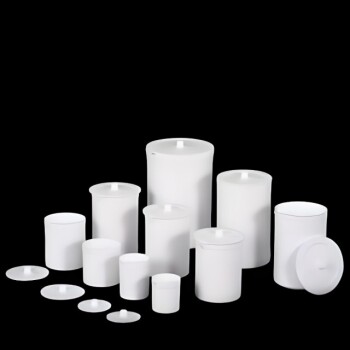
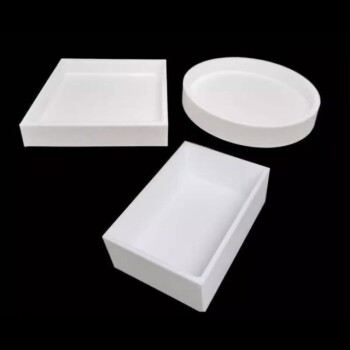
The strategic advantage of using a PTFE (Teflon) deposition tank for electrophoretic deposition (EPD) lies in its dual capability to provide absolute chemical inertness and superior electrical insulation. These properties are essential for stabilizing the deposition environment, particularly when applying coatings to ferritic stainless steel under high-voltage conditions.
A PTFE tank acts as a neutral boundary, forcing current lines to flow exclusively between the electrodes. This containment is the decisive factor in achieving a coating with consistent thickness and superior surface quality.
The Critical Role of Electrical Insulation
Eliminating Leakage Currents
Under high-voltage DC fields, such as 60 V, standard tank materials may allow current to "leak" into the vessel walls or surrounding environment.
PTFE provides a robust dielectric barrier that prevents leakage currents entirely.
This ensures that the applied voltage is utilized efficiently, directing the energy solely toward the electrophoretic mobility of the particles.
Optimizing Current Distribution
Because the tank walls act as perfect insulators, they do not distort the electric field.
This forces the current lines to distribute uniformly between the cathode (the stainless steel substrate) and the anode.
A predictable, uniform electric field is the primary requirement for a controlled deposition rate across complex geometries.
Impact on Coating Quality
Achieving Consistent Thickness
The uniformity of the current lines directly translates to the physical properties of the coating.
By stabilizing the field, the PTFE tank ensures the (Co,Mn)3O4 coating maintains a consistent thickness across the entire substrate.
This eliminates "hot spots" where coating might otherwise build up too quickly due to field concentration.
Enhancing Surface Finish
Electrical interference often leads to rough or porous deposition layers.
The stability provided by the PTFE environment results in a significantly smoother surface finish.
This smoothness is critical for the functional performance of the stainless steel in its final application.
Chemical Inertness and Purity
Preventing Electrolyte Reactions
EPD processes rely on specific chemical balances within the electrolyte solution.
PTFE is chemically non-reactive and does not interact with the electrolyte, even during prolonged exposure.
This guarantees that the bath chemistry remains pure, preventing contamination that could degrade the coating's adhesion or composition.
Understanding the Trade-offs
While PTFE is technically superior for EPD, it introduces specific logistical challenges.
Opacity: Unlike glass, PTFE is opaque, which makes visual monitoring of the electrode distance and suspension stability impossible during the process.
Cost: PTFE vessels are significantly more expensive to fabricate than standard polypropylene or glass beakers, potentially increasing the setup cost for large-scale operations.
Making the Right Choice for Your Goal
Selecting the correct tank material depends on the precision required for your final application.
- If your primary focus is coating uniformity: Prioritize a PTFE tank to ensure linear current distribution and consistent layer thickness.
- If your primary focus is process visibility: Consider that PTFE will block your view, requiring you to rely entirely on electrical readouts to monitor the process.
The choice of tank material is not just a logistical detail; it is a process variable that directly dictates the quality of your final coating.
Summary Table:
| Feature | PTFE (Teflon) Tank Advantage | Impact on EPD Process |
|---|---|---|
| Electrical Insulation | High dielectric strength; zero leakage | Maximizes energy efficiency and field control |
| Current Distribution | Eliminates wall interference | Ensures uniform coating thickness on substrates |
| Chemical Stability | Completely inert and non-reactive | Maintains electrolyte purity and prevents contamination |
| Surface Quality | Stable electrical environment | Produces smooth, non-porous, and consistent finishes |
| Durability | High-voltage and chemical resistance | Long-lasting performance in aggressive lab conditions |
Elevate Your Coating Precision with KINTEK Materials Expertise
Don't let inconsistent electric fields or chemical contamination compromise your research. At KINTEK, we specialize in providing high-performance laboratory equipment and specialized consumables, including PTFE products, ceramics, and crucibles designed to withstand the rigors of advanced material science.
Whether you are performing electrophoretic deposition on ferritic stainless steel or advancing battery research, our comprehensive range—from high-temperature furnaces (muffle, vacuum, CVD) and high-pressure reactors to electrolytic cells and electrodes—is engineered for absolute reliability.
Ready to optimize your deposition environment? Contact our technical specialists today to find the perfect PTFE solution or laboratory hardware tailored to your specific application. Let KINTEK provide the precision tools you need for superior surface quality.
References
- Jyrki Mikkola, Olivier Thomann. Protective Coatings for Ferritic Stainless Steel Interconnect Materials in High Temperature Solid Oxide Electrolyser Atmospheres. DOI: 10.3390/en15031168
This article is also based on technical information from Kintek Solution Knowledge Base .
Related Products
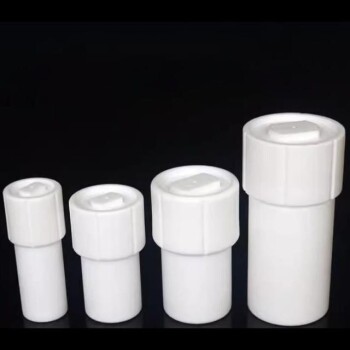
- Custom PTFE Teflon Parts Manufacturer for Microwave Digestion Tank
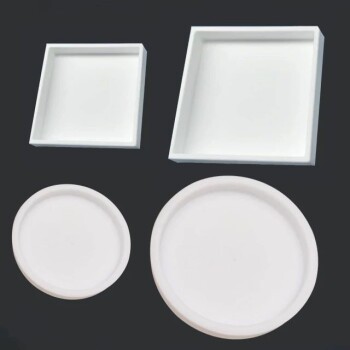
- Custom PTFE Teflon Parts Manufacturer for PTFE Containers
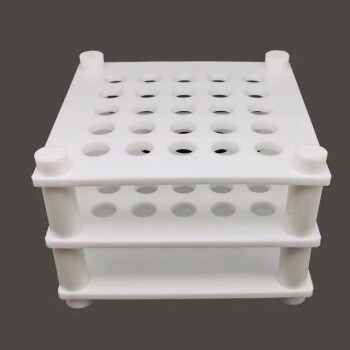
- Custom PTFE Teflon Parts Manufacturer for Centrifuge Tube Racks
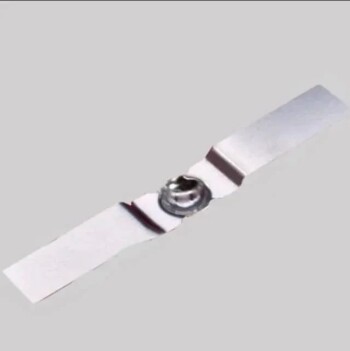
- Hemispherical Bottom Tungsten Molybdenum Evaporation Boat
- Tungsten Evaporation Boat for Thin Film Deposition
People Also Ask
- Why are PTFE containers required for PCT leaching tests? Ensure Chemical Inertness and Analytical Precision
- Why use high-quality PTFE containers for CO2 reduction electrolytes? Eliminate silicon contamination and ensure data.
- Why is PTFE Mandatory for Hydrofluoric Acid (HF) Handling? Ensure Safety and Data Integrity in Corrosion Testing
- Why is a PTFE container required for acid leaching of silicon nanosheets? Ensure High Purity and Safety
- Why are polytetrafluoroethylene (PTFE) containers essential for assessing the corrosion resistance of glassified waste?