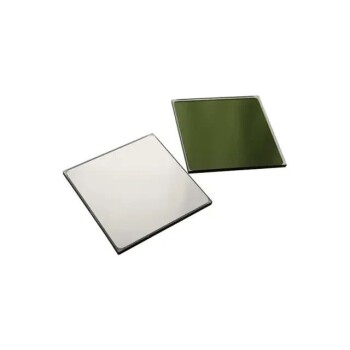
Fluorine-doped Tin Oxide (FTO) glass is the preferred substrate for photoelectrochemical (PEC) characterization because it uniquely combines high optical transparency with excellent electrical conductivity. It serves as a robust physical support for photocatalyst films while functioning as a high-efficiency current collector. This dual-purpose role ensures that light can reach the catalyst while photogenerated electrons are simultaneously transferred to the external measurement circuit with minimal loss.
Core Takeaway: FTO glass provides a chemically stable and thermally resilient platform that bridges the gap between light absorption and electrical measurement, ensuring high-fidelity data in diverse testing environments.
The Synergy of Optical and Electrical Properties
High Visible Light Transmittance
FTO glass allows the majority of the visible light spectrum to pass through the substrate to reach the deposited photocatalyst. This high transparency is critical for constructing efficient transparent photoanodes where back-illumination or precise light dosage is required.
Superior Electrical Conductivity
As a transparent conducting oxide (TCO), FTO maintains a low sheet resistance that facilitates rapid electron transfer. This conductivity is essential for minimizing ohmic losses during transient photocurrent response measurements and steady-state polarization curves.
Efficient Current Collection
Beyond simple conductivity, FTO acts as a bridge for electron collection. It ensures that electrons generated within the catalyst layer are captured and directed into the external circuit without significant recombination at the interface.
Structural and Chemical Robustness
Exceptional Thermal Stability
Unlike other conductive glasses, FTO can withstand the high-temperature annealing processes (often exceeding 450°C) required for methods like sol-gel or chemical vapor deposition. This allows for the synthesis of high-quality crystalline titanium dioxide and other semiconductor films directly on the substrate.
Chemical Corrosion Resistance
FTO glass maintains its integrity when exposed to strong acidic or alkaline electrolytes. This chemical inertness is vital for the reliability of long-term stability tests and sensitive Mott-Schottky measurements.
Mechanical Support for Thin Films
The substrate provides a rigid, flat surface that ensures the physical durability of the photocatalyst film. This support prevents the delamination of the active material during immersion in liquid electrolytes or under the stress of gas evolution.
Understanding the Trade-offs and Pitfalls
Surface Roughness vs. Film Uniformity
FTO typically has a higher surface roughness compared to Indium Tin Oxide (ITO). While this can improve film adhesion, it may lead to non-uniformity in extremely thin atomic layer deposition (ALD) coatings, potentially creating "pinholes" or shunts.
The Conductivity-Transparency Balance
There is an inherent trade-off between the thickness of the fluorine-doped layer and its performance. Thicker layers increase conductivity but reduce light transmittance; choosing the right "ohms per square" rating is a critical design decision for any PEC experiment.
Interface Resistance
Even with high-quality FTO, the interface between the catalyst and the glass can introduce resistance. Failure to properly clean the FTO surface or optimize the deposition parameters can result in poor charge carrier injection, leading to underrepresented efficiency data.
How to Apply This to Your Project
Making the Right Choice for Your Goal
- If your primary focus is high-temperature catalyst synthesis: Choose FTO over ITO to ensure the conductive layer does not degrade or lose conductivity during the calcination process.
- If your primary focus is extreme pH environments: Utilize FTO due to its superior chemical resistance in highly caustic or acidic photoelectrocatalytic cells.
- If your primary focus is maximum light harvesting: Select a high-transmittance FTO grade (e.g., >80% visible light) even if it results in a slightly higher sheet resistance.
- If your primary focus is precise electrochemical kinetics: Prioritize low-resistance FTO (e.g., 7-10 ohms/sq) to ensure that the measured current reflects the catalyst's performance rather than substrate limitations.
By leveraging the thermal and chemical resilience of FTO, researchers can ensure that their photoelectrochemical data is a true reflection of the catalyst's intrinsic properties.
Summary Table:
| Feature | Key Advantage | Impact on PEC Characterization |
|---|---|---|
| Optical Transparency | High visible light transmittance | Enables back-illumination and precise light dosage. |
| Electrical Conductivity | Low sheet resistance | Minimizes ohmic losses for accurate photocurrent data. |
| Thermal Stability | Withstands >450°C | Supports high-temperature catalyst synthesis (sol-gel/CVD). |
| Chemical Inertness | Acid/Alkali resistance | Ensures reliability in diverse and corrosive electrolytes. |
| Surface Texture | High roughness | Promotes superior adhesion of photocatalyst films. |
Elevate Your PEC Research with KINTEK Precision Tools
To achieve high-fidelity data in photoelectrochemical characterization, the quality of your substrates and equipment is non-negotiable. KINTEK specializes in providing researchers with premium laboratory equipment and consumables designed for the most demanding environments.
From high-quality FTO and ITO conductive glass to advanced high-temperature furnaces (muffle, tube, and vacuum) for catalyst calcination, and electrolytic cells for precise testing, we offer a comprehensive portfolio to support your breakthroughs. Whether you are developing next-generation batteries or high-efficiency photocatalysts, KINTEK provides the thermal, mechanical, and electrochemical tools—including hydraulic presses and high-pressure reactors—to ensure your lab operates at peak efficiency.
Ready to optimize your experimental results? Contact our experts today to find the perfect solutions for your specific research needs.
References
- Siying Lin, Baojiang Jiang. Rod-shaped aggregates of sulfur-doped carbon nitride nanosheets for enhanced photocatalytic hydrogen evolution. DOI: 10.1007/s40843-023-2627-0
This article is also based on technical information from Kintek Solution Knowledge Base .
Related Products
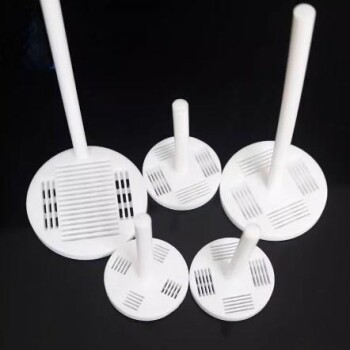
- Custom Machined and Molded PTFE Teflon Parts Manufacturer for Laboratory ITO FTO Conductive Glass Cleaning Flower Basket
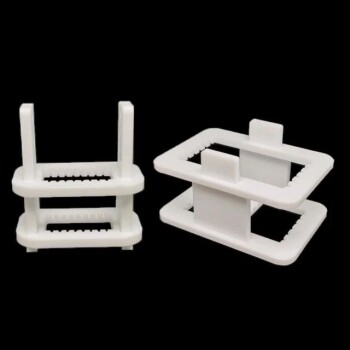
- Custom PTFE Teflon Parts Manufacturer for Conductive Glass Substrate Cleaning Rack
- Float Soda-Lime Optical Glass for Laboratory Use
- Optical Window Glass Substrate Wafer CaF2 Substrate Window Lens
- Conductive Boron Nitride BN Ceramics Composite for Advanced Applications
People Also Ask
- What should be monitored during the cleaning process when using a PTFE cleaning basket? Ensure Reliable Results & Prevent Damage
- What precautions should be taken regarding the physical handling and loading of a PTFE cleaning basket? Prevent Damage and Ensure Process Integrity
- How should a PTFE cleaning basket be cleaned before its initial use? A Critical First Step for Process Integrity
- What is the maximum operating temperature for a PTFE cleaning basket? Avoid Catastrophic Failure at 260°C
- How should a PTFE cleaning basket be stored when not in use? Maximize Lifespan & Prevent Contamination