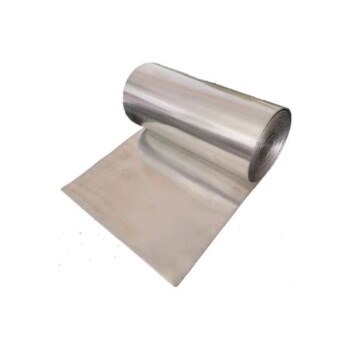
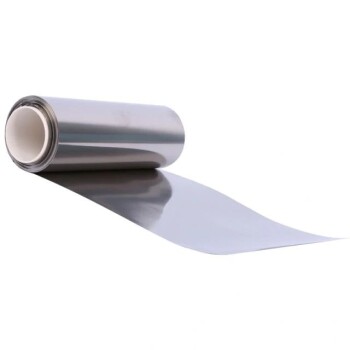
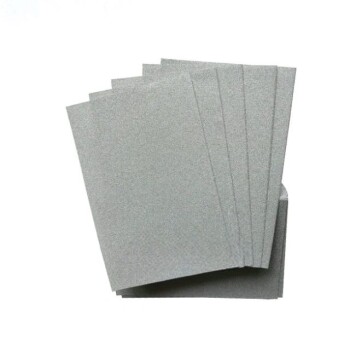
In flexible all-solid-state zinc-air batteries, high-purity zinc foil acts as a dual-purpose anode and current collector, while specialized separators serve as the critical ion-conductive barrier that prevents electrical failure. These components work in tandem to ensure electrochemical stability, high energy density, and mechanical resilience during physical deformation.
The performance of a zinc-air battery depends on the zinc foil's ability to provide a clean electrochemical source and the separator's efficiency in facilitating ion flow while blocking physical short circuits. Mastering the interplay between these materials is essential for achieving long cycle life and high power density in flexible electronics.
The Multi-Functional Role of High-Purity Zinc Foil
Anode Activity and Current Collection
In this architecture, the high-purity zinc foil serves as the active anode material, undergoing electrochemical oxidation to release electrons and zinc ions during discharge. Beyond being the "fuel" of the battery, it also functions as the current collector, providing a low-resistance path for electron conduction throughout the system.
Influence on Power Density and Capacity
The chemical purity and surface smoothness of the zinc plate are not merely aesthetic; they directly influence polarization characteristics and specific capacity. When paired with advanced air cathodes, such as hierarchical porous nitrogen-doped carbon, the zinc foil becomes a primary determinant of the battery’s peak power density.
Structural Foundation for Flexibility
Because it is a foil, it provides a degree of mechanical flexibility necessary for all-solid-state designs. It must maintain its structural integrity and electrical contact even when the battery is subjected to repeated bending or twisting.
The Critical Barrier Functions of Specialized Separators
Electrical Isolation and Ion Conductivity
The specialized separator acts as a physical gatekeeper, positioned between the anode and the air cathode to prevent catastrophic short circuits. While it blocks electrons, its porosity and hydrophilicity are engineered to allow oxygen ions or hydroxide ions to migrate freely between electrodes.
Ion Channel Formation
When integrated with gel electrolytes, the separator is often pre-soaked to establish stable ion channels. This process is vital for maintaining low internal resistance, which ensures the battery can deliver steady voltage under load.
Mitigating Dendrite Growth
One of the most critical roles of the separator is blocking the penetration of zinc dendrites—needle-like structures that can grow from the anode during cycling. By preventing these dendrites from reaching the air electrode, the separator significantly extends the cycle life and safety of the device.
Understanding the Trade-offs and Challenges
Purity versus Surface Reactivity
While high purity reduces side reactions, the surface smoothness of the zinc foil can sometimes limit the surface area available for the electrochemical reaction. Balancing a smooth surface for uniform deposition with enough reactivity for high discharge rates is a constant engineering challenge.
Porosity versus Mechanical Strength
A separator with extremely high porosity offers excellent ion transport but may suffer from reduced mechanical strength. In flexible applications, a separator that is too thin or porous may fail under the physical stress of bending, leading to internal contact between the zinc particles and the air electrode.
Electrolyte Retention and Resistance
Specialized separators must maintain high electrolyte retention to prevent the battery from drying out, particularly in "all-solid-state" designs that use gels. If the separator loses moisture, internal resistance spikes, which can lead to a rapid decline in battery performance.
How to Optimize Your Battery Assembly
Strategic Material Selection
- If your primary focus is maximizing cycle life: Prioritize a separator with high mechanical strength and proven dendrite-blocking capabilities to prevent internal shorts over hundreds of cycles.
- If your primary focus is high power output: Utilize the highest purity zinc foil available with a polished surface to minimize polarization and maximize electron flow.
- If your primary focus is extreme flexibility: Select thin, specialized separators that are optimized for gel electrolyte compatibility to ensure the ion channels remain open during physical deformation.
By carefully balancing the electrochemical purity of the zinc anode with the structural and conductive properties of the separator, you can build a flexible power source that is both high-performing and remarkably durable.
Summary Table:
| Component | Primary Function(s) | Key Performance Impact |
|---|---|---|
| High-Purity Zinc Foil | Dual-purpose Anode & Current Collector | Maximizes power density; ensures low-resistance electron path |
| Specialized Separator | Ion-conductive barrier & Dendrite blocker | Prevents electrical shorts; extends cycle life & ensures safety |
| Integrated System | Structural foundation for flexibility | Enables mechanical resilience during bending or twisting |
Elevate Your Battery Research with KINTEK
Achieving peak performance in flexible all-solid-state zinc-air batteries requires the highest quality materials. At KINTEK, we specialize in providing researchers with premium battery research tools and consumables, including high-purity foils, specialized separators, and advanced electrolytic cells.
Whether you are optimizing for high power density or extreme mechanical flexibility, our comprehensive range of high-performance materials—from PTFE products and ceramic crucibles to precision crushing and milling systems—ensures your lab results are reliable and scalable.
Ready to optimize your battery assembly?
Contact KINTEK Today to discuss your specific requirements and see how our expertise can drive your next breakthrough!
References
- Hyun Wook Go, Joong Hee Lee. Tailored Heterojunction Active Sites for Oxygen Electrocatalyst Promotion in Zinc‐Air Batteries. DOI: 10.1002/smll.202206341
This article is also based on technical information from Kintek Solution Knowledge Base .
Related Products
- High Purity Zinc Foil for Battery Lab Applications
- High-Purity Titanium Foil and Sheet for Industrial Applications
- High Purity Alumina Granulated Powder for Engineering Advanced Fine Ceramics
- High Purity Gold Platinum Copper Iron Metal Sheets
- Optical Window Glass Substrate Wafer Sheets Zinc Sulfide ZnS Window
People Also Ask
- Why is high-purity copper foil preferred for silicon-based anodes? Boost Efficiency and Loading Density
- What is the function of a High-purity Platinum Foil Electrode? Master TiO2 Nanotube Anodic Oxidation
- What are the core functions of zinc-air battery test molds? Evaluate Catalyst Durability & Cycling Efficiency
- In which fields is nickel foam widely used? A Key Material for Advanced Engineering
- What procedures should be followed after using nickel or copper foam? A Guide to Reliable Reuse and Performance