Copper foil serves as the essential negative current collector and conductive substrate in asymmetric sodium metal battery testing. Specifically used in Na||Cu half-cell configurations, acts as the foundational surface where sodium ions are deposited (plated) and subsequently removed (stripped). This setup is the industry standard for isolating and measuring the efficiency of sodium cycling without the masking effects of a massive sodium reservoir.
Core Takeaway In electrochemical testing, copper foil acts as a precise "blank canvas" that reveals the true reversibility of the system. By acting as the substrate for sodium deposition, it allows researchers to rigorously quantify Coulombic Efficiency and evaluate how well other components—like separators—suppress dangerous dendrite growth.
The Role of Copper in Asymmetric Half-Cells
Serving as the Conductive Substrate
In a Na||Cu half-cell, the copper foil is not the active fuel; it is the inert host. It provides the necessary electrical conductivity for electrons to flow, allowing sodium ions to reduce and form sodium metal on its surface.
Because copper is electrochemically stable within the voltage window of sodium plating, it ensures that the reactions observed are purely from the sodium, not the current collector itself.
Enabling the Plating and Stripping Mechanism
The fundamental test involves moving sodium from a source electrode to the copper foil. This process is known as plating.
Subsequently, the current is reversed to move the sodium back to the source, known as stripping. The copper foil allows this cycle to happen repeatedly so researchers can observe how the system degrades over time.
Evaluating Battery Performance and Safety
Measuring Coulombic Efficiency (CE)
The most critical metric derived from using copper foil is Coulombic Efficiency. This represents the ratio of sodium successfully stripped off the copper compared to the amount originally plated.
If 100% of the sodium returns, the system is perfectly reversible. Any loss indicates that sodium was consumed by side reactions or isolated on the copper surface, signaling inefficiency.
Monitoring Voltage Profiles
The voltage response recorded at the copper interface acts as a diagnostic heartbeat for the cell. Stable voltage indicates smooth, uniform sodium deposition.
Erratic voltage fluctuations on the copper foil often signal the formation of dendrites—needle-like growths that can pierce separators and cause short circuits.
Assessing Separator Effectiveness
References indicate that copper foil is specifically used to evaluate modified separators. By changing the separator but keeping the copper substrate constant, researchers can isolate the separator's impact.
If the separator successfully inhibits dendrites and induces uniform sodium deposition, the copper foil will show improved cycle life and higher efficiency.
Understanding the Trade-offs
High Sensitivity to Surface Condition
While copper is a standard consumable, its surface quality is a critical variable. Pre-existing oxidation, roughness, or contamination on the copper foil can alter how sodium nucleates (begins to grow).
This sensitivity means that inconsistent foil preparation can lead to noisy data that does not accurately reflect the performance of the separator or electrolyte being tested.
The "Harshness" of the Test
The Na||Cu configuration is often more rigorous than a full cell because there is no excess sodium on the copper side.
In a full battery, excess sodium can hide inefficiencies. On copper foil, every microgram of lost sodium is immediately apparent in the efficiency data, making it an unforgiving but necessary stress test.
Making the Right Choice for Your Goal
When designing your electrochemical experiments, the way you utilize the copper foil interface dictates the quality of your data.
- If your primary focus is quantifying reversibility: Monitor the Coulombic Efficiency (CE) on the copper foil to determine strictly how much active sodium is lost per cycle.
- If your primary focus is safety and morphology: Analyze the voltage profiles at the copper interface to detect early signs of dendrite formation and unstable deposition.
By treating the copper foil as a precision diagnostic tool rather than just a battery component, you gain the visibility needed to engineer safer, longer-lasting sodium metal batteries.
Summary Table:
| Feature | Role in Sodium Metal Battery Testing | Key Benefit for Researchers |
|---|---|---|
| Current Collector | Serves as an inert, conductive negative substrate | Ensures high electrical conductivity without interference. |
| Plating/Stripping Site | Provides a "blank canvas" for sodium ion movement | Allows precise measurement of cycle reversibility. |
| CE Metric Host | Primary surface for calculating Coulombic Efficiency | Quantifies sodium loss and system degradation accurately. |
| Safety Diagnostic | Monitors voltage profiles and nucleation | Enables early detection of dangerous dendrite growth. |
Optimize Your Battery Research with KINTEK Precision Consumables
High-quality testing requires high-purity materials. KINTEK specializes in providing premium laboratory consumables and equipment tailored for advanced energy storage research. From high-conductivity copper foils and electrolytic cells to high-temperature furnaces and vacuum reactors, our portfolio supports every stage of sodium metal battery development.
Ensure the accuracy of your Coulombic Efficiency measurements and the safety of your electrochemical cells with materials trusted by leading labs.
Contact KINTEK today to discuss your testing needs!
Related Products
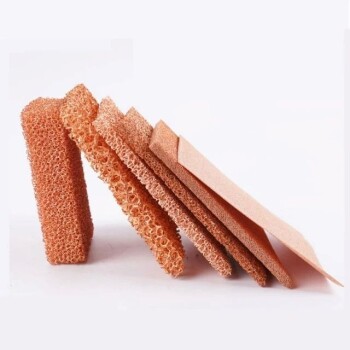
- Copper Foam
- Copper Nickel Foam Metal Sheet
- Professional Cutting Tools for Carbon Paper Cloth Diaphragm Copper Aluminum Foil and More
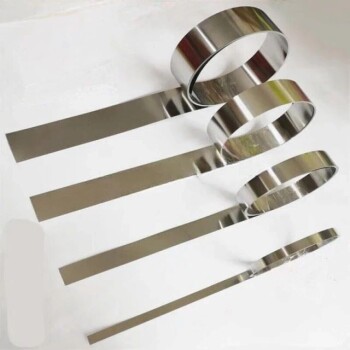
- Battery Lab Equipment 304 Stainless Steel Strip Foil 20um Thick for Battery Test
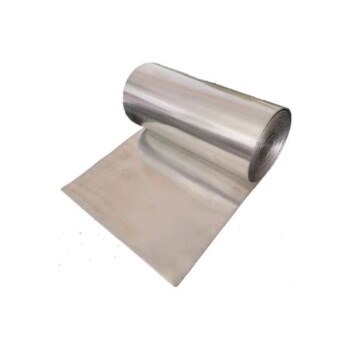
- High Purity Zinc Foil for Battery Lab Applications
People Also Ask
- What is copper foam used for? A Guide to Its High-Performance Thermal and Energy Applications
- How do you make copper foam? A Step-by-Step Guide to Creating Porous Metal Structures
- What are the available sizes and thicknesses for copper foam? Optimize Your Thermal and Filtration Performance
- What are the characteristics of copper foam? Unlock High-Performance Thermal and Electrical Solutions
- Is copper foam safe? Discover the facts about its antimicrobial and cooling benefits