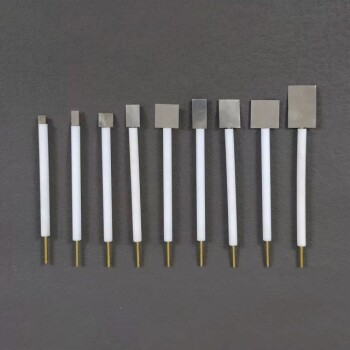
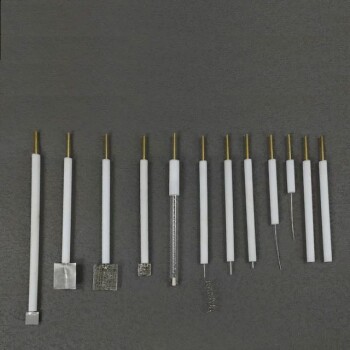
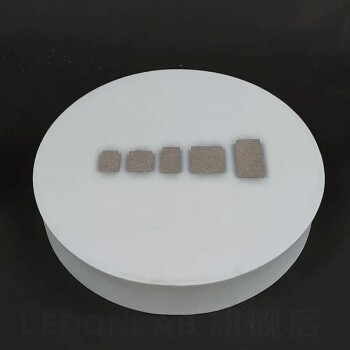
In the anodic oxidation process of titanium dioxide (TiO2) nanotube arrays, the High-purity Platinum Foil Electrode functions as the counter electrode, or cathode. Its primary role is to complete the electrochemical circuit, allowing current to flow to the titanium anode where the oxidation occurs.
Core Takeaway: By providing high electrical conductivity and resisting corrosion in harsh fluoride-containing electrolytes, the platinum cathode ensures a stable electrical field. This stability is the prerequisite for the controlled local oxidative dissolution of the titanium surface, which directly enables the growth of vertically oriented nanotube structures.
The Mechanics of the Dual-Electrode System
acting as the Counter Electrode
In a standard dual-electrode anodic oxidation setup, the system requires two poles. The titanium specimen acts as the anode (where oxidation happens).
Completing the Circuit
The platinum foil serves as the cathode. Without this counter electrode, the electrical circuit remains open, and the electrochemical reaction cannot proceed.
Why Platinum is the Material of Choice
Withstanding Harsh Electrolytes
The anodic oxidation process typically utilizes fluoride-containing electrolytes. These solutions are highly corrosive and can degrade many standard metals.
Ensuring Chemical Stability
High-purity platinum serves this role because of its excellent chemical stability. It resists reacting with the electrolyte, ensuring that the electrode itself does not corrode or introduce impurities into the solution.
maintaining High Conductivity
Platinum is chosen for its high electrical conductivity. This property ensures efficient charge transfer through the system, maintaining a consistent current density essential for uniform nanotube growth.
Impact on Nanotube Formation
Facilitating Oxidative Dissolution
The stability provided by the platinum electrode allows for controlled local oxidative dissolution. This is the specific chemical process where the titanium surface breaks down in a regulated manner.
Promoting Vertical Alignment
Because the electrochemical environment remains stable, the system promotes a specific structural outcome. The process results in the vertically oriented growth of titanium dioxide nanotube structures, rather than disordered or random oxide layers.
Understanding the Critical Requirements
The Necessity of Stability
The use of high-purity platinum is not arbitrary; it is a response to the aggressive nature of the electrolyte. If a less stable material were used as the cathode, it could degrade, destabilizing the electrical circuit and disrupting the growth process.
The Role of Purity
"High-purity" is a key specification. Impurities in the cathode material could alter the conductivity or chemical resistance, leading to inconsistent voltage application and irregular nanotube structures.
Making the Right Choice for Your Goal
To ensure successful nanotube synthesis, apply the following principles:
- If your primary focus is Process Stability: Ensure your cathode is made of chemically inert material like high-purity platinum to withstand fluoride electrolytes without degradation.
- If your primary focus is Nanotube Quality: Prioritize a high-conductivity counter electrode to maintain the stable circuit required for vertically oriented, uniform structural growth.
The platinum foil is not just a passive component; it is the stabilizing anchor that makes precise electrochemical nanostructuring possible.
Summary Table:
| Component Feature | Functional Role in Anodic Oxidation |
|---|---|
| Electrode Type | Serves as the stable Counter Electrode (Cathode) |
| Chemical Stability | Resists corrosion in aggressive fluoride electrolytes |
| Conductivity | High electrical efficiency for consistent current density |
| Process Impact | Enables controlled oxidative dissolution for vertical nanotubes |
| Purity Grade | Prevents electrolyte contamination and circuit fluctuations |
Elevate Your Electrochemical Research with KINTEK
Precision in nanostructuring starts with high-quality components. KINTEK specializes in premium laboratory equipment and consumables designed for the most demanding research environments. Whether you are performing anodic oxidation, battery research, or material synthesis, our high-purity platinum foil electrodes and comprehensive range of electrolytic cells and electrodes provide the stability and conductivity you need for reproducible results.
From high-temperature vacuum furnaces and hydraulic pellet presses to specialized PTFE products and ceramics, KINTEK offers the full spectrum of tools for modern laboratories.
Ready to optimize your TiO2 nanotube synthesis? Contact our technical experts today to find the perfect electrochemical solutions tailored to your specific application requirements.
References
- Yue Sun, Lan A. Gold nanoparticle decoration potentiate the antibacterial enhancement of TiO2 nanotubes via sonodynamic therapy against peri-implant infections. DOI: 10.3389/fbioe.2022.1074083
This article is also based on technical information from Kintek Solution Knowledge Base .
Related Products
- High Purity Gold Platinum Copper Iron Metal Sheets
- Platinum Sheet Electrode for Laboratory and Industrial Applications
- Platinum Sheet Electrode for Battery Lab Applications
- High Purity Zinc Foil for Battery Lab Applications
- Platinum Auxiliary Electrode for Laboratory Use
People Also Ask
- What general precaution should be taken regarding the electrolyte? Ensure Your Gold & Platinum Electrodes Stay Inert
- What are the guidelines for using gold or platinum sheets during an experiment? Ensure Precise and Reliable Results
- What is the purity of the gold and platinum sheets used for experiments? Ensuring 99.99% Purity for Reliable Results
- What substances should be avoided to prevent damage to gold or platinum sheets? Protect Your Precious Metals
- What are the main maintenance and care instructions for gold and platinum sheets? Ensure Longevity and Pristine Performance