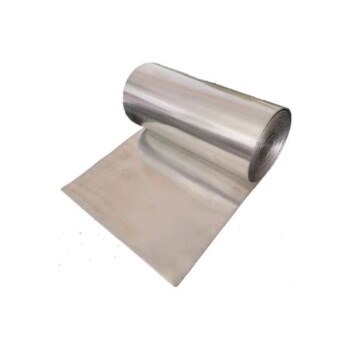
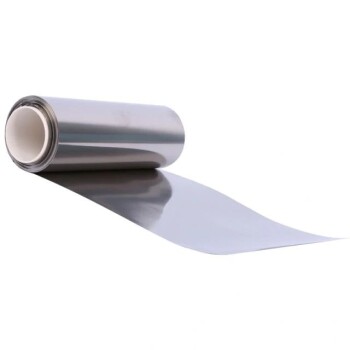
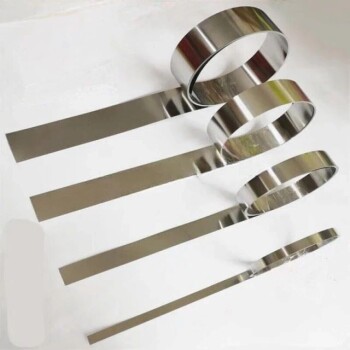
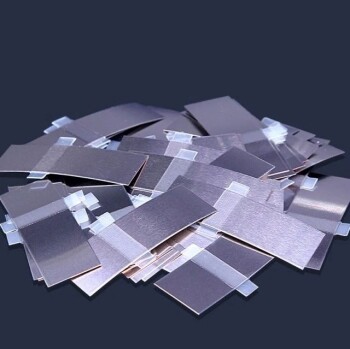
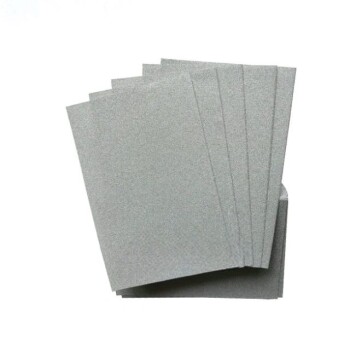
The necessity of Aluminum Nitride (AlN) foil lies in its ability to act as a comprehensive protective shield during the volatile conditions of high-pressure and high-temperature sintering. It serves as a physical barrier that isolates powder samples, specifically carbide nanopowders, from the surrounding pressure chamber components. By doing so, it prevents chemical contamination while simultaneously ensuring the sample receives the consistent heat required for successful sintering.
By combining high thermal conductivity with chemical inertness, AlN foil resolves the critical conflict of sintering: it allows heat to enter the sample efficiently while rigorously blocking contaminants from entering the material structure.
The Mechanisms of Sample Protection
Ensuring Chemical Purity
The primary risk during high-temperature sintering is cross-contamination. Nanopowders are highly reactive and susceptible to impurities.
AlN foil exhibits excellent chemical stability even at elevated temperatures. This inertness creates a boundary that prevents the sample from reacting with the high-pressure media or other mold components.
Without this barrier, the chemical composition of the nanocomposite could be altered, compromising the final material properties.
Achieving Thermal Uniformity
Isolation alone is not enough; the sample must also undergo a consistent phase change.
Aluminum Nitride possesses high thermal conductivity, which allows it to transfer heat rapidly and evenly across the sample surface.
This ensures the sample is heated uniformly, preventing hot spots or thermal gradients that could lead to uneven sintering or structural defects.
Providing Physical Isolation
The environment inside a high-pressure chamber involves significant physical forces and distinct media types.
The foil acts as an effective physical isolator, containing the powder within a defined volume.
This containment is essential for maintaining the shape and density of the sample while protecting it from direct contact with the forceful elements of the pressure chamber.
The Risks of Inadequate Isolation
Compromising Material Integrity
The absence of a material like AlN results in immediate interaction between the sample and the processing environment.
This leads to chemical reactions with the mold components, introducing foreign elements into the nanopowder matrix.
Such contamination renders the experiment invalid, as the resulting composite no longer reflects the intended chemical baseline.
Making the Right Choice for Your Goal
To ensure the success of your sintering process, consider the specific protective needs of your material.
- If your primary focus is Chemical Composition: Rely on AlN foil to serve as an inert barrier that completely blocks reaction with high-pressure media.
- If your primary focus is Microstructural Homogeneity: Utilize AlN foil to leverage its thermal conductivity, ensuring every part of the sample experiences the same temperature profile.
AlN foil is not merely a packaging material; it is an active process control that guarantees both the purity and thermal consistency of your sintered samples.
Summary Table:
| Feature | Function of AlN Foil | Benefit to Sintering Process |
|---|---|---|
| Chemical Stability | Prevents reactions with chamber media | Maintains high sample purity and composition |
| Thermal Conductivity | Distributes heat rapidly and evenly | Ensures microstructural homogeneity and no hot spots |
| Physical Barrier | Isolates powders from mold components | Prevents cross-contamination and maintains sample shape |
| High-Temp Resistance | Remains inert at elevated temperatures | Reliable performance during extreme sintering cycles |
Elevate Your Material Research with KINTEK Precision
Don't let contamination or uneven heating compromise your high-pressure experiments. KINTEK specializes in high-performance laboratory solutions, providing the critical tools needed for advanced material science. Whether you require high-temperature high-pressure reactors, precision crushing and milling systems, or essential consumables like high-purity ceramics and AlN-compatible components, we deliver the quality your research demands.
Ready to optimize your sintering outcomes? Our experts are here to help you select the right high-temperature furnaces and protective consumables for your specific application.
Contact KINTEK Today for a Tailored Quote
References
- O. Nakonechna, N.M. Belyavina. Effect of Carbon Nanotubes on Mechanochemical Synthesis of d-Metal Carbide Nanopowders and Nanocomposites. DOI: 10.15407/ufm.20.01.005
This article is also based on technical information from Kintek Solution Knowledge Base .
Related Products
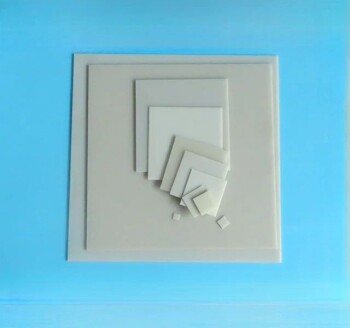
- Advanced Engineering Fine Ceramics Aluminum Nitride (AlN) Ceramic Sheet
- Aluminum Foil Current Collector for Lithium Battery
- Aluminum-Plastic Flexible Packaging Film for Lithium Battery Packaging
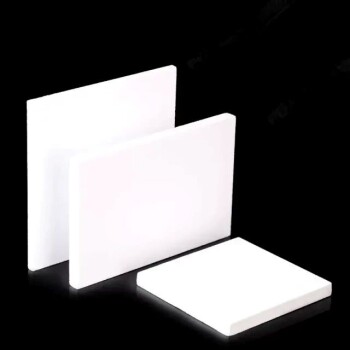
- High Temperature Wear-Resistant Alumina Al2O3 Plate for Engineering Advanced Fine Ceramics
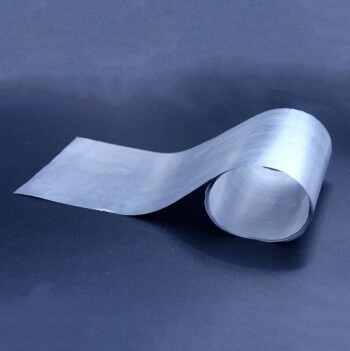
- High Purity Zinc Foil for Battery Lab Applications
People Also Ask
- How is alumina ceramic made? A Guide to Manufacturing Methods and Material Properties
- What function do alumina ceramic plates serve as supports in the preparation of molecular sieve membranes?
- Why are alumina ceramic discs used as sample supports? Optimize Cathodic Cage Deposition Efficiency
- How do alumina ceramic tubes address technical challenges in electrochemical devices? Ensure Peak Signal Integrity.
- What role does a Boron Nitride (BN) sleeve play in cold sintering mold assemblies? Essential Electrical Insulation