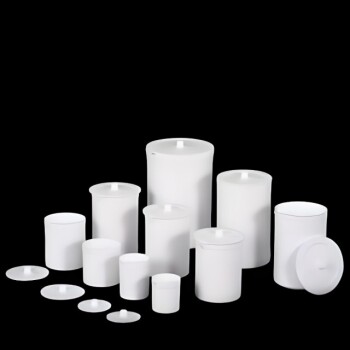
The Teflon-lined stainless steel high-pressure reactor is the essential vessel for creating the hydrothermal conditions required to synthesize Mn3O4@NPC composites. It provides a sealed environment where high temperature and autogenous pressure facilitate the chelation and in-situ reaction between manganese precursors and chitosan molecules. This process is critical for ensuring the uniform nucleation and growth of manganese oxide nanoparticles within the nitrogen-doped carbon (NPC) precursor framework.
Core Takeaway: The reactor functions as a controlled hydrothermal chamber that enables complex chemical bonding and crystal growth while the Teflon liner preserves material purity by preventing corrosive interactions with the steel shell.
Facilitating Complex Chemical Transformations
Enabling High-Temperature Chelation
In the synthesis of Mn3O4@NPC, the reactor maintains a high-temperature environment that allows manganese precursors and chitosan molecules to undergo thorough chelation. This temperature-dependent bonding is necessary to anchor the metal ions to the organic framework before carbonization.
Driving In-Situ Reactions
The sealed nature of the reactor generates autogenous pressure, which forces in-situ reactions that would not occur at atmospheric pressure. This pressure environment is what allows the manganese oxide nanoparticles to form directly within the structure of the carbon precursor.
Ensuring Uniform Nucleation
By providing a stable and enclosed thermal environment, the reactor ensures uniform nucleation and growth. This prevents the aggregation of manganese oxide, resulting in a finely dispersed composite material with consistent properties.
The Protective Role of the Teflon Liner
Maintaining High Structural Purity
The Teflon (PTFE) liner acts as a chemically inert barrier between the reaction solution and the stainless steel body. This prevents metal ions from the reactor itself from leaching into the solution, ensuring the final Mn3O4@NPC composite is free from iron or chromium impurities.
Preventing Chemical Corrosion
Many hydrothermal precursors or solvents can be corrosive under high pressure and temperature. The corrosion resistance of the Teflon liner protects the integrity of the stainless steel outer shell, extending the life of the equipment and preventing hazardous leaks.
Controlling Crystal Morphology
By allowing for precise control over temperature and pressure, the reactor guides the growth of crystals along specific directions. This level of control is vital for achieving the desired nanostructure and surface area required for high-performance composite materials.
Understanding the Trade-offs
Temperature and Pressure Limitations
While Teflon is highly inert, it has a thermal limit (typically around 220°C to 250°C), beyond which it may deform or release toxic vapors. High-pressure synthesis must stay strictly within these safety parameters to avoid equipment failure.
Heat Transfer Inefficiency
Teflon is an insulator, which means it can cause a lag in heat transfer from the oven to the reaction solution. Users must account for this delay when timing their synthesis to ensure the precursors spend the required amount of time at the target temperature.
Potential for Seal Failure
Repeated heating and cooling cycles can cause the Teflon liner to lose its shape or the gaskets to wear. If the hermetic seal is compromised, the loss of pressure will prevent the hydrothermal reactions from completing, leading to failed material synthesis.
How to Optimize Reactor Use for Material Synthesis
The success of Mn3O4@NPC synthesis depends on balancing the chemical requirements of the precursors with the physical limits of the reactor.
- If your primary focus is material purity: Ensure the Teflon liner is inspected for scratches or pitting before every run to prevent the reaction from contacting the steel.
- If your primary focus is uniform particle size: Use a slow ramp-up in temperature to allow for steady nucleation within the carbon framework.
- If your primary focus is structural consistency: Maintain a consistent "fill degree" (usually 60-80% of the liner volume) to ensure reproducible autogenous pressure across different batches.
By mastering the hydrothermal environment of the reactor, researchers can precisely engineer the interface between manganese oxides and carbon frameworks for advanced applications.
Summary Table:
| Feature | Function in Mn3O4@NPC Synthesis | Key Benefit |
|---|---|---|
| Teflon (PTFE) Liner | Provides a chemically inert barrier | Prevents iron/chromium impurities and shell corrosion |
| SS Pressure Shell | Contains high autogenous pressure | Enables hydrothermal reactions and in-situ bonding |
| Sealed Environment | Regulates nucleation and growth rates | Ensures uniform nanoparticle dispersion in the NPC framework |
| Thermal Stability | Facilitates precursor chelation | Anchors manganese ions securely to the carbon precursor |
Precision Engineering for Advanced Material Synthesis
Achieving the perfect nanostructure requires equipment that offers both safety and chemical integrity. KINTEK specializes in high-performance laboratory solutions, featuring a comprehensive range of high-temperature high-pressure reactors and autoclaves designed specifically for demanding hydrothermal processes.
Whether you are synthesizing Mn3O4@NPC composites or developing next-generation battery materials, our Teflon-lined reactors provide the thermal stability and corrosion resistance necessary for consistent, high-purity results.
Ready to elevate your research outcomes? Contact our technical experts today to find the ideal hydrothermal reactor or autoclave for your lab's specific requirements!
References
- Yu-Min Kang, Wein-Duo Yang. Boosting the Capacitive Performance of Supercapacitors by Hybridizing N, P-Codoped Carbon Polycrystalline with Mn3O4-Based Flexible Electrodes. DOI: 10.3390/nano13142060
This article is also based on technical information from Kintek Solution Knowledge Base .
Related Products
- Stainless High Pressure Autoclave Reactor Laboratory Pressure Reactor
- Custom PTFE Teflon Parts Manufacturer for Reagent Wide Mouth Fine Mouth Sample High Temperature Bottles
- Custom PTFE Teflon Parts Manufacturer for Hydrothermal Synthesis Reactor Polytetrafluoroethylene Carbon Paper and Carbon Cloth Nano-growth
- Mini SS High Pressure Autoclave Reactor for Laboratory Use
- Custom PTFE Teflon Parts Manufacturer for Microwave Digestion Tank
People Also Ask
- Why is a laboratory high-pressure reactor used in the hydrothermal synthesis of hydroxyapatite catalysts?
- Why is a laboratory high-pressure reactor necessary for synthesizing fly ash-based zeolite? Achieve Pure Crystallization
- What role does a laboratory high-pressure reactor play in the leaching process of spent cathode materials? Optimize Recovery
- What conditions do laboratory high-pressure reactors provide for HTC? Optimize Your Biochar Production Processes
- How are high-pressure reactors used to prepare metaphosphate electrocatalysts? Master In-Situ Precursor Growth