Chemical indicators act as process markers rather than guarantees of sterility. Their primary function is to distinguish between items that have been processed in an autoclave and those that have not, utilizing tools like indicator tapes or tablets to provide a visual cue.
While chemical indicators are essential for workflow management and identifying gross equipment failures, they cannot confirm that adequate decontamination criteria were met.
The Role of Chemical Indicators
Distinguishing Processed Loads
In a busy environment, it is easy to confuse items waiting to be sterilized with those that have just exited the autoclave.
Chemical indicators solve this logistical problem. By changing color or physical state, they allow operators to instantly visually differentiate between processed and unprocessed goods.
Detecting Serious Malfunctions
Chemical indicators provide an immediate "pass/fail" check on the equipment's basic operation.
If an indicator fails to change as expected, it signals a serious malfunction of the autoclave. This allows the operator to reject the load immediately without further testing.
Understanding the Limitations
The Decontamination Gap
The most critical limitation of chemical indicators is their inability to prove efficacy.
A changed indicator confirms the item was exposed to the process, but it does not confirm that decontamination criteria were achieved. You cannot rely on them to verify the biological lethality of the cycle.
Surface-Level Verification
Chemical indicators react to physical parameters, such as heat or steam presence.
They do not measure the actual destruction of microorganisms. Therefore, a "pass" result on a chemical indicator is necessary for release, but it is not sufficient proof of safety on its own.
Making the Right Choice for Your Goal
To use chemical indicators effectively, you must align their use with their intended purpose:
- If your primary focus is workflow organization: Use chemical indicators to segregate clean loads from dirty loads to prevent cross-contamination.
- If your primary focus is equipment troubleshooting: Monitor these indicators to instantly spot catastrophic failures where the autoclave failed to heat or pressurize adequately.
- If your primary focus is sterility assurance: Do not rely solely on chemical indicators, as they cannot verify that decontamination standards were met.
Treat chemical indicators as a logistical sorting tool and a first-line defense against broken equipment, not as a certificate of sterility.
Summary Table:
| Feature | Function of Chemical Indicators | Limitation of Chemical Indicators |
|---|---|---|
| Primary Purpose | Distinguishes processed vs. unprocessed items | Cannot confirm biological decontamination |
| Verification | Immediate visual pass/fail for equipment operation | Does not measure microbial destruction |
| Workflow Role | Organizes laboratory logistics and safety | Not a substitute for biological indicators |
| Key Signal | Detects gross equipment or pressure failures | Surface-level physical parameter check only |
Optimize Your Lab’s Sterilization Safety with KINTEK
Don't compromise on safety—ensure your laboratory maintains the highest standards of sterilization. While chemical indicators organize your workflow, KINTEK provides the high-performance equipment needed to guarantee results. From advanced high-temperature high-pressure reactors and autoclaves to precision cooling solutions (ULT freezers, freeze dryers) and durable PTFE products or ceramics, we support every stage of your research.
Ready to upgrade your lab's efficiency and reliability? Contact KINTEK today for expert guidance and premium laboratory consumables.
Related Products
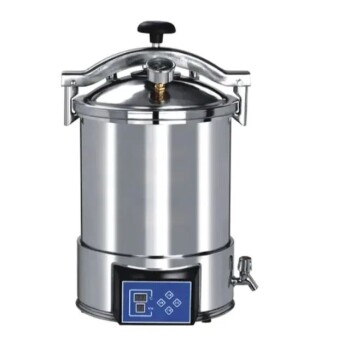
- Portable Digital Display Automatic Laboratory Sterilizer Lab Autoclave for Sterilization Pressure
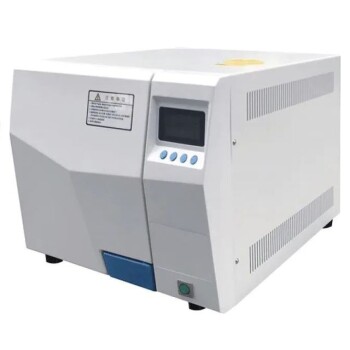
- Laboratory Sterilizer Lab Autoclave Vertical Pressure Steam Sterilizer for Liquid Crystal Display Automatic Type
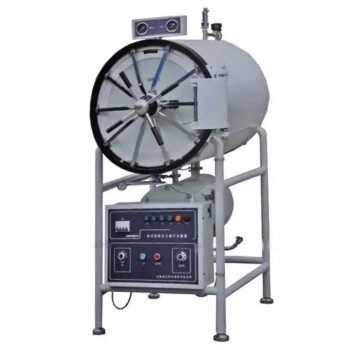
- Laboratory High Pressure Horizontal Autoclave Steam Sterilizer for Lab Use
- High Pressure Laboratory Autoclave Reactor for Hydrothermal Synthesis
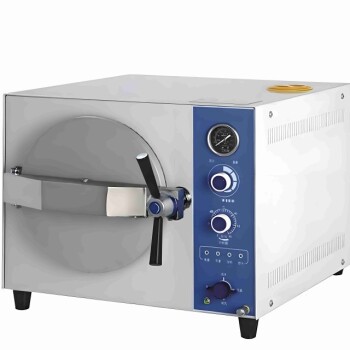
- Desktop Fast High Pressure Laboratory Autoclave Sterilizer 16L 24L for Lab Use
People Also Ask
- What is the primary function of a laboratory sterilization autoclave? Master the Physics of Wet Heat Sterilization
- What are the two types of autoclave used in the laboratory? Gravity vs. Pre-Vacuum Explained
- What is the autoclave temperature for sterilization? Master the 121°C Standard for Guaranteed Sterility
- What precautions should be taken during autoclave in laboratory? A Complete Safety Guide to Prevent Burns and Explosions
- What extreme conditions does a laboratory autoclave simulate? Testing Wear Resistance of Nuclear Fuel Cladding