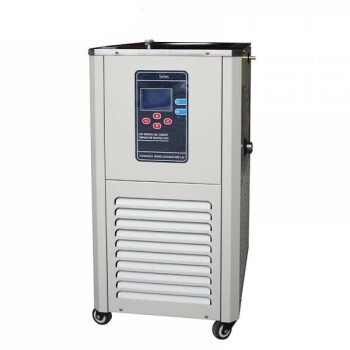
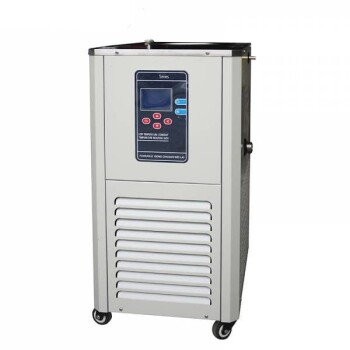
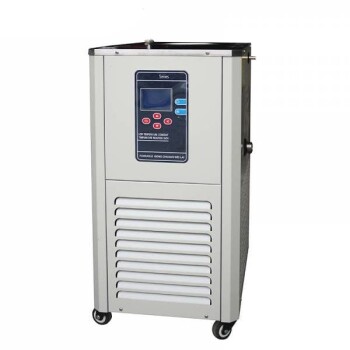
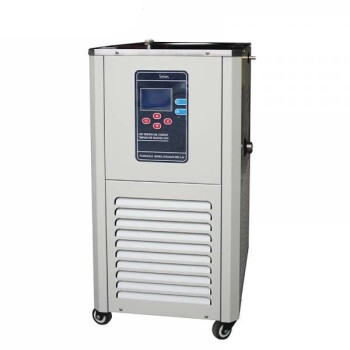
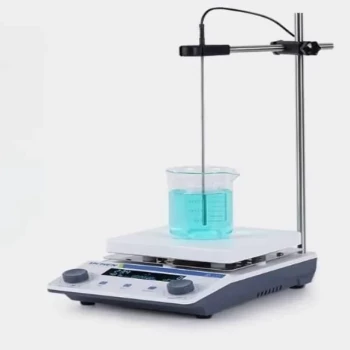
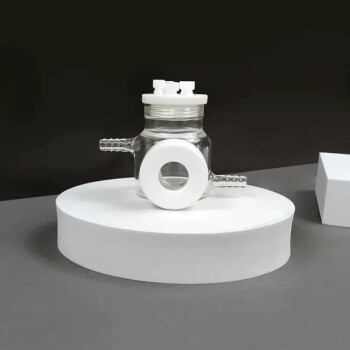
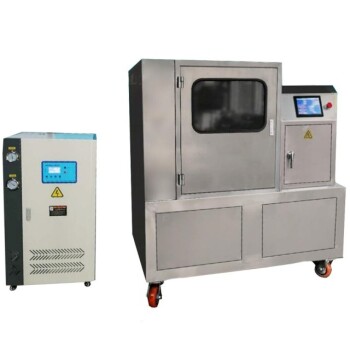
A constant temperature shaking water bath is the critical control mechanism in the static decontamination of ion exchange resins, serving two simultaneous functions: thermal regulation and mechanical agitation. It maintains a precise thermal environment (specifically around 50°C) to accelerate the chemical breakdown of hematite, while providing continuous oscillation to ensure reagents like sulfuric acid and ferrous sulfate make thorough contact with the resin.
Core Takeaway: This equipment bridges the gap between theoretical chemistry and practical application. By synchronizing precise heat with constant motion, it eliminates the "dead zones" where chemical reactions stall, ensuring that radionuclide desorption is both fast and uniform.
The Role of Thermal Precision
Establishing the Thermodynamic Environment
For decontamination to be effective, the chemical environment must be thermodynamically favorable. The water bath ensures the solution is held at a specific, constant temperature.
Accelerating Hematite Dissolution
The primary reference highlights 50°C as a critical set point for this process. Sustaining this temperature provides the energy required to significantly accelerate the dissolution of hematite found on the resins.
The Necessity of Mechanical Oscillation
Ensuring Thorough Reagent Contact
Static soaking often results in uneven cleaning. The water bath's continuous oscillation forces the decontamination reagents—specifically sulfuric acid and ferrous sulfate solutions—to circulate constantly around the resin beads.
Eliminating Concentration Gradients
When fluid is stationary, the chemicals immediately surrounding the resin get used up, slowing the reaction. Mechanical shaking constantly refreshes the liquid at the resin's surface.
Improving Desorption Efficiency
By eliminating these local concentration gradients, the system ensures maximum chemical activity at all times. This directly results in a significant improvement in the desorption efficiency of radionuclides.
Understanding Process Constraints
The Pitfall of Static Processing
While the process is termed "static" (batch) decontamination, the solution itself cannot remain static. Without the oscillation provided by the bath, the reaction becomes diffusion-limited, meaning the cleaning agents cannot reach the contaminants fast enough.
The Risk of Thermal Fluctuation
Reliance on ambient temperature or uncontrolled heating leads to unpredictable reaction rates. The water bath eliminates this variable, ensuring that the dissolution of hematite occurs at a predictable, optimized rate.
Making the Right Choice for Your Goal
To maximize the effectiveness of your decontamination process, consider these priorities:
- If your primary focus is Speed: Ensure the bath is set to the upper limit of the optimal temperature range (e.g., 50°C) to maximize the rate of hematite dissolution.
- If your primary focus is Uniformity: Prioritize the oscillation frequency to ensure no concentration gradients form, guaranteeing that every resin bead is equally exposed to the sulfuric acid and ferrous sulfate.
Ultimately, the constant temperature shaking water bath transforms a passive soaking process into an active, high-efficiency chemical reaction.
Summary Table:
| Function | Role in Decontamination | Key Benefit |
|---|---|---|
| Thermal Regulation | Maintains precise 50°C environment | Accelerates chemical breakdown of hematite |
| Mechanical Oscillation | Continuous circulation of sulfuric acid/ferrous sulfate | Ensures thorough reagent contact with resin |
| Gradient Elimination | Prevents localized chemical depletion | Maintains maximum reaction activity at resin surface |
| Process Stability | Eliminates thermal and diffusion variables | Ensures uniform and fast radionuclide desorption |
Elevate Your Laboratory Precision with KINTEK
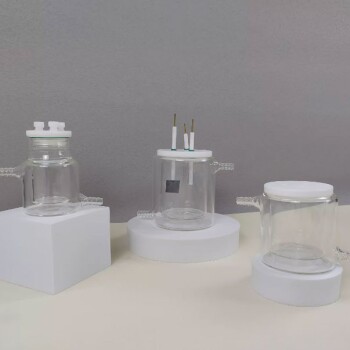
Maximize your decontamination efficiency and research accuracy with KINTEK’s industry-leading laboratory solutions. Whether you require precise constant temperature shaking water baths, high-performance high-temperature high-pressure reactors, or specialized ion exchange consumables, we provide the tools necessary to eliminate variables and ensure repeatable results.
From battery research tools and homogenizers to advanced cooling solutions and PTFE consumables, KINTEK specializes in equipping modern labs with rugged, high-precision hardware.
Ready to optimize your workflow? Contact our experts today to find the perfect equipment for your specific application.
References
- A. I. Matskevich, Andrei Egorin. Effects of Temperature and Sulfuric Acid and Iron (II) Concentrations on the Efficacy of Decontamination of Spent Ion-Exchange Resins Containing Hematite. DOI: 10.3390/pr10050931
This article is also based on technical information from Kintek Solution Knowledge Base .
Related Products
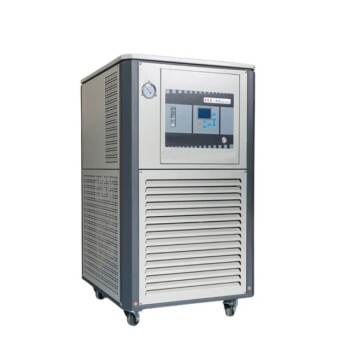
- High Temperature Constant Temperature Heating Circulator Water Bath Chiller Circulator for Reaction Bath
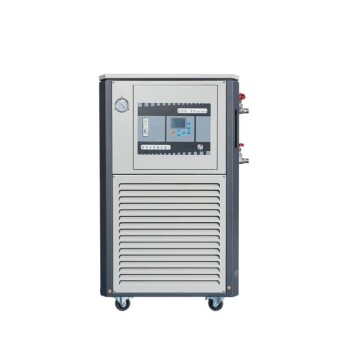
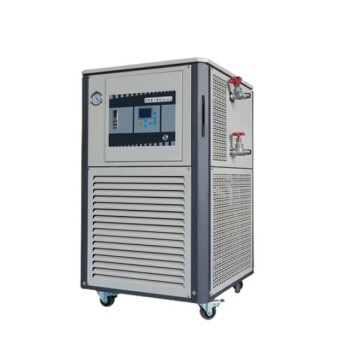
- 50L Chiller Water Bath Cooling Circulator Low Temperature Constant Temperature Reaction Bath
- 10L Chilling Circulator Cooling Water Bath Low Temperature Constant Temperature Reaction Bath
- 5L Chilling Circulator Cooling Water Bath Circulator for Low Temperature Constant Temperature Reaction Bath
- 30L Chiller Water Bath Cooling Circulator Low Temperature Constant Temperature Reaction Bath
People Also Ask
- What is the necessity of a circulating water bath in chlorate production? Optimize Yield & Purity with Precision
- How do constant temperature circulators impact weight-loss immersion tests? Ensure Precision in Corrosion Analysis
- How does a constant temperature circulator support the leaching reaction of gold scrap? Optimize Gold Recovery Results
- Why is a constant temperature water bath used for precursor storage in CVD? Achieve Stable Nanocrystalline SiC Deposition
- Why is a high-precision constant temperature water bath necessary for anaerobic digestion? Ensure Success at 37±0.02°C