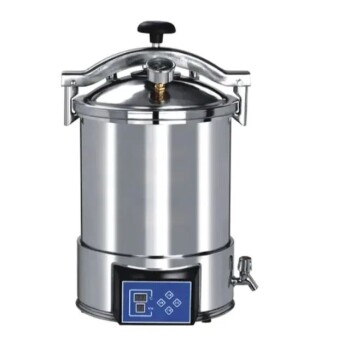
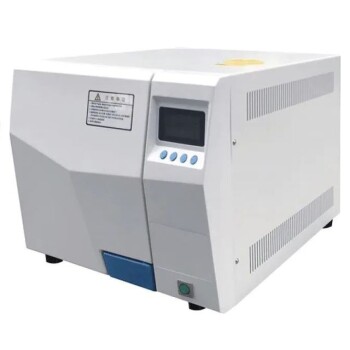
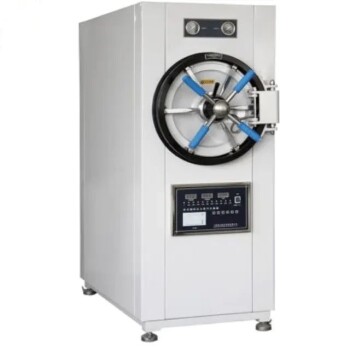
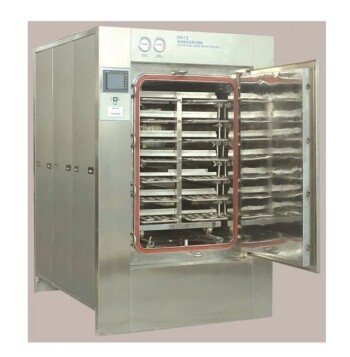
The stainless steel high-pressure autoclave serves as a critical solvothermal reactor that provides a sealed, high-temperature environment necessary for chemical synthesis. Specifically, in the production of nitrogen-doped carbon microflower precursors, it facilitates the thorough polymerization of monomer molecules in a dimethylformamide (DMF) solution at 180°C. This confined, high-pressure setting is the primary driver for the self-assembly of polyimide precursors into their unique, hierarchical flower-like structures.
The autoclave acts as a thermodynamic catalyst, using high autogenous pressure to force molecular polymerization and structural self-assembly that are physically impossible under standard atmospheric conditions.
Creating the Solvothermal Environment
Overcoming Solvent Boiling Points
In this synthesis, the autoclave allows the dimethylformamide (DMF) solvent to reach a temperature of 180°C without evaporating. By sealing the reaction, the vessel generates autogenous pressure, which keeps the solvent in a liquid state well above its normal boiling point.
Accelerating Reaction Kinetics
The combination of high temperature and pressure significantly increases the reaction rate of the chemical precursors. This energetic environment ensures that the dissociation and recombination of molecules occur more rapidly and completely than in an open-vessel system.
Driving Polymerization and Self-Assembly
Facilitating Thorough Polymerization
The high-pressure environment is essential for the monomer molecules to undergo a high degree of polymerization. Without the sustained pressure provided by the autoclave, the polyimide chains might not reach the length or density required to form a stable precursor.
Guiding Hierarchical Morphology
The autoclave acts as a structural template-builder by guiding the self-assembly of polyimide into a "microflower" shape. This confined setting ensures the formation of a hierarchical structure, which is characterized by a central core with radiating "petals" or nanosheets.
Ensuring Structural Stability
By maintaining a constant pressure and temperature, the autoclave ensures morphological uniformity across the entire batch. This consistency is vital for the material’s structural stability, preventing the microflowers from collapsing during the subsequent carbonization stages.
Understanding the Trade-offs and Risks
Material Corrosion and Longevity
While stainless steel provides the necessary mechanical strength to withstand high pressure, it can be susceptible to chemical corrosion from certain precursors or solvents. In many laboratory settings, a PTFE (Teflon) liner must be used inside the stainless steel shell to protect the metal and prevent contamination of the carbon precursor.
Safety and Pressure Management
The primary risk associated with this equipment is the uncontrolled release of pressure. Because by-products and heating generate significant internal force, precise monitoring of the temperature-to-pressure ratio is required to prevent vessel failure.
Scalability Limitations
Autoclave synthesis is typically a batch process, which can limit high-volume production. Achieving the same structural uniformity in a larger vessel requires complex thermal management to ensure the core of the solution reaches the same 180°C as the walls.
Applying This Technology to Your Synthesis
Making the Right Choice for Your Goal
To achieve the best results when synthesizing nitrogen-doped carbon microflowers, consider the following technical priorities:
- If your primary focus is morphological precision: Ensure the autoclave remains at a constant 180°C for the entire duration to allow the hierarchical self-assembly to complete without interruption.
- If your primary focus is material purity: Utilize a Teflon-lined autoclave to prevent the stainless steel walls from reacting with the DMF or nitrogen-containing monomers.
- If your primary focus is high yield: Monitor the heating rate closely, as specific ramps can influence the dissociation rates and the final density of the microflower precursors.
The high-pressure autoclave is the indispensable engine that transforms simple monomers into complex, high-performance carbon architectures through controlled thermodynamic force.
Summary Table:
| Key Function | Mechanism | Impact on Precursor |
|---|---|---|
| Solvothermal Environment | Maintains DMF at 180°C under autogenous pressure | Prevents solvent evaporation; enables liquid-phase reaction above boiling point |
| Enhanced Polymerization | Accelerated reaction kinetics via high temperature/pressure | Drives monomer molecules into dense, high-quality polyimide chains |
| Hierarchical Self-Assembly | Confined thermodynamic template-building | Forces precursors into unique, radiating "flower-like" structures |
| Morphological Stability | Sustained thermal and pressure uniformity | Ensures consistent batch quality and prevents structural collapse during carbonization |
Elevate Your Advanced Material Synthesis with KINTEK
Precision is the difference between a failed batch and a breakthrough. At KINTEK, we specialize in providing high-performance laboratory equipment designed for the rigorous demands of solvothermal synthesis and materials science. Whether you are synthesizing nitrogen-doped carbon microflowers or exploring new catalysts, our high-temperature high-pressure reactors and autoclaves—available with PTFE or PPL liners—ensure maximum material purity and structural integrity.
Our comprehensive portfolio supports your entire research workflow, including:
- Thermal Processing: Muffle, tube, vacuum, and CVD/PECVD furnaces.
- Sample Preparation: Hydraulic presses (pellet, isostatic), crushing, milling, and sieving systems.
- Laboratory Essentials: Electrolytic cells, battery research tools, cooling solutions (ULT freezers), and high-quality crucibles.
Ready to achieve superior morphological control and reliable results? Contact our technical experts today to find the perfect equipment solution for your laboratory's needs.
References
- Qi Sun, Yan Zhao. Tailoring activity of iron phthalocyanine by edge-nitrogen sites induced electronic delocalization. DOI: 10.1016/j.apsusc.2023.157154
This article is also based on technical information from Kintek Solution Knowledge Base .
Related Products
- Stainless High Pressure Autoclave Reactor Laboratory Pressure Reactor
- Mini SS High Pressure Autoclave Reactor for Laboratory Use
- Desktop Fast High Pressure Laboratory Autoclave Sterilizer 16L 24L for Lab Use
- Laboratory High Pressure Horizontal Autoclave Steam Sterilizer for Lab Use
- Portable High Pressure Laboratory Autoclave Steam Sterilizer for Lab Use
People Also Ask
- Why is a laboratory high-pressure reactor necessary for synthesizing fly ash-based zeolite? Achieve Pure Crystallization
- Why is a laboratory high-pressure reactor used in the hydrothermal synthesis of hydroxyapatite catalysts?
- What role does a laboratory high-pressure reactor play in the leaching process of spent cathode materials? Optimize Recovery
- What conditions do laboratory high-pressure reactors provide for HTC? Optimize Your Biochar Production Processes
- How are high-pressure reactors used to prepare metaphosphate electrocatalysts? Master In-Situ Precursor Growth