The Teflon-lined hydrothermal reactor serves as a high-pressure, corrosion-resistant reaction vessel that enables the precise assembly of Cobalt-based Metal-Organic Frameworks (Co-MOFs). By providing a sealed environment capable of maintaining temperatures significantly above the boiling point of solvents—typically around 120°C—it facilitates the essential coordination reaction between cobalt ions and organic ligands to form stable, crystalline structures.
The primary function of a Teflon-lined reactor in Co-MOF synthesis is to create a controlled, high-pressure environment that drives oriented crystal growth while preventing chemical contamination from the reactor walls.
Facilitating Complex Chemical Assembly
Driving the Coordination Reaction
In Co-MOF synthesis, the reactor maintains a constant high temperature that provides the activation energy needed for metal-ligand coordination. This thermal energy allows cobalt ions and organic linkers to overcome energy barriers, ensuring they bond into the desired framework rather than forming amorphous precipitates.
Managing Autogenous Pressure
As the internal temperature rises within the sealed vessel, it generates autogenous pressure that exceeds atmospheric limits. This pressurized state increases the solubility of precursors and keeps solvents in a liquid phase above their normal boiling points, which is critical for the formation of the Co-MOF's hierarchical structure.
Enabling Oriented Crystal Growth
The stable environment inside the reactor allows for oriented crystal growth, which is necessary to produce specific morphologies like the "flower-like" hierarchical petal structure. By controlling the rate of reaction through sustained heat and pressure, the reactor ensures that crystals grow uniformly and achieve high structural integrity.
Ensuring Material Purity and Durability
The Role of Chemical Inertness
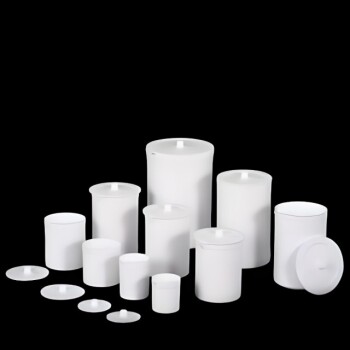
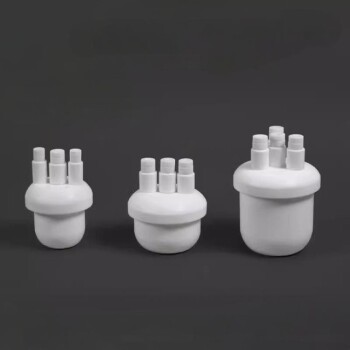
The Polytetrafluoroethylene (PTFE/Teflon) liner is chosen for its exceptional chemical inertness. This liner prevents the acidic or alkaline precursors used in MOF synthesis from reacting with the stainless steel outer shell of the autoclave.
Preventing Metallic Contamination
Without the Teflon liner, corrosive solvents could leach iron, chromium, or nickel from the reactor's metal walls into the solution. The liner acts as a barrier, ensuring the high purity of the cobalt-based framework and preventing unwanted metal impurities from altering the material's properties.
Resisting Aggressive Solvents
Co-MOF synthesis often involves concentrated acetic acid or other aggressive organic solvents. The Teflon liner is specifically designed to withstand these corrosive environments at high temperatures, which would otherwise degrade standard laboratory glassware or metal containers.
Understanding the Trade-offs
Temperature Limitations
While Teflon is highly resistant to chemicals, it has a thermal ceiling, typically around 220°C to 250°C. Exceeding these temperatures can cause the liner to soften or deform, potentially leading to seal failure or the release of toxic vapors.
Thermal Lag and Cooling Rates
The thick walls of the stainless steel autoclave combined with the insulating properties of the Teflon liner create significant thermal inertia. This makes it difficult to change reaction temperatures rapidly, meaning users must account for slow heating and cooling ramps in their experimental design.
Pressure Safety Risks
Hydrothermal reactions involve significant energy storage in the form of pressurized vapor. If the reactor is overfilled—typically beyond 70-80% of its capacity—the lack of expansion space can lead to catastrophic pressure spikes and vessel failure.
How to Apply This to Your Project
Maximizing Synthesis Success
Selecting the right parameters for your hydrothermal reactor is essential for achieving the desired Co-MOF characteristics.
- If your primary focus is hierarchical morphology: Maintain a constant temperature (e.g., 120°C) for a specific duration to allow for the slow, oriented growth of petal-like structures.
- If your primary focus is maximum purity: Ensure the Teflon liner is pristine and free of scratches, as surface defects can trap contaminants from previous reactions.
- If your primary focus is structural stability: Use the autogenous pressure to drive full hydrolysis and recrystallization, ensuring the framework is fully formed and stable.
By leveraging the unique high-pressure and inert environment of a Teflon-lined reactor, researchers can reliably synthesize complex Co-MOFs with tailored properties.
Summary Table:
| Feature | Function in Co-MOF Synthesis | Key Benefit |
|---|---|---|
| Teflon (PTFE) Liner | Chemical inertness & corrosion resistance | Prevents metal contamination; ensures framework purity |
| High Pressure | Manages autogenous pressure in sealed vessel | Increases precursor solubility; enables hierarchical assembly |
| Thermal Stability | Maintains temperatures above boiling points | Provides activation energy for metal-ligand coordination |
| Structural Control | Facilitates slow, oriented crystal growth | Ensures formation of specific morphologies (e.g., flower-like) |
Elevate Your Material Synthesis with KINTEK’s Precision Engineering
Achieving the perfect hierarchical structure in Cobalt-based Metal-Organic Frameworks requires equipment that can handle extreme conditions without compromise. At KINTEK, we specialize in high-performance high-temperature high-pressure reactors and autoclaves designed specifically for demanding hydrothermal and solvothermal synthesis.
From our chemically inert PTFE-lined reactors to our advanced heating, crushing, and milling systems, we provide the laboratory tools necessary for superior crystal growth and high-purity results. Our comprehensive portfolio also features electrolytic cells, battery research tools, and essential consumables like ceramics and crucibles, ensuring a complete solution for your advanced material research.
Ready to optimize your Co-MOF synthesis and ensure structural integrity? Contact our experts today to find the perfect laboratory solutions for your project!
References
- Amna A. Kotp, Abeer Enaiet Allah. Evaluating the electrocatalytic activity of flower-like Co-MOF/CNT nanocomposites for methanol oxidation in basic electrolytes. DOI: 10.1039/d3ra05105f
This article is also based on technical information from Kintek Solution Knowledge Base .
Related Products
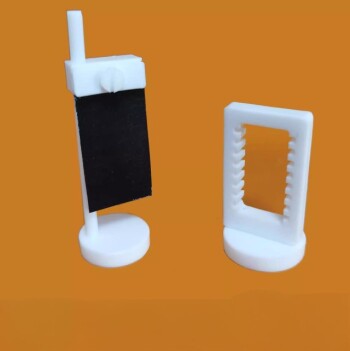
- Custom PTFE Teflon Parts Manufacturer for Hydrothermal Synthesis Reactor Polytetrafluoroethylene Carbon Paper and Carbon Cloth Nano-growth
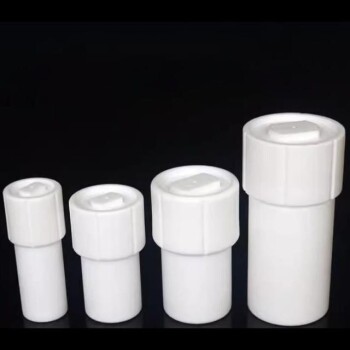
- Custom PTFE Teflon Parts Manufacturer for Microwave Digestion Tank
- Custom PTFE Teflon Parts Manufacturer F4 Conical Flask Triangular Flask 50 100 250ml
- High Pressure Laboratory Autoclave Reactor for Hydrothermal Synthesis
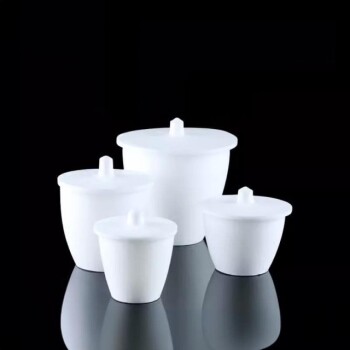
- Custom Machined and Molded PTFE Teflon Parts Manufacturer with PTFE Crucible and Lid
People Also Ask
- What is the function of a PTFE reactor in MXene etching? Ensure Safe, High-Purity MAX Phase Conversion
- Why is a PTFE reactor required for titanium-based nano-ceramic coating solutions? Ensure Chemical Inertness & Purity
- Why must a Polytetrafluoroethylene (PTFE) reactor be used for Ti3C2TX MXene etching? Ensure Safety and Purity
- Why are PTFE reactors preferred for silver phosphate glass testing? Ensure Purity and Kinetic Accuracy
- What are the advantages of using polytetrafluoroethylene (PTFE) liners in hydrothermal synthesis reactors? High Purity