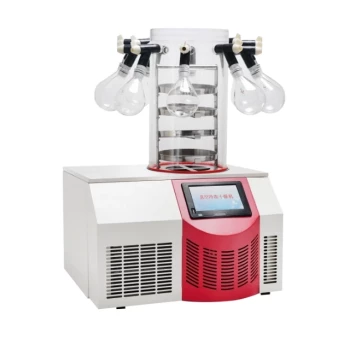
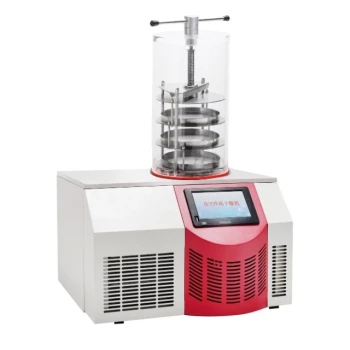
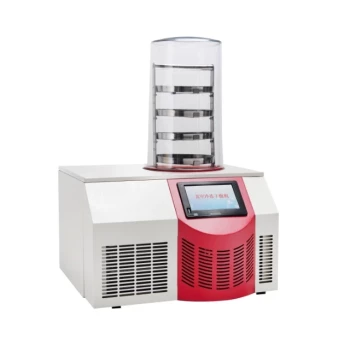
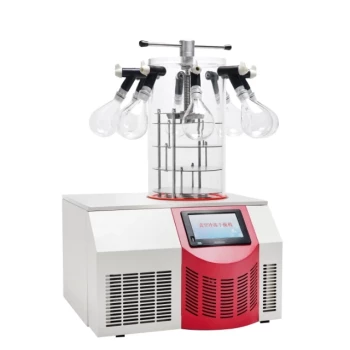
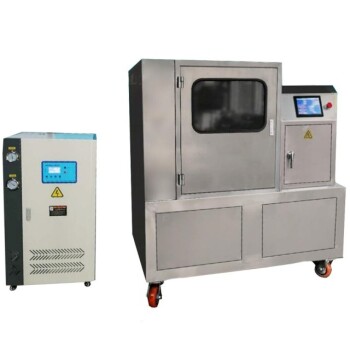
Freeze-thaw equipment serves as the structural architect for Au-(PNiPAAm/PVA) hydrogel nanocomposites. By precisely controlling cyclic temperature changes, the equipment utilizes the physical force of ice crystal growth to drive the physical cross-linking of polymer chains. This process eliminates the need for chemical agents and constructs a robust, honeycomb-like microporous framework that secures gold (Au) nanoparticles and dictates the material's mechanical and swelling properties.
The equipment leverages the "exclusion effect" during freezing to engineer a highly porous gel network, simultaneously enhancing mechanical strength, response speed, and the spatial stability of embedded gold nanoparticles for photothermal applications.
Creating Structure Through Physics, Not Chemistry
The Mechanism of Exclusion
The core function of the equipment is to manage the exclusion effect. As the hydrogel system freezes, growing ice crystals push the solvent (water) aside.
This forces the polymer chains, particularly Polyvinyl Alcohol (PVA), into high-density aggregates. The equipment ensures this compression is uniform, creating the conditions necessary for structure formation.
Physical Cross-Linking
Unlike traditional methods that use toxic chemical linkers, freeze-thaw equipment facilitates physical cross-linking. The dense polymer regions formed during freezing align and crystallize.
Upon thawing, these crystalline regions remain intact as stable cross-linking points. This results in a biocompatible gel body with high mechanical strength derived purely from physical interactions.
Engineering the Honeycomb Architecture
Forming the Microporous Network
The equipment's precise thermal cycling leaves behind a specific footprint when the ice melts. This results in a honeycomb-like microporous or macroporous structure.
This architecture is not random; it is a direct replica of the ice crystal network generated during the freezing phase.
Enhancing Swelling Kinetics
This porous framework is critical for the hydrogel's function. The interconnected pores allow water to move rapidly in and out of the matrix.
Consequently, the material exhibits significantly faster swelling and shrinking responses. This speed is essential for applications where the hydrogel must act as an actuator or sensor.
Integrating Gold Nanocomposites
Stabilizing Spatial Arrangement
For Au-(PNiPAAm/PVA) composites, the location of the gold nanoparticles is vital. The freeze-thaw process constructs a rigid scaffold that locks the gold (Au) nanoparticles into a stable spatial arrangement.
This prevents nanoparticle aggregation and ensures uniform distribution throughout the active layer of the hydrogel.
Facilitating Photothermal Response
The combination of stable Au loading and a porous structure enables efficient photothermal actuation. When the gold particles generate heat under light stimulation, the porous network allows the hydrogel to contract rapidly.
Without the specific pore structure created by the freeze-thaw cycles, the thermal response would be sluggish and inefficient.
Understanding the Trade-offs
Process Sensitivity
While effective, the freeze-thaw method is highly sensitive to process parameters. Inconsistent cooling rates or temperature fluctuations within the equipment can lead to irregular pore sizes.
This structural inconsistency can cause uneven mechanical strength or unpredictable swelling behavior across the hydrogel sample.
Cycle Time Requirements
Physical cross-linking is generally more time-consuming than chemical methods. Achieving a robust network often requires multiple freeze-thaw cycles, which increases the total fabrication time.
You must balance the desire for a purely physical, biocompatible network against the longer production timelines required to achieve sufficient crystallinity.
Making the Right Choice for Your Goal
The freeze-thaw process allows you to tune the hydrogel's properties by adjusting the thermal cycles.
- If your primary focus is Response Speed: Prioritize freezing rates that favor large, interconnected macropores to maximize water transport and swelling kinetics.
- If your primary focus is Mechanical Strength: Increase the number of freeze-thaw cycles to maximize the density of crystalline cross-linking points for a stiffer, more durable gel.
Mastering the freeze-thaw cycle allows you to transform a liquid polymer mix into a sophisticated, high-speed actuator without a single chemical additive.
Summary Table:
| Function Category | Mechanism | Impact on Hydrogel Performance |
|---|---|---|
| Structural Framework | Ice crystal "exclusion effect" | Creates honeycomb-like microporous architectures |
| Cross-Linking | Physical crystallization (no chemicals) | Enhances biocompatibility and mechanical strength |
| Nanoparticle Support | Rigid scaffold construction | Ensures stable, uniform spatial distribution of Au particles |
| Kinetics Control | Thermal cycle adjustment | Accelerates swelling/shrinking response and photothermal speed |
Elevate Your Material Research with KINTEK Precision
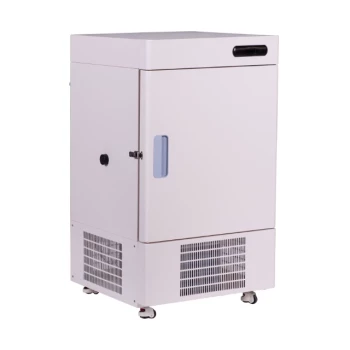
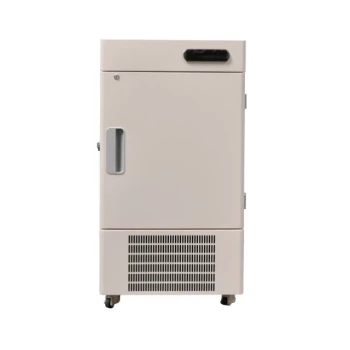
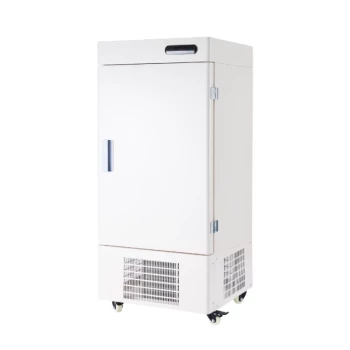
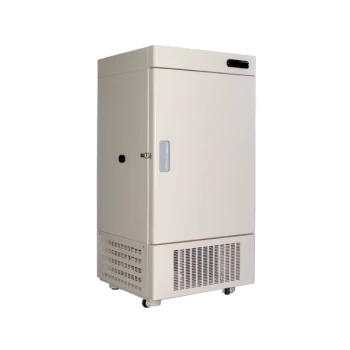
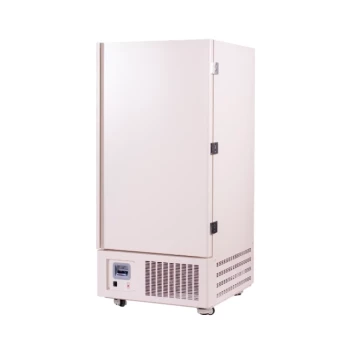
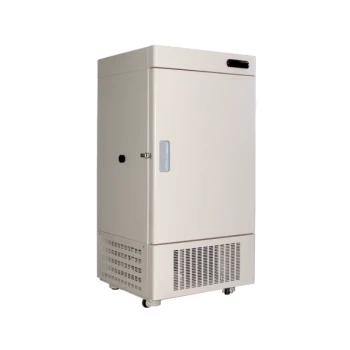
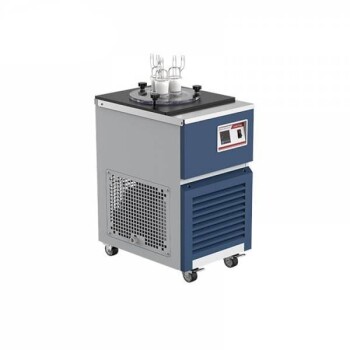
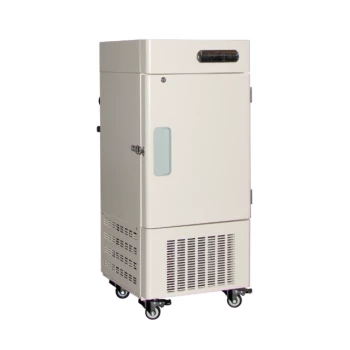
Optimize your hydrogel synthesis with KINTEK’s advanced freeze-thaw equipment and cooling solutions (ULT freezers, cold traps, freeze dryers). Whether you are engineering photothermal actuators or biocompatible sensors, our precision-controlled systems ensure uniform pore structure and consistent physical cross-linking.
Beyond cooling, KINTEK specializes in a comprehensive range of laboratory equipment including high-temperature furnaces, high-pressure reactors, and specialized battery research tools. Our mission is to provide researchers with the durable consumables and sophisticated systems needed for cutting-edge innovation.
Ready to master your fabrication process? Contact us today to find the perfect solution for your lab!
References
- Gintautas Tamulaitis, A. Vaitkevičius. Processes limiting performance of heavily-doped lead tungstate scintillators. DOI: 10.21175/rad.abstr.book.2023.32.1
This article is also based on technical information from Kintek Solution Knowledge Base .
Related Products
- High Performance Laboratory Freeze Dryer
- High Performance Laboratory Freeze Dryer for Research and Development
- Benchtop Laboratory Vacuum Freeze Dryer
- Benchtop Laboratory Freeze Dryer for Lab Use
- 108L Vertical Ultra Low Temperature ULT Freezer
People Also Ask
- What role does a laboratory freeze dryer play in the synthesis of graphene-based electrocatalysts? Preserve 3D Structures
- What are the technical advantages of using a laboratory freeze dryer for porous carbon precursors? Preserve 3D Networks
- What types of liquid samples can be processed using a laboratory freeze dryer? Preserve Your Sensitive Materials
- How do laboratory freeze dryers support scientific research? Preserve Sample Integrity for Reproducible Results
- Why is a laboratory freeze dryer preferred over traditional heating? Preserve Biochar Structure & Maximize Porosity