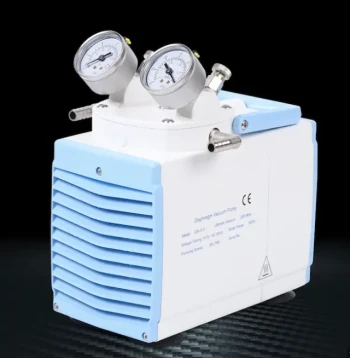
The vacuum pressure impregnation tank acts as the critical delivery system in the Precursor Infiltration and Pyrolysis (PIP) process. Its primary function is to forcibly inject liquid ceramic precursors, such as polycarbosilane, into the complex, microscopic porous structure of fiber preforms. By utilizing a specific cycle of vacuum followed by high pressure, it ensures the liquid fully saturates the material, which is a prerequisite for creating a viable composite.
The tank functions as the gatekeeper of material density, removing air pockets and overcoming fluid viscosity to minimize internal defects in Ultra-High Temperature Ceramic Matrix Composites (UHTCMCs).
The Mechanics of Infiltration
Eliminating Air Resistance
The process begins by pulling a vacuum on the dry fiber preform within the tank. This step is essential to evacuate air from the deep, internal spaces of the material.
If air were left remaining in the pores, it would create back-pressure and form voids. The vacuum creates an empty space that naturally invites the liquid precursor to enter.
Overcoming High Viscosity
Once the air is removed, the tank introduces the liquid precursor and applies high pressure. Ceramic precursors like polycarbosilane often have high viscosity (thickness), making them resistant to flowing into tight spaces.
The pressure exerted by the tank forces this thick liquid deep into the microscopic pores of the preform. This mechanical force ensures the liquid reaches the center of the material, not just the surface.
The Role in Material Quality
Maximizing Matrix Density
The primary goal of the PIP process is to build a dense ceramic matrix around the fibers. The impregnation tank is responsible for the initial "fill" of this matrix.
By ensuring the preform is completely saturated, the tank sets the stage for high density. A poorly impregnated preform will result in a weak, porous final product.
Reducing Internal Defects
The tank specifically targets the reduction of internal flaws. By forcing liquid into every available space, it prevents structural weaknesses.
This creates a solid "green body" (the unfired composite). This green body is then ready for the subsequent pyrolysis step in a furnace, where the polymer converts into a ceramic.
Understanding the Trade-offs
The Viscosity Limit
While the tank uses pressure to aid infiltration, there are physical limits. If a precursor is too viscous, even high pressure may fail to infiltrate the finest pores of a dense weave.
This requires a careful balance between the chemistry of the precursor and the pressure capabilities of the tank.
Cycle Repetition
It is important to note that a single pass through the impregnation tank is rarely enough. The subsequent pyrolysis step (heating in a furnace) causes the precursor to shrink and creates new pores.
Therefore, the part must often be returned to the vacuum pressure impregnation tank multiple times. This increases total processing time but is necessary to achieve the required density.
Making the Right Choice for Your Goal
To optimize your PIP process, consider how the tank settings align with your specific material requirements:
- If your primary focus is Maximizing Strength: Prioritize a deep, extended vacuum cycle to remove every micro-pocket of air before introducing the liquid.
- If your primary focus is Handling High Viscosity: Ensure your tank is rated for pressures high enough to overcome the specific flow resistance of your chosen polycarbosilane precursor.
The vacuum pressure impregnation tank is not just a dipping station; it is the fundamental tool for establishing the internal integrity of the composite before thermal processing begins.
Summary Table:
| Feature | Function in PIP Process | Impact on Material Quality |
|---|---|---|
| Vacuum Cycle | Evacuates air and gases from fiber preform | Eliminates internal voids and back-pressure |
| High Pressure | Forces viscous precursors into micro-pores | Ensures full saturation and deep penetration |
| Infiltration Tank | Acts as the primary delivery system | Establishes the 'green body' density |
| Repeatability | Facilitates multiple infiltration/pyrolysis cycles | Minimizes porosity caused by material shrinkage |
Elevate Your Composite Manufacturing with KINTEK Precision
To achieve superior material density in Ultra-High Temperature Ceramic Matrix Composites (UHTCMCs), you need equipment that masters the balance of vacuum and pressure. KINTEK specializes in advanced laboratory solutions designed for the most demanding research and production environments.
From high-performance vacuum pressure impregnation tanks and high-temperature furnaces to precision crushing systems and isostatic presses, KINTEK provides the end-to-end tools necessary for cutting-edge material science. Whether you are developing aerospace-grade ceramics or conducting battery research, our comprehensive range of equipment ensures consistent, repeatable results every time.
Ready to optimize your PIP process and reduce internal defects? Contact our technical experts today to find the perfect equipment solution for your laboratory.
References
- Dewei Ni, Guo‐Jun Zhang. Advances in ultra-high temperature ceramics, composites, and coatings. DOI: 10.1007/s40145-021-0550-6
This article is also based on technical information from Kintek Solution Knowledge Base .
Related Products
- Vacuum Cold Mounting Machine for Sample Preparation
- Vacuum Heat Treat and Sintering Furnace with 9MPa Air Pressure
- Vacuum Heat Treat and Pressure Sintering Furnace for High Temperature Applications
- Vacuum Hot Press Furnace Heated Vacuum Press Machine Tube Furnace
- Vacuum Hot Press Furnace Machine Heated Vacuum Press
People Also Ask
- What is the purpose of sample preparation? Ensure Accurate & Reliable Analytical Results
- What sample preparation methods are used in labs? Master the Critical First Step for Reliable Analysis
- What is a vacuum press machine? Harness Atmospheric Pressure for Perfect Lamination
- What role does vacuum impregnation play with high-viscosity ionic liquids? Enhance Your Battery Performance Today
- What can you do with a vacuum press? Achieve Flawless Lamination and Clamping