Knowledge What is the mechanism by which high-energy homogenizers improve polymer nanocomposites? Achieve Molecular Dispersion
Author avatar

Tech Team · Kintek Solution

Updated 16 hours ago

What is the mechanism by which high-energy homogenizers improve polymer nanocomposites? Achieve Molecular Dispersion


High-energy homogenizers operate by applying extreme shear forces to forcefully disperse nanoparticles into a polymer matrix. By targeting particles smaller than 100 nm, this equipment drives the reinforcement phase into the polymer structure at a molecular level, preventing the agglomeration common in standard mixing.

The core mechanism is the creation of strong interfacial adhesion through deep molecular interaction. This ensures that mechanical stress is transferred efficiently from the matrix to the reinforcement phase, resulting in material performance that far exceeds conventional composites.

The Physics of Molecular Dispersion

Applying Extreme Shear Forces

The primary driver of this process is the application of intense mechanical energy. High-energy homogenizers generate extreme shear forces that are necessary to break apart clusters of nanoparticles.

Overcoming Agglomeration

Nanoparticles naturally tend to clump together, which reduces their effectiveness. The shear forces overcome these cohesive forces, distributing the particles individually throughout the mix.

Achieving Molecular-Level Integration

Success depends on the scale of the operation. This equipment is designed to disperse particles smaller than 100 nm directly into the polymer matrix, ensuring a homogenous blend rather than a simple suspension.

Transforming Material Properties

Establishing Interfacial Adhesion

The deep interaction between the polymer and the nanoparticles creates a powerful bond. This molecular-level dispersion establishes strong interfacial adhesion, which is the "glue" that holds the composite's performance together.

Maximizing Stress Transfer Efficiency

In a composite, the load must pass from the weaker polymer to the stronger reinforcement. Because of the superior adhesion, high-energy homogenization significantly improves stress transfer efficiency.

Superior Mechanical Outcomes

The result is a composite material with mechanical properties far superior to those produced by conventional methods. The matrix and the reinforcement act as a single, unified entity under load.

Understanding the Trade-offs

Equipment Complexity vs. Performance

While the results are superior, achieving "molecular level" interaction requires specialized, high-energy equipment. This is distinct from conventional mixers, which cannot generate the shear forces required for this level of dispersion.

The Necessity of Precision

The process relies on handling particles smaller than 100 nm. If the equipment fails to maintain high shear consistently, the nanoparticles may re-agglomerate, negating the benefits of the stress transfer mechanism.

Making the Right Choice for Your Goal

To determine if high-energy homogenization is required for your application, consider your performance targets.

  • If your primary focus is Maximum Mechanical Strength: Prioritize high-energy homogenization to maximize interfacial adhesion and stress transfer efficiency.
  • If your primary focus is Basic Material Filling: Conventional mixing may suffice, but acknowledge that you will not achieve the molecular-level integration required for high-performance nanocomposites.

High-energy homogenization is the definitive method for converting potential nanoparticle properties into actual composite performance.

Summary Table:

Mechanism Feature Impact on Nanocomposites Key Benefit
Extreme Shear Force Breaks nanoparticle clusters Uniform molecular dispersion
Interfacial Adhesion Creates strong polymer-particle bonds Efficient mechanical stress transfer
Sub-100nm Targeting Integration at the molecular level Prevents particle re-agglomeration
Stress Transfer Efficient load path from matrix to phase Superior tensile and structural strength

Elevate Your Material Science with KINTEK Precision

Unlock the full potential of your polymer research with KINTEK’s advanced laboratory solutions. As specialists in high-performance equipment, we provide the tools necessary to achieve superior molecular-level integration and material durability. From high-energy homogenizers and shakers for perfect dispersion to high-temperature high-pressure reactors and hydraulic presses for advanced composite formation, KINTEK supports your workflow from synthesis to testing.

Whether you are developing next-generation battery components using our battery research tools or optimizing ceramic-polymer blends with our milling and sieving systems, our expertise ensures your lab achieves maximum efficiency and repeatable results.

Ready to transform your nanocomposite performance? Contact KINTEK today for a tailored consultation and find the perfect equipment for your application.

References

  1. М. И. Баранов. AN ANTHOLOGY OF THE DISTINGUISHED ACHIEVEMENTS IN SCIENCE AND TECHNIQUE. PART 41: COMPOSITE MATERIALS: THEIR CLASSIFICATION, TECHNOLOGIES OF MAKING, PROPERTIES AND APPLICATION DOMAINS IN MODERN TECHNIQUE. DOI: 10.20998/2074-272x.2017.6.01

This article is also based on technical information from Kintek Solution Knowledge Base .

Related Products

People Also Ask

Related Products

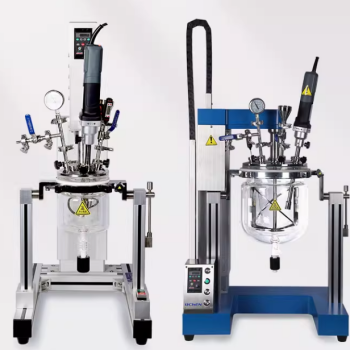
High Performance Lab Homogenizer for Pharma Cosmetics and Food R&D

High Performance Lab Homogenizer for Pharma Cosmetics and Food R&D

Lab vacuum homogenizing emulsifier for pharmaceuticals, cosmetics & food. High-shear mixing, vacuum deaeration, scalable 1L-10L. Get expert advice now!

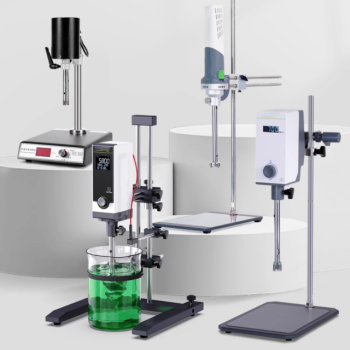
High Shear Homogenizer for Pharmaceutical and Cosmetic Applications

High Shear Homogenizer for Pharmaceutical and Cosmetic Applications

Enhance lab efficiency with our high-speed Laboratory Emulsifier Homogenizer for precise, stable sample processing. Ideal for pharmaceuticals & cosmetics.

Lab Sterile Slapping Type Homogenizer for Tissue Mashing and Dispersing

Lab Sterile Slapping Type Homogenizer for Tissue Mashing and Dispersing

The slapping sterile homogenizer can effectively separate the particles contained in and on the surface of solid samples, ensuring that the mixed samples in the sterile bag are fully representative.

Assemble Square Lab Press Mold for Laboratory Applications

Assemble Square Lab Press Mold for Laboratory Applications

Achieve perfect sample preparation with Assemble Square Lab Press Mold. Quick disassembly eliminates sample deformation. Perfect for battery, cement, ceramics, and more. Customizable sizes available.

Portable Digital Display Automatic Laboratory Sterilizer Lab Autoclave for Sterilization Pressure

Portable Digital Display Automatic Laboratory Sterilizer Lab Autoclave for Sterilization Pressure

Portable autoclave sterilization pressure is a device that uses pressure saturated steam to quickly and effectively sterilize items.

Portable High Pressure Laboratory Autoclave Steam Sterilizer for Lab Use

Portable High Pressure Laboratory Autoclave Steam Sterilizer for Lab Use

Portable autoclave sterilization pressure is a device that uses pressure saturated steam to quickly and effectively sterilize items.

Desktop Fast Laboratory Autoclave Sterilizer 20L 24L for Lab Use

Desktop Fast Laboratory Autoclave Sterilizer 20L 24L for Lab Use

The desktop fast steam sterilizer is a compact and reliable device used for rapid sterilization of medical, pharmaceutical, and research items.

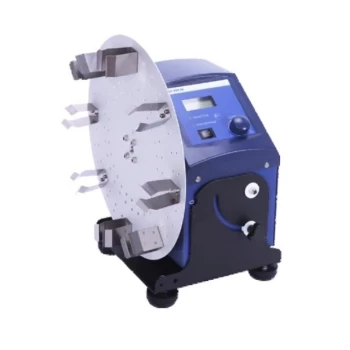
Laboratory Disc Rotary Mixer for Efficient Sample Mixing and Homogenization

Laboratory Disc Rotary Mixer for Efficient Sample Mixing and Homogenization

Efficient Laboratory Disc Rotary Mixer for Precise Sample Mixing, Versatile for Various Applications, DC Motor and Microcomputer Control, Adjustable Speed and Angle.

Laboratory High Pressure Steam Sterilizer Vertical Autoclave for Lab Department

Laboratory High Pressure Steam Sterilizer Vertical Autoclave for Lab Department

Vertical pressure steam sterilizer is a kind of sterilization equipment with automatic control, which is composed of heating system, microcomputer control system and overheating and overpressure protection system.

Laboratory Sterilizer Lab Autoclave Vertical Pressure Steam Sterilizer for Liquid Crystal Display Automatic Type

Laboratory Sterilizer Lab Autoclave Vertical Pressure Steam Sterilizer for Liquid Crystal Display Automatic Type

Liquid crystal display automatic vertical sterilizer is a safe, reliable and automatic control sterilization equipment, which is composed of heating system, microcomputer control system and overheating and overvoltage protection system.

Laboratory Horizontal Autoclave Steam Sterilizer Lab Microcomputer Sterilizer

Laboratory Horizontal Autoclave Steam Sterilizer Lab Microcomputer Sterilizer

The horizontal autoclave steam sterilizer adopts the method of gravity displacement to remove the cold air in the inner chamber, so that the content of steam cold air in the inner chamber is less, and the sterilization is more reliable.

Laboratory Hybrid Tissue Grinding Mill

Laboratory Hybrid Tissue Grinding Mill

KT-MT20 is a versatile laboratory device used for rapid grinding or mixing of small samples, whether dry, wet, or frozen. It comes with two 50ml ball mill jars and various cell wall breaking adapters for biological applications such as DNA/RNA and protein extraction.

Desktop Fast Laboratory Autoclave Sterilizer 35L 50L 90L for Lab Use

Desktop Fast Laboratory Autoclave Sterilizer 35L 50L 90L for Lab Use

The desktop fast steam sterilizer is a compact and reliable device used for rapid sterilization of medical, pharmaceutical, and research items. It efficiently sterilizes surgical instruments, glassware, medicines, and resistant materials, making it suitable for various applications.

Laboratory Sterilizer Lab Autoclave Pulse Vacuum Lifting Sterilizer

Laboratory Sterilizer Lab Autoclave Pulse Vacuum Lifting Sterilizer

The pulse vacuum lifting sterilizer is a state-of-the-art equipment for efficient and precise sterilization. It uses pulsating vacuum technology, customizable cycles, and a user-friendly design for easy operation and safety.

XRF & KBR steel ring lab Powder Pellet Pressing Mold for FTIR

XRF & KBR steel ring lab Powder Pellet Pressing Mold for FTIR

Produce perfect XRF samples with our steel ring lab powder pellet pressing mold. Fast tableting speed and customizable sizes for accurate molding every time.

Custom PTFE Teflon Parts Manufacturer for PTFE Buchner Funnel and Triangular Funnel

Custom PTFE Teflon Parts Manufacturer for PTFE Buchner Funnel and Triangular Funnel

The PTFE funnel is a piece of laboratory equipment used primarily for filtration processes, particularly in the separation of solid and liquid phases in a mixture. This setup allows for efficient and rapid filtration, making it indispensable in various chemical and biological applications.

High Performance Laboratory Freeze Dryer for Research and Development

High Performance Laboratory Freeze Dryer for Research and Development

Advanced laboratory freeze dryer for lyophilization, preserving sensitive samples with precision. Ideal for biopharmaceuticals, research & food industries.

Rubber Vulcanizer Vulcanizing Machine Plate Vulcanizing Press for Lab

Rubber Vulcanizer Vulcanizing Machine Plate Vulcanizing Press for Lab

The Plate vulcanizing press is a kind of equipment used in the production of rubber products, mainly used for the vulcanization of rubber products. Vulcanization is a key step in rubber processing.

Automatic Laboratory Hydraulic Pellet Press Machine for Lab Use

Automatic Laboratory Hydraulic Pellet Press Machine for Lab Use

Experience efficient sample preparation with our Automatic Lab Press Machine. Ideal for material research, pharmacy, ceramics, and more. Features a compact size and hydraulic press functionality with heating plates. Available in various sizes.

VHP Sterilization Equipment Hydrogen Peroxide H2O2 Space Sterilizer

VHP Sterilization Equipment Hydrogen Peroxide H2O2 Space Sterilizer

A hydrogen peroxide space sterilizer is a device that uses vaporized hydrogen peroxide to decontaminate enclosed spaces. It kills microorganisms by damaging their cellular components and genetic material.


Leave Your Message