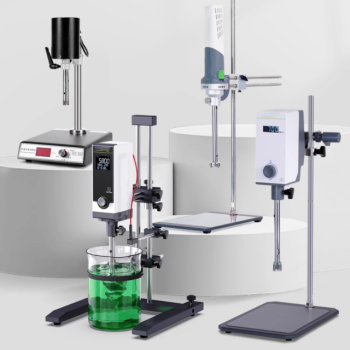
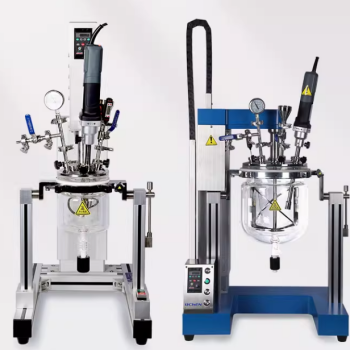
The primary significance involves achieving complete cellular disruption. By utilizing an ultrasonic homogenizer, you generate powerful shear forces capable of breaking the membranes of cells adhering to Nanocrystalline Diamond (NCD) films. This ensures the total release of intracellular proteins, which is a prerequisite for accurate biochemical profiling.
Ultrasonic homogenization ensures total cell lysis through cavitation, transforming cells attached to hard NCD surfaces into a fully representative protein lysate essential for reliable biochemical assays.
The Mechanism of Extraction
Ultrasonic Cavitation
The core mechanism behind this technique is ultrasonic cavitation. This process creates rapid pressure changes in the liquid surrounding the cells.
These pressure changes generate microscopic bubbles that collapse violently, creating powerful shear forces. These forces are strong enough to physically tear open cell membranes.
Overcoming Surface Adhesion
Cells cultured on Nanocrystalline Diamond films can be difficult to harvest using mild chemical buffers alone.
The mechanical nature of ultrasonic homogenization ensures that cells attached to these robust films are effectively reached and disrupted. This guarantees that the extraction process is not limited by the cell's adherence to the substrate.
Impact on Downstream Analysis
Ensuring Representative Samples
The ultimate goal of extraction is to analyze what is occurring inside the cell.
Because this method completely disrupts the membrane, the resulting lysate contains the full spectrum of intracellular proteins. This makes the sample fully representative of the cell population being studied.
Enhancing Assay Accuracy
High-efficiency extraction is critical for quantitative measurements.
Techniques such as total protein determination rely on capturing the entire protein content of the sample. Similarly, specific functional protein analysis requires that target proteins are released rather than trapped in cell debris.
Understanding the Trade-offs
Managing Shear Force Intensity
While the reference highlights the benefit of "powerful shear forces," it is important to note that these forces are non-selective.
You must ensure the intensity is sufficient to lyse the cells but controlled enough to prevent the degradation of sensitive proteins once they are released.
Heat Generation
The physical process of cavitation and shear generation creates energy.
Although not explicitly detailed in the reference, the "powerful" nature of this interaction implies that temperature management is often necessary to maintain protein stability during the homogenization process.
Ensuring Protocol Success
To maximize the quality of your protein extraction from NCD films, consider your specific analytical goals:
- If your primary focus is Total Protein Determination: Prioritize complete membrane disruption to ensure every available protein is released into the lysate for quantification.
- If your primary focus is Functional Protein Analysis: Ensure the extraction releases the intracellular components efficiently so that the specific functions of the proteins remain detectable.
Reliable data begins with the complete and efficient release of cellular material from the substrate.
Summary Table:
| Feature | Ultrasonic Homogenization Benefit |
|---|---|
| Mechanism | High-energy ultrasonic cavitation and shear forces |
| NCD Film Interaction | Overcomes strong surface adhesion for total cell release |
| Sample Quality | Delivers a fully representative lysate for downstream assays |
| Key Applications | Total protein determination & functional protein analysis |
| Critical Controls | Shear force intensity and heat management for protein stability |
Maximize Your Research Precision with KINTEK
Don’t let substrate adhesion compromise your biochemical data. KINTEK specializes in high-performance laboratory equipment, including advanced ultrasonic homogenizers, shakers, and cooling solutions designed to maintain protein integrity during intense cellular disruption. Whether you are working with Nanocrystalline Diamond films or complex cell cultures, our comprehensive range of tools—from ULT freezers and freeze dryers to precision crushing and milling systems—ensures your lab achieves consistent, high-yield results.
Ready to elevate your protein extraction workflow? Contact KINTEK today for a customized solution!
References
- Ľubica Grausová, Lucie Bačáková. Enhanced Growth and Osteogenic Differentiation of Human Osteoblast-Like Cells on Boron-Doped Nanocrystalline Diamond Thin Films. DOI: 10.1371/journal.pone.0020943
This article is also based on technical information from Kintek Solution Knowledge Base .
Related Products
- High Shear Homogenizer for Pharmaceutical and Cosmetic Applications
- High Performance Lab Homogenizer for Pharma Cosmetics and Food R&D
- Lab Sterile Slapping Type Homogenizer for Tissue Mashing and Dispersing
- Laboratory High Throughput Tissue Grinding Mill Grinder
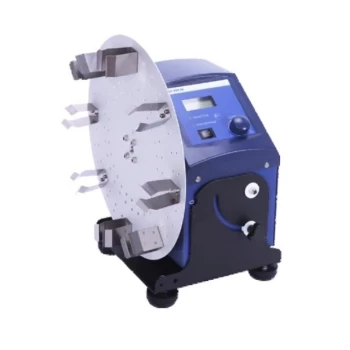
- Laboratory Disc Rotary Mixer for Efficient Sample Mixing and Homogenization
People Also Ask
- Why Use a High Shear Homogenizer for Cathode Slurries? Optimize Double-Layer Solid-State Battery Production
- What is the function of high-shear dispersion equipment in corona-resistant nanocomposites? Elevate Your Insulation
- What is the necessity of using an industrial-grade high-shear homogenizer for biomass washing? Ensure Process Efficiency
- What are the advantages of using a high-shear homogenizer for BED/GMA coatings? Achieve Superior Nano-Dispersion
- What role does a high-shear homogenizer play in ODC catalyst suspensions? Unlock Superior Electrochemical Efficiency