An ultrasonic homogenizer enhances Calcium Oxide (CaO) catalysts by utilizing high-intensity acoustic cavitation to physically shatter catalyst aggregates. This process generates micro-jets and shock waves that break down the material, significantly increasing the specific surface area and availability of the catalyst for chemical reactions.
Core Takeaway: By mechanically fracturing catalyst clumps, ultrasonic homogenization exposes a greater number of basic active centers. This physical alteration allows you to achieve faster reaction kinetics while simultaneously reducing the need for high temperatures and excess chemical inputs.
The Mechanics of Catalyst Activation
The Power of Cavitation
The core mechanism driving this enhancement is the cavitation effect. Ultrasonic waves create rapid pressure fluctuations in the liquid, leading to the formation and violent collapse of microscopic bubbles.
Physical Breakdown of Aggregates
When these bubbles collapse, they generate intense micro-jets and shock waves. These physical forces impact the Calcium Oxide, effectively breaking down large, cohesive aggregates into much smaller individual particles.
Increasing Specific Surface Area
The reduction in particle size leads to a massive increase in specific surface area. By maximizing the surface area relative to volume, the homogenizer ensures that a larger percentage of the catalyst material is physically available to participate in the reaction.
Enhancing Chemical Efficiency
Exposing Active Centers
The physical shattering of particles does more than just reduce size; it modifies the surface structure. This process exposes more basic active centers on the Calcium Oxide that were previously locked inside the aggregates.
Accelerating Reaction Speed
With more active sites exposed and a larger surface area available, reactants can interact with the catalyst more freely. This leads to a substantial reduction in reaction time compared to methods that leave aggregates intact.
Understanding the Operational Trade-offs
Shifting Energy Inputs
Using an ultrasonic homogenizer represents a trade-off between mechanical energy and thermal energy. You are introducing high-intensity physical stress (ultrasound) to reduce the system's reliance on heat.
Reducing Chemical Overheads
The increased activity of the catalyst allows for a reduction in other process variables. Specifically, it enables the use of lower alcohol-to-oil ratios, minimizing raw material waste.
Lowering Thermal Stress
Because the catalyst is more efficient, the reaction can proceed effectively at lower temperatures. This reduces the energy costs associated with heating the reaction mixture, trading thermal input for the mechanical input of the homogenizer.
Making the Right Choice for Your Goal
To determine if this approach aligns with your process requirements, consider your specific optimization targets:
- If your primary focus is Speed: Implement ultrasonic homogenization to drastically cut reaction times by maximizing the exposure of active centers.
- If your primary focus is Efficiency: Use this technology to lower operational costs by reducing required reaction temperatures and alcohol-to-oil ratios.
Ultrasonic homogenization transforms Calcium Oxide from a passive aggregate into a highly active, high-surface-area catalyst through the precise application of physical force.
Summary Table:
| Feature | Effect of Ultrasonic Homogenization | Impact on Process |
|---|---|---|
| Particle Size | Breaks aggregates into smaller particles | Increases specific surface area |
| Active Centers | Exposes previously locked basic sites | Faster reaction kinetics |
| Energy Source | Replaces thermal energy with mechanical force | Enables lower reaction temperatures |
| Resource Usage | Optimizes catalyst availability | Reduces alcohol-to-oil ratio requirements |
Elevate Your Chemical Synthesis with KINTEK Precision
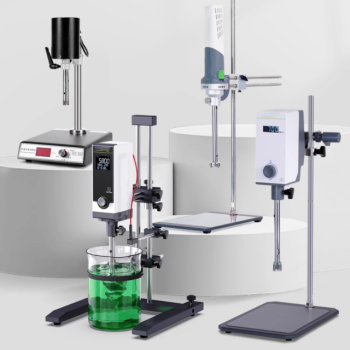
Maximize your catalytic efficiency and reduce operational overhead with KINTEK’s high-performance ultrasonic homogenizers. Whether you are optimizing Calcium Oxide for biodiesel production or specialized chemical synthesis, our advanced technology ensures superior particle dispersion and maximum surface area exposure.
Beyond homogenization, KINTEK specializes in a comprehensive range of laboratory equipment including:
- High-Temperature Furnaces (Muffle, Vacuum, Tube, & CVD)
- High-Pressure Reactors & Autoclaves
- Crushing, Milling, & Sieving Systems
- Hydraulic Presses (Pellet, Hot, & Isostatic)
- Advanced Battery Research Tools & Consumables
Don't let inefficient catalysts slow down your research. Contact us today to discover how KINTEK can provide the precision tools your laboratory needs to achieve faster, more cost-effective results.
References
- Hoora Mazaheri, T. M. Yunus Khan. An Overview of Biodiesel Production via Calcium Oxide Based Catalysts: Current State and Perspective. DOI: 10.3390/en14133950
This article is also based on technical information from Kintek Solution Knowledge Base .
Related Products
- High Shear Homogenizer for Pharmaceutical and Cosmetic Applications
- High Performance Lab Homogenizer for Pharma Cosmetics and Food R&D
- Lab Sterile Slapping Type Homogenizer for Tissue Mashing and Dispersing
- Laboratory High Throughput Tissue Grinding Mill Grinder
- Laboratory Disc Rotary Mixer for Efficient Sample Mixing and Homogenization
People Also Ask
- Why Use a High Shear Homogenizer for Cathode Slurries? Optimize Double-Layer Solid-State Battery Production
- What is the function of high-shear dispersion equipment in corona-resistant nanocomposites? Elevate Your Insulation
- What is the necessity of using an industrial-grade high-shear homogenizer for biomass washing? Ensure Process Efficiency
- What are the advantages of using a high-shear homogenizer for BED/GMA coatings? Achieve Superior Nano-Dispersion
- What role does a high-shear homogenizer play in ODC catalyst suspensions? Unlock Superior Electrochemical Efficiency