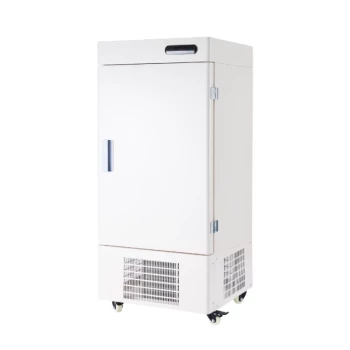
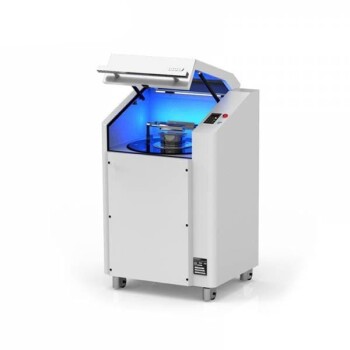
A cryogenic grinder operates by embrittling polymers using extreme cold before pulverizing them. Rather than attempting to mechanically shear soft or rubbery plastic pellets, which generates heat and causes clumping, this device uses liquid nitrogen to freeze the material. By dropping the temperature below the polymer's brittle transition point, the machine transforms tough pellets into glass-like solids that can be shattered into the fine micron-sized powders necessary for additive manufacturing.
The central purpose of a cryogenic grinder is to overcome the natural viscoelasticity of polymers. By chemically "freezing" the molecular structure, it allows high-energy impact to fracture materials that would otherwise deform or melt at room temperature, enabling the creation of specialized powders for Selective Laser Sintering (SLS).
The Physical Challenge of Grinding Polymers
The Problem with Room Temperature
At ambient temperatures, most polymers exhibit viscoelastic behavior. They possess both viscous (flow-like) and elastic (spring-like) properties.
Energy Absorption vs. Fracture
When you attempt to grind a viscoelastic material, it absorbs the mechanical energy of the grinder. Instead of breaking, the material deforms, stretches, or heats up, often melting into a useless mass.
The Mechanism of Cryogenic Milling
Thermal Shock via Liquid Nitrogen
The core mechanism involves immersing or spraying the polymer pellets with liquid nitrogen. This cryogen acts as a heat sink, rapidly extracting thermal energy from the material.
Reaching the Brittle Transition
The objective is to cool the polymer below its brittle transition temperature (often related to the glass transition temperature). Below this specific thermal threshold, the polymer chains lose their mobility and the material becomes rigid.
High-Energy Impact
Once the material is in this glass-like state, the grinder applies a high-energy mechanical impact. Because the polymer can no longer stretch or absorb energy, it fails catastrophically upon impact.
Shattering into Micro-Powder
The result is a clean fracture rather than a tear. This mechanism effectively reduces centimeter-sized pellets into micron-sized fine powders.
Why This Matters for Additive Manufacturing
Enabling Selective Laser Sintering (SLS)
SLS printing requires powders with specific flow characteristics and particle sizes to spread evenly across the print bed. Cryogenic grinding creates the uniform particle distribution required for high-quality sintering.
Processing Difficult Materials
This method is particularly crucial for elastomers and high-performance plastics. These materials are specifically engineered to be tough and heat-resistant, making them virtually impossible to pulverize using standard ambient milling techniques.
Understanding the Trade-offs
Operational Complexity
Cryogenic grinding is significantly more complex than standard milling. It requires the safe handling and continuous supply of liquid nitrogen, which adds an operational hazard and logistical layer to the process.
Cost Implications
The process is energy-intensive and consumes consumables (nitrogen) at a high rate. It is generally reserved for high-value materials where ambient milling is physically impossible.
Making the Right Choice for Your Goal
When deciding if cryogenic comminution is required for your material preparation, consider the physical properties of your feed stock.
- If your primary focus is processing Elastomers (Rubbers): You typically must use cryogenic grinding, as these materials will simply stretch or smear under ambient conditions.
- If your primary focus is High-Performance Thermoplastics: You should utilize this method to prevent thermal degradation during grinding and to achieve the fine particle distribution required for SLS.
Cryogenic grinding is not merely a cooling method; it is a phase-change strategy that temporarily alters material physics to achieve a precise manufacturing standard.
Summary Table:
| Feature | Ambient Grinding | Cryogenic Grinding |
|---|---|---|
| Material State | Viscoelastic / Rubbery | Glass-like / Brittle |
| Mechanism | Mechanical Shearing | High-Energy Impact Fracture |
| Thermal Impact | Heat Generation & Melting | Rapid Cooling via Liquid Nitrogen |
| Powder Quality | Clumped & Irregular | Fine Micron-sized & Uniform |
| Best For | Hard/Brittle Solids | Elastomers & High-Performance Plastics |
Elevate Your Materials Research with KINTEK Precision
Struggling to transform tough elastomers or high-performance thermoplastics into high-quality powders? KINTEK specializes in cutting-edge laboratory solutions designed for the most demanding additive manufacturing workflows.
Our extensive portfolio includes advanced crushing and milling systems, high-temperature furnaces, and liquid nitrogen cooling solutions tailored to overcome the challenges of polymer processing. Whether you are developing materials for SLS 3D printing or conducting complex battery research, KINTEK provides the specialized equipment and consumables—from PTFE products and ceramics to high-pressure reactors—needed to achieve precise results.
Ready to optimize your powder preparation? Contact our experts today to find the perfect equipment for your laboratory.
References
- Lisa Jiaying Tan, Kun Zhou. Recent Progress on Polymer Materials for Additive Manufacturing. DOI: 10.1002/adfm.202003062
This article is also based on technical information from Kintek Solution Knowledge Base .
Related Products
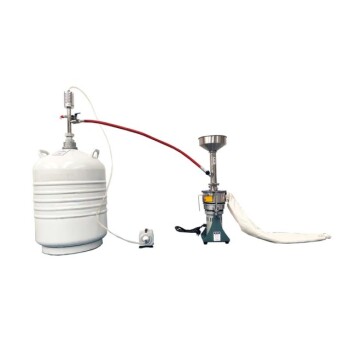
- lab cryogenic grinding use liquid-nitrogen for pulverizing plastic raw materials and heat sensitive materials
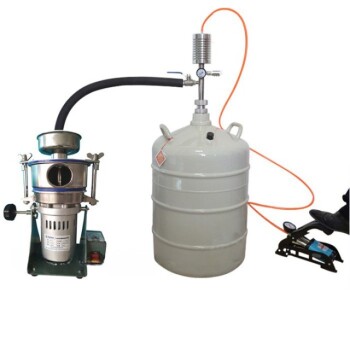
- Liquid Nitrogen Cryogenic Grinder Mill Cryomill Airflow Ultrafine Pulverizer
- Small Cryogenic Grinder Cryomill Cryogrinder with Liquid Nitrogen for Laboratory Use
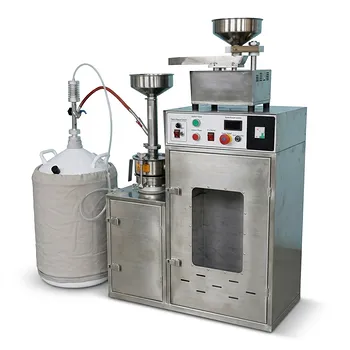
- Liquid Nitrogen Cryogenic Grinder Mill Cryomill with Screw Feeder
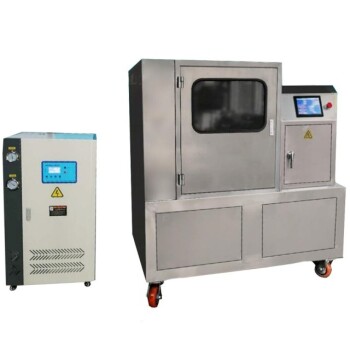
- Low-Temperature Water-Cooled Touchscreen Vibratory Ultrafine Pulverizer
People Also Ask
- What are the advantages of using a cryogenic grinder? Achieve Nanoscale Precision for All-Solid-State Battery Cathodes
- Why is a cryogenic grinder required for cured alkyd resin HRMAS NMR? Ensure Structural Integrity & Sample Precision
- What is the role of a cryogenic grinder in PET recycling? Transform Waste into High-Reactive Micron Powders
- What is cool grinding technology? Unlock Efficient Milling for Heat-Sensitive Materials
- What are cryogenic ground spices? Unlock Maximum Flavor with Advanced Grinding Technology