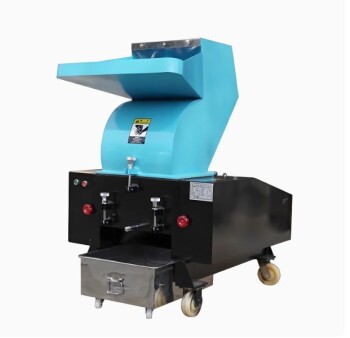
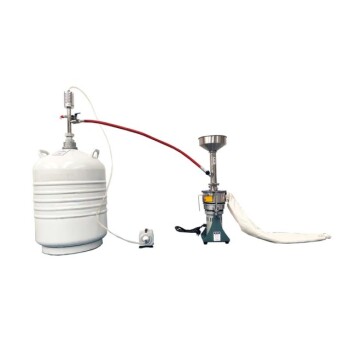
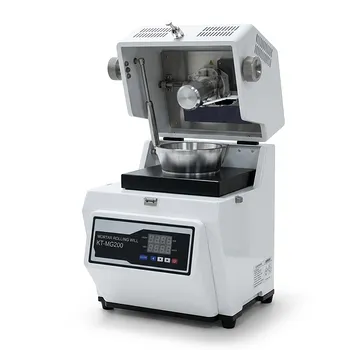
Mechanical grinding functions as a purely physical pretreatment method that utilizes shear force to significantly reduce the particle size of lignocellulosic raw materials. By physically breaking down agricultural waste, such as straw or husks, this equipment reduces the crystallinity of the biomass and drastically increases its specific surface area. This alteration is essential for exposing cellulose and hemicellulose, making them accessible for the hydrolysis reactions required to produce fermentable sugars for yeast biodiesel production.
The primary value of mechanical grinding is its ability to enhance the accessibility of raw materials for hydrolysis without generating chemical by-products. It structurally prepares the biomass—reducing crystallinity and increasing surface area—to ensure efficient microbial growth and conversion.
Mechanisms of Physical Alteration
Application of Shear Force
Mechanical grinding equipment operates by applying intense shear force to lignocellulosic residues.
This physical stress fragments the macroscopic structure of the raw material, converting coarse agricultural waste into fine particles.
Increasing Specific Surface Area
The reduction in particle size leads to a substantial increase in the specific surface area of the biomass.
This expanded surface area provides greater contact points for subsequent reactions, facilitating the release of nutrients and carbon sources required for microbial synthesis.
Reducing Crystallinity
Beyond simple size reduction, grinding disrupts the microscopic structure of the material by reducing its crystallinity.
Lignocellulosic materials are naturally rigid and resistant to degradation; breaking this crystalline structure is a prerequisite for effective processing.
Impact on Biodiesel Production Efficiency
Enhancing Hydrolysis Accessibility
The primary goal of pretreatment is to prepare the material for hydrolysis, the process where complex carbohydrates are broken down into simple sugars.
By increasing surface area and reducing crystallinity, grinding makes cellulose and hemicellulose accessible to enzymes or reagents, thereby improving the efficiency of the extraction process.
Preservation of Microbial Viability
A distinct advantage of mechanical grinding is that it prepares the substrate without introducing external chemicals.
Consequently, this process avoids producing chemical by-products that are often generated during harsh chemical pretreatments. This is critical for yeast biodiesel production, as such by-products can inhibit microbial growth and reduce fermentation yields.
Comparing Pretreatment Implications
The Chemical vs. Physical Trade-off
While chemical pretreatments can be effective, they often carry the risk of generating toxic compounds that hinder the biological conversion process.
Mechanical grinding serves as a cleaner alternative. It focuses on altering the physical form of the waste to facilitate conversion, ensuring the downstream environment remains hospitable for the microorganisms responsible for synthesizing lipids.
Making the Right Choice for Your Goal
To optimize your pretreatment strategy for yeast biodiesel production, consider the following technical priorities:
- If your primary focus is process stability: Prioritize mechanical grinding to ensure high surface area accessibility without creating chemical inhibitors that could stall yeast growth.
- If your primary focus is reaction kinetics: Utilize grinding to maximize specific surface area and reduce crystallinity, which directly accelerates the rate at which hydrolysis can release fermentable sugars.
Mechanical grinding acts as a fundamental enabler, transforming recalcitrant raw materials into a bio-accessible format while protecting the biological integrity of your production strain.
Summary Table:
| Mechanism | Physical Action | Impact on Bio-Processing |
|---|---|---|
| Shear Force | Particle size reduction | Converts coarse waste into fine, manageable particles |
| Surface Area | Drastic increase | Enhances exposure of cellulose for faster hydrolysis |
| Crystallinity | Structural disruption | Breaks down rigid fibers to improve enzyme accessibility |
| Chemical Impact | Zero chemical additives | Prevents formation of inhibitors, protecting yeast viability |
Optimize Your Biofuel Research with KINTEK Precision
Accelerate your conversion rates and ensure maximum process stability with high-performance laboratory solutions from KINTEK. Whether you are refining lignocellulosic pretreatment or scaling up yeast fermentation, our comprehensive range of crushing and milling systems, sieving equipment, and high-temperature high-pressure reactors provides the reliability your research demands.
From high-efficiency homogenizers to essential consumables like PTFE products and crucibles, KINTEK specializes in delivering the tools needed for advanced material science and renewable energy development. Contact us today to discover how our equipment can enhance your lab's efficiency and output!
References
- Alejandra Sánchez-Solís, Elier Ekberg Neri-Torres. Biodiesel Production Processes with Yeast: A Sustainable Approach. DOI: 10.3390/en17020302
This article is also based on technical information from Kintek Solution Knowledge Base .
Related Products
- Three-dimensional electromagnetic sieving instrument
- Powerful Plastic Crusher Machine
- Vibrating Disc Mill Small Laboratory Grinding Machine
- Liquid Nitrogen Cryogenic Grinder Mill Cryomill Airflow Ultrafine Pulverizer
- Laboratory High Throughput Tissue Grinding Mill Grinder
People Also Ask
- Why is sieving equipment essential for the classification of processed bio-activated carbon? Optimize Performance
- What are the limitations of sieving? Understanding the Constraints of Particle Size Analysis
- What are advantages and disadvantages of sieving method? A Guide to Reliable & Cost-Effective Particle Sizing
- How is sieving important? The Critical Role of Particle Size Analysis in Quality Control
- What is sieving and how does it work? A Guide to Accurate Particle Size Analysis