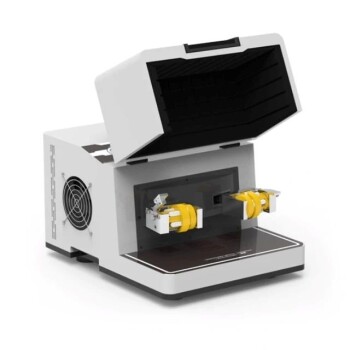
The primary function of a cryogenic ball milling system is to pulverize polymer blocks and mix them with fillers at ultra-low temperatures (below -50°C) to produce a uniform composite powder. By utilizing high-energy collisions from grinding balls and blades in a frozen environment, the system physically fuses materials like carbon fibers or nanoclay into the polymer matrix while preventing thermal degradation caused by process heat.
Core Takeaway Standard milling generates significant friction heat, which can melt or chemically degrade sensitive polymers. Cryogenic ball milling solves this by freezing the material, making it brittle enough to crush effectively while preserving the polymer's molecular integrity and ensuring a homogenous mix.
The Mechanics of Cryogenic Processing
Thermal Protection of the Matrix
The defining feature of this system is its operating temperature, which is maintained below -50°C.
In standard milling, kinetic energy converts to heat, which causes polymers to soften, melt, or char. Cryogenic cooling creates a brittle state, allowing the polymer to shatter rather than deform, ensuring the chemical structure remains intact.
High-Energy Physical Fusion
The system uses ceramic or metal grinding balls and blades to deliver intense mechanical impact.
This force does more than just reduce particle size; it facilitates physical fusion. The impact forces the polymer and reinforcing fillers (such as carbon fibers) to merge at a microscopic level, creating a cohesive composite particle rather than a simple loose mixture.
Achieving Structural Homogeneity
Uniform Dispersion of Fillers
A critical challenge in composite preparation is preventing "hot spots" or weak points caused by uneven mixing.
Ball milling mechanisms ensure that fillers are distributed with high precision throughout the polymer matrix. This mirrors the general utility of ball milling in other industries, where it is used to disperse distinct phases—such as distributing lubricants in metal powders or ceramic particles in alloys—to ensure isotropic (uniform) mechanical properties.
Eliminating Agglomeration
Fine filler particles, particularly nanomaterials like nanoclay, have a natural tendency to clump together (agglomerate).
The mechanical shearing forces in the ball mill break these agglomerations apart. Just as light ball milling is used in ceramic processing to break up fine powder clumps, cryogenic milling ensures individual filler particles are wetted and surrounded by the polymer, which is essential for consistent material performance.
Understanding the Trade-offs
Complexity and Cost
While cryogenic milling offers superior quality for polymers, it introduces significant operational complexity.
maintaining temperatures below -50°C requires a constant supply of cryogens (like liquid nitrogen) and specialized insulation. This increases the operational cost and energy footprint compared to ambient temperature milling, making it justifiable primarily for high-value or heat-sensitive materials.
Making the Right Choice for Your Project
If you are evaluating whether to employ cryogenic ball milling for your polymer composites, consider your specific material constraints:
- If your primary focus is material integrity: Use cryogenic milling to prevent thermal degradation if your polymer has a low melting point or is sensitive to heat.
- If your primary focus is dispersion quality: Rely on this method to break down stubborn agglomerations of nanofillers or carbon fibers that fail to disperse in standard mixing.
Cryogenic ball milling is the definitive solution when you must reconcile the need for high-impact mixing energy with the thermal sensitivity of polymer matrices.
Summary Table:
| Feature | Cryogenic Ball Milling | Standard Ambient Milling |
|---|---|---|
| Operating Temperature | Below -50°C (Ultra-low) | Room Temperature (Heat Rises) |
| Material State | Brittle (Shatters easily) | Soft/Ductile (May melt or deform) |
| Thermal Degradation | Prevented; preserves molecular integrity | High risk due to friction heat |
| Filler Dispersion | Superior; breaks nano-agglomerates | Potential for uneven clumping |
| Primary Application | Heat-sensitive polymers & nano-composites | Minerals, metals, and stable ceramics |
Elevate Your Material Research with KINTEK
Precision in powder preparation is the foundation of high-performance composites. KINTEK specializes in advanced laboratory solutions, including high-energy crushing and milling systems, planetary ball mills, and specialized cryogenic processing tools designed to preserve your material's integrity.
Whether you are developing next-generation polymer composites or conducting advanced battery research, our comprehensive range of high-temperature furnaces, hydraulic presses, and specialized consumables ensures your lab achieves consistent, repeatable results.
Ready to optimize your milling process? Contact our technical experts today to find the perfect equipment for your specific polymer or filler requirements.
References
- Shangqin Yuan, Kun Zhou. Polymeric composites for powder-based additive manufacturing: Materials and applications. DOI: 10.1016/j.progpolymsci.2018.11.001
This article is also based on technical information from Kintek Solution Knowledge Base .
Related Products
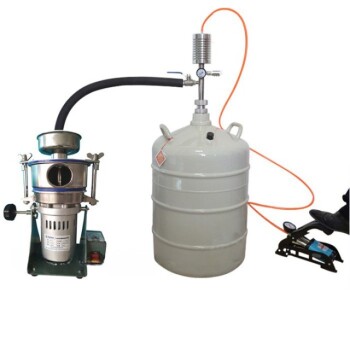
- Small Cryogenic Grinder Cryomill Cryogrinder with Liquid Nitrogen for Laboratory Use
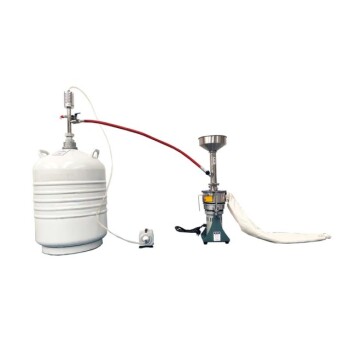
- lab cryogenic grinding use liquid-nitrogen for pulverizing plastic raw materials and heat sensitive materials
- Liquid Nitrogen Cryogenic Grinder Mill Cryomill Airflow Ultrafine Pulverizer
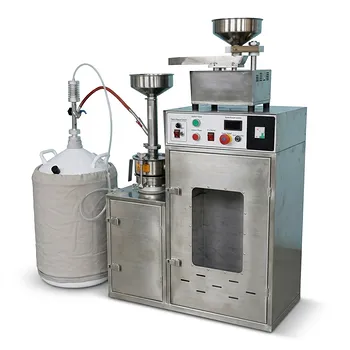
- Liquid Nitrogen Cryogenic Grinder Mill Cryomill with Screw Feeder
- Stainless Steel Laboratory Ball Mill for Dry Powder and Liquid with Ceramic Polyurethane Lining
People Also Ask
- What are the advantages of using a cryogenic grinder? Achieve Nanoscale Precision for All-Solid-State Battery Cathodes
- Why is a cryogenic grinder required for cured alkyd resin HRMAS NMR? Ensure Structural Integrity & Sample Precision
- What is the role of a cryogenic grinder in PET recycling? Transform Waste into High-Reactive Micron Powders
- What is cryogenic grinding of crumb rubber? Achieve Fine, High-Quality Rubber Powder
- What food is cryogenic grinding? The Ultimate Guide to Preserving Flavor & Aroma