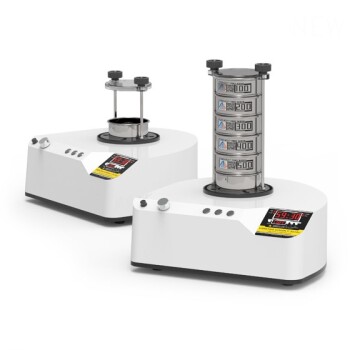
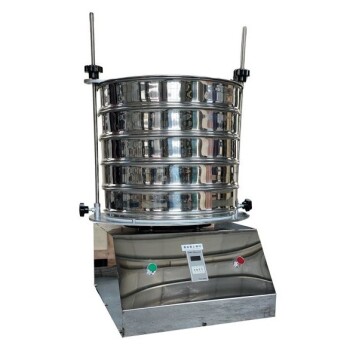
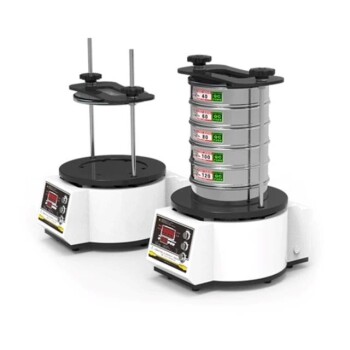
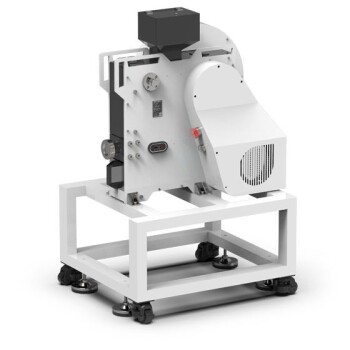
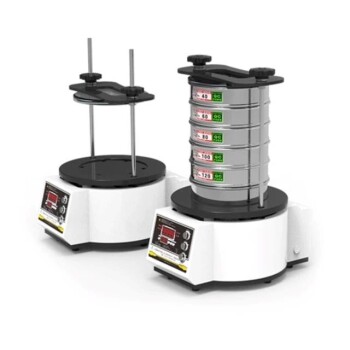
The primary objective of industrial sieving for raw sawdust is to establish physical homogeneity. By filtering raw material through standardized meshes—such as a 1 mm sieve—producers remove large debris and non-homogeneous impurities. This pre-treatment ensures the feedstock possesses a uniform particle size, which is the foundational requirement for consistent thermal reactions and high-quality end products.
Industrial sieving transforms variable raw sawdust into a standardized technical feedstock. This uniformity is the critical catalyst for predictable heat transfer, optimized chemical extraction, and superior mechanical durability in downstream processing.
The Role of Uniformity in Thermal and Chemical Processing
Optimizing Pyrolysis and Carbonization
Uniform particle size is critical for achieving a complete and consistent pyrolysis reaction. When sawdust particles are identical in size, heat penetrates each grain at the same rate, preventing the "cold core" effect found in larger chunks.
This consistency directly impacts the quality of the final biochar product. It ensures that the chemical properties and adsorption surface areas remain stable across the entire batch.
Enhancing Specific Surface Area
Sieving increases the effective specific surface area of the biomass by ensuring a fine, consistent distribution. A higher surface area provides optimized physical contact conditions for subsequent processes like solvent extraction.
In biochemical applications, this increased surface area enhances microbial attachment efficiency. This leads to more uniform reactions during composting or lignin separation.
Ensuring Scientific Repeatability
In a laboratory or industrial R&D setting, high-precision sieving eliminates variables caused by particle size fluctuations. This allows for the precise control of the carbon-to-nitrogen (C/N) ratio and moisture distribution.
Standardized particles ensure that data regarding volatile release kinetics and heating rates are scientifically valid. Without this control, variations in heat and mass transfer would make process optimization impossible.
Mechanical Integrity and Material Handling
Improving Pellet and Briquette Quality
For wood pellet production, sieving removes coarse particles that typically exceed 2 mm or 3 mm. These large particles are often responsible for brittle cracks and uneven density in the finished fuel.
Consistency in particle size ensures that die holes in pellet mills are filled uniformly. This results in pellets with high mechanical strength and better resistance to moisture.
Enhancing Material Flowability
Sawdust that has been classified through a precise mesh range—such as between 1.0 mm and 3.0 mm—exhibits superior flowability. This prevents "bridging" or clogging in industrial hoppers and transport systems.
Uniform flow is essential for the even distribution of binders during the mixing process. This leads to sawdust briquettes with improved compressive strength and physical stability.
Understanding the Trade-offs and Pitfalls
Material Loss and Yield Considerations
While sieving improves quality, it inevitably results in "overs" (material too large) and "fines" (material too small). If the raw sawdust is highly irregular, the percentage of rejected material can significantly impact the overall process yield.
Producers must balance the need for extreme uniformity against the economic cost of material waste. Often, "overs" must be diverted back to a secondary crusher, increasing energy consumption.
The Risk of Screen Blinding
Industrial sieving equipment is susceptible to "blinding," where moist or resinous sawdust plugs the mesh openings. This reduces the efficiency of the separation and can lead to "carryover," where improperly sized particles contaminate the feedstock.
Maintaining the moisture content of the raw sawdust before sieving is crucial. High-precision sieving requires constant mechanical maintenance or the use of self-cleaning vibrating screens to remain effective.
Making the Right Choice for Your Goal
Before implementing a sieving protocol, evaluate your primary production objective to determine the necessary mesh precision.
- If your primary focus is Biochar Quality: Use a 1 mm standard sieve to ensure uniform heat transfer and maximize the adsorption surface area of the final product.
- If your primary focus is Wood Pellet Durability: Focus on removing all particles larger than 3 mm to prevent density fluctuations and brittle cracking in the pellet mill.
- If your primary focus is Chemical Extraction: Utilize a fine mesh (e.g., 35 mesh) to maximize specific surface area and ensure uniform contact with extraction solvents.
- If your primary focus is Industrial Fuel Briquettes: Prioritize a vibrating sieving machine to ensure the particle size meets specific binder formulation requirements for moisture resistance.
Standardizing your raw material through professional sieving is the single most effective way to guarantee the predictability and excellence of your industrial output.
Summary Table:
| Application | Objective | Recommended Mesh | Key Benefit |
|---|---|---|---|
| Biochar Production | Uniform Heat Transfer | ~1.0 mm | Consistent adsorption surface area |
| Wood Pellets | Mechanical Integrity | < 3.0 mm | Prevents cracks; ensures high density |
| Chemical Extraction | Maximize Surface Area | ~35 Mesh | Optimized solvent contact & yield |
| R&D / Lab Testing | Scientific Repeatability | Precision Meshes | Validates volatile release kinetics |
Elevate Your Biomass Processing with KINTEK Precision
Standardizing your raw material is the first step toward industrial excellence. At KINTEK, we specialize in providing the high-performance laboratory equipment and consumables needed to transform variable raw materials into high-quality technical feedstocks.
Whether you are optimizing biochar production, ensuring the durability of wood pellets, or conducting advanced chemical extractions, our portfolio is designed to meet your most rigorous standards:
- Material Preparation: High-precision sieving equipment, shakers, and advanced crushing and milling systems.
- Thermal Processing: A comprehensive range of high-temperature furnaces (muffle, tube, vacuum, and atmosphere) for perfect pyrolysis.
- Forming & Densification: Professional hydraulic presses for high-strength pellets and briquettes.
- Research Tools: Essential consumables including crucibles, ceramics, and specialized high-temperature reactors.
Don't let inconsistent particle size compromise your results. Partner with KINTEK for reliable equipment, expert support, and a more efficient production cycle.
Contact our experts today to find the right sieving solution for your lab!
References
- Fei Jiang, Bin Gao. Remarkable synergy between sawdust biochar and attapulgite/diatomite after co-ball milling to adsorb methylene blue. DOI: 10.1039/d3ra01123b
This article is also based on technical information from Kintek Solution Knowledge Base .
Related Products
- Laboratory Vibratory Sieve Shaker Machine for Dry and Wet Three-Dimensional Sieving
- Three-dimensional electromagnetic sieving instrument
- Laboratory Test Sieves and Sieving Machines
- Laboratory Wet Three-Dimensional Vibratory Sieve Shaker Machine
- Laboratory Vibratory Sieve Shaker Machine Slap Vibrating Sieve
People Also Ask
- How does a laboratory vibratory sieve shaker facilitate the microstructural study of gas-atomized alloy powders?
- What role does a laboratory vibrating sieve shaker play in the LiFePO4 powder processing workflow? Ensure Batch Quality
- Why use a vibratory sieve shaker for PET powder? Achieve Precise Particle Size Control for Chemical Research
- What is the principle of vibratory sieve shaker? Achieve Accurate Particle Size Analysis
- What is the function of a vibratory sieve shaker? Achieve Precise Particle Size Analysis