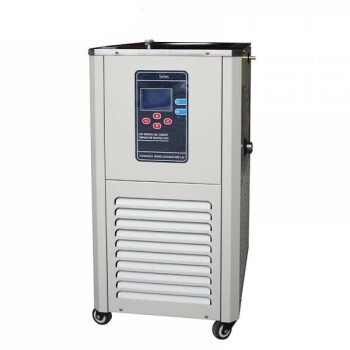
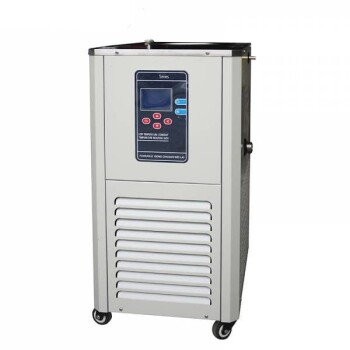
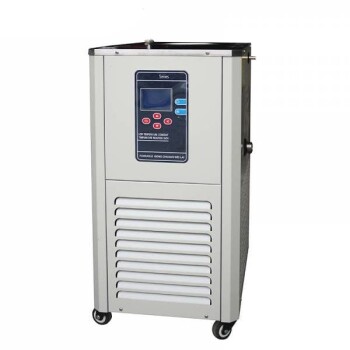
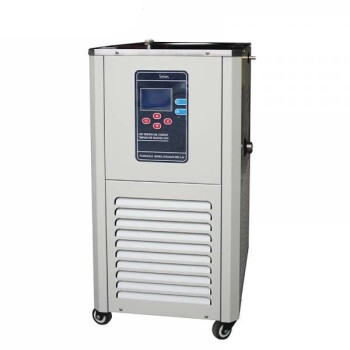
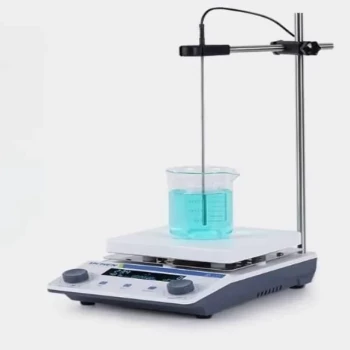
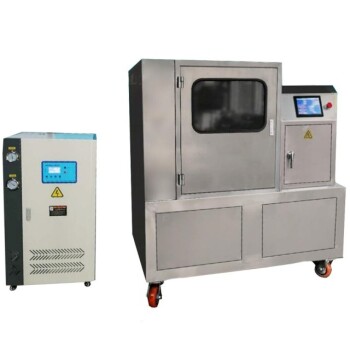
The constant temperature shaking water bath is the fundamental tool for ensuring experimental precision in phosphorus adsorption studies. Its primary function is to provide a synchronized environment of thermal stability and mechanical kinetic energy. By maintaining a precise temperature and continuous oscillation, it eliminates mass transfer resistance and ensures the adsorbent particles remain in full contact with the phosphorus solution, allowing researchers to capture data that reflects the material's intrinsic properties rather than external environmental interference.
The device bridges the gap between raw chemical reaction and measurable data by standardizing the physical environment. It removes variables like temperature fluctuations and particle settling, ensuring that the resulting kinetic models accurately represent the true adsorption capacity of the material.
Eliminating External Resistance through Mechanical Force
Overcoming Liquid Film Diffusion
In a static solution, a "film" of liquid surrounds the adsorbent particles, creating a barrier that phosphorus ions must penetrate. The continuous oscillation (typically around 180 rpm) provided by the water bath creates forced convection, which effectively shears away this liquid film. By eliminating this diffusion resistance, the experiment measures the actual speed at which phosphorus binds to the material's surface, rather than the speed at which it moves through the water.
Preventing Particle Settling
Heavier adsorbents, such as modified biochar or activated carbon, tend to settle at the bottom of a container if left undisturbed. The shaking mechanism keeps these particles in a suspended state, ensuring they are fully surrounded by the wastewater. This maximizes the contact frequency and collisions between phosphorus ions and the active sites on the adsorbent's surface.
Accelerating the Path to Equilibrium
Because mechanical vibration increases the kinetic energy within the system, it shortens the time required for the adsorption reaction to reach thermodynamic equilibrium. This is critical for 24-hour kinetic tests, as it ensures that the maximum adsorption capacity is reached within a practical laboratory timeframe. Without this constant agitation, the reaction might proceed too slowly to provide accurate pseudo-second-order kinetic data.
Standardizing the Thermodynamic Environment
The Necessity of Thermal Stability
Adsorption is a process highly sensitive to temperature, which can alter the energy levels of both the phosphorus ions and the adsorbent surface. The water bath maintains a stable thermal environment (e.g., 25°C), which is essential for the repeatability of experimental results. Even minor fluctuations can lead to inaccurate measurements of the adsorption rate and capacity.
Enabling Thermodynamic Calculations
By providing a strictly controlled temperature, the water bath allows researchers to calculate critical thermodynamic parameters like enthalpy and entropy. This data helps determine whether the phosphorus adsorption process is endothermic or exothermic. Without precise thermal control, these calculations would be fundamentally flawed, as the energy input from the environment would be an unknown variable.
Ensuring Data Accuracy and Integrity
The primary goal of using a shaking water bath is to ensure that the measured data reflects the intrinsic performance of the material. By standardizing both the temperature and the agitation speed, researchers can be confident that their results are not skewed by external factors. This consistency is what allows for the comparison of different biochars or adsorbents across different studies.
Understanding the Trade-offs
Mechanical Stress vs. Particle Integrity
While high-speed oscillation is necessary to eliminate mass transfer resistance, excessive speeds can physically degrade fragile adsorbents. If the mechanical force is too high, biochar particles may break into smaller fragments, artificially increasing the surface area and skewing the adsorption data. Researchers must find a balance (usually between 110 and 180 rpm) that provides sufficient agitation without compromising the material's structure.
Uniformity vs. Localized Hotspots
In larger water baths, temperature uniformity can sometimes be an issue if the water is not properly circulated. While the shaker helps move the samples, the heating element must be powerful enough to maintain a uniform temperature throughout the entire bath. If the temperature varies between different flasks in the same bath, the resulting kinetic data will lack the precision required for high-level scientific publication.
How to Apply This to Your Research Project
To achieve the most accurate phosphorus adsorption data, you must tailor the water bath settings to your specific material and goals.
- If your primary focus is determining intrinsic kinetic rates: Maintain a high oscillation speed (160–180 rpm) to completely eliminate liquid film diffusion and ensure the reaction is not transport-limited.
- If your primary focus is calculating thermodynamic parameters: Use the water bath to run experiments at three or more distinct, strictly controlled temperatures (e.g., 298 K, 308 K, 318 K) to ensure accurate enthalpy and entropy derivations.
- If your primary focus is working with fragile or low-density adsorbents: Opt for a lower oscillation speed (around 110 rpm) to keep particles suspended without causing mechanical degradation or fragmentation.
By masterfully controlling the physical environment of your phosphorus adsorption experiments, you transform raw data into a definitive understanding of material performance.
Summary Table:
| Feature | Primary Function | Benefit for Adsorption Research |
|---|---|---|
| Thermal Stability | Maintains precise constant temperature | Enables accurate thermodynamic calculations (Enthalpy/Entropy). |
| Continuous Oscillation | Eliminates liquid film diffusion resistance | Ensures measurements reflect intrinsic material kinetics, not transport lag. |
| Suspension Mechanism | Prevents adsorbent particle settling | Maximizes contact frequency between ions and active adsorbent sites. |
| Speed Control | Balances agitation and mechanical stress | Protects the structural integrity of fragile adsorbents like biochar. |
Elevate Your Research Precision with KINTEK
Achieving accurate and reproducible results in phosphorus adsorption studies requires equipment that offers uncompromising stability. KINTEK specializes in high-performance laboratory solutions designed to standardize your experimental environment.
From our precision shakers and homogenizers that ensure optimal particle suspension to our advanced cooling solutions and ULT freezers for sample preservation, we provide the tools researchers need to transform raw data into scientific breakthroughs. Our extensive portfolio also includes high-temperature furnaces, hydraulic presses, and essential consumables like ceramics and crucibles.
Ready to optimize your lab’s efficiency? Contact our experts today to find the perfect equipment for your specific adsorption and material science applications.
References
- Cancan Xu, Quanxi Wang. Efficient Adsorption Removal of Phosphate from Rural Domestic Sewage by Waste Eggshell-Modified Peanut Shell Biochar Adsorbent Materials. DOI: 10.3390/ma16175873
This article is also based on technical information from Kintek Solution Knowledge Base .
Related Products
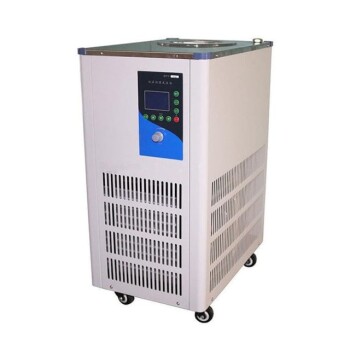
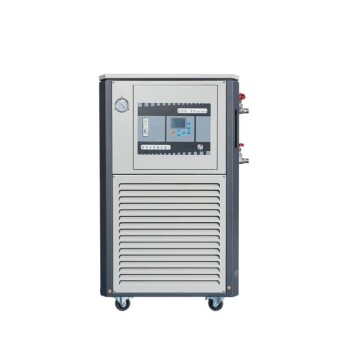
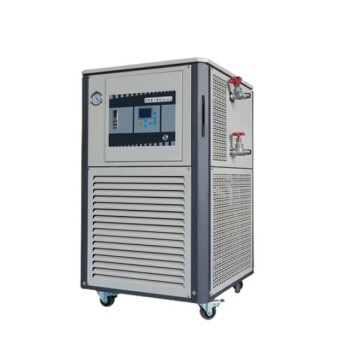
- High Temperature Constant Temperature Heating Circulator Water Bath Chiller Circulator for Reaction Bath
- 50L Chiller Water Bath Cooling Circulator Low Temperature Constant Temperature Reaction Bath
- 10L Chilling Circulator Cooling Water Bath Low Temperature Constant Temperature Reaction Bath
- 5L Chilling Circulator Cooling Water Bath Circulator for Low Temperature Constant Temperature Reaction Bath
- 30L Chiller Water Bath Cooling Circulator Low Temperature Constant Temperature Reaction Bath
People Also Ask
- What is the necessity of a circulating water bath in chlorate production? Optimize Yield & Purity with Precision
- How do constant temperature circulators impact weight-loss immersion tests? Ensure Precision in Corrosion Analysis
- How does a constant temperature circulator support the leaching reaction of gold scrap? Optimize Gold Recovery Results
- Why is a constant temperature water bath used for precursor storage in CVD? Achieve Stable Nanocrystalline SiC Deposition
- Why is a high-precision constant temperature water bath necessary for anaerobic digestion? Ensure Success at 37±0.02°C